
THE LETTER FROM TOMORROW
A Cinematic Story About Choices, Time and the Life You Still Have Time to Live
Dharmendra Singh

An illustrated cinematic novella
Some messages arrive too late.This one arrived ten years early.
PROLOGUE — THE LETTER
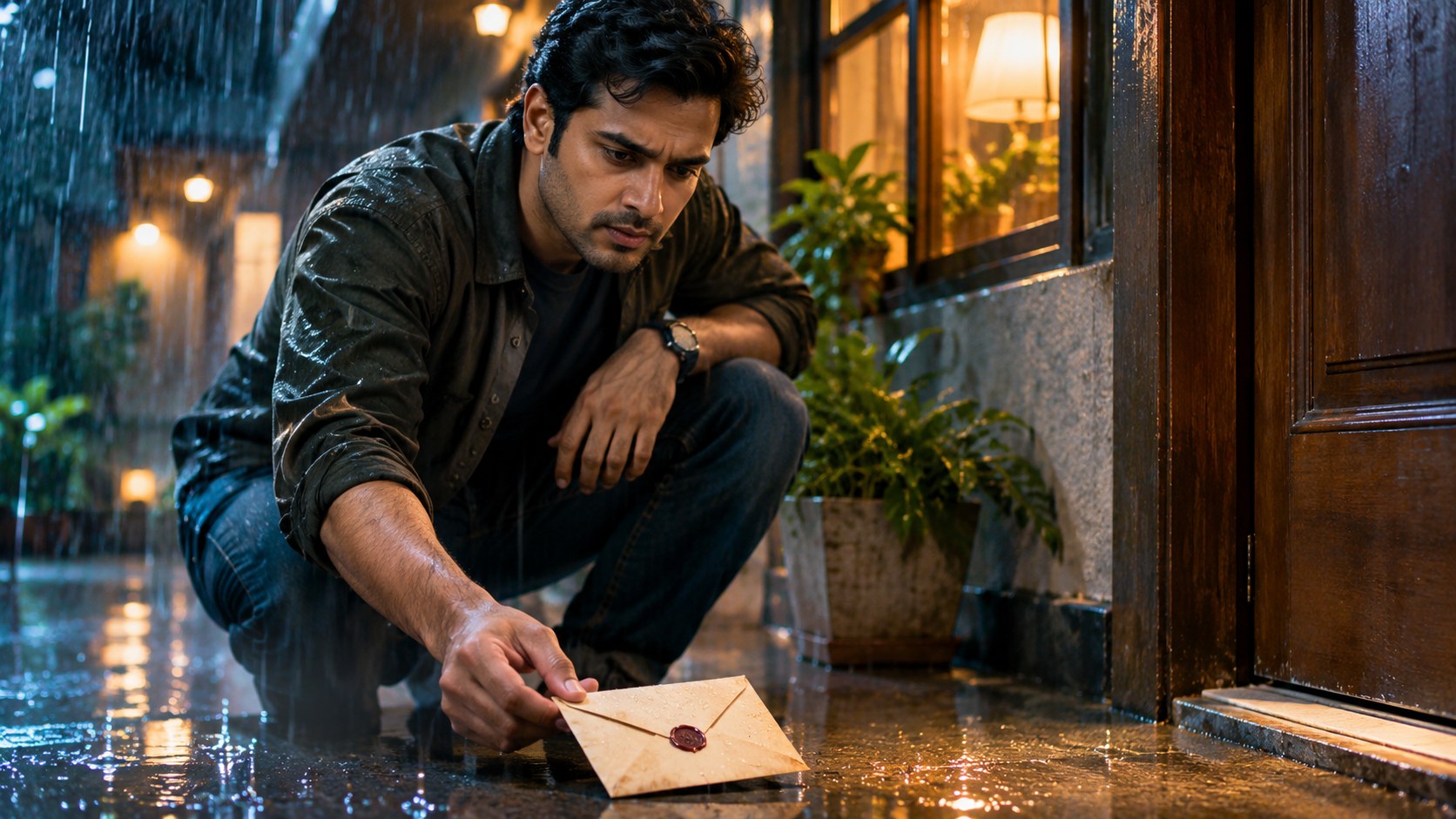
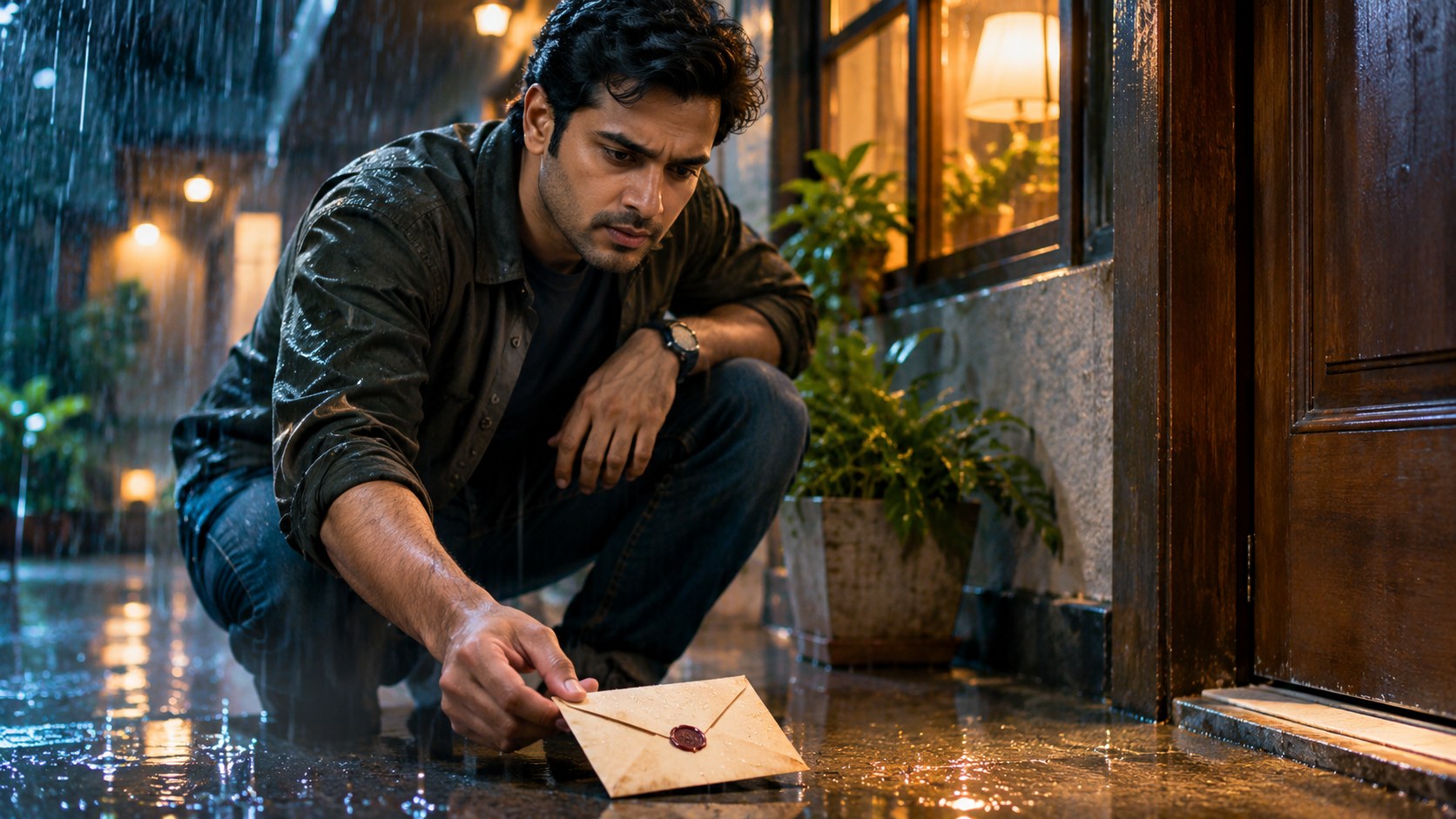
The letter arrived on a Thursday evening.
Rain pressed against the windows of Arjun Malhotra's apartment, turning the city lights below into trembling rivers of gold and red.
His phone had been vibrating for twenty minutes.
Missed calls. Unread messages. Tomorrow's presentation.
He turned it face down.
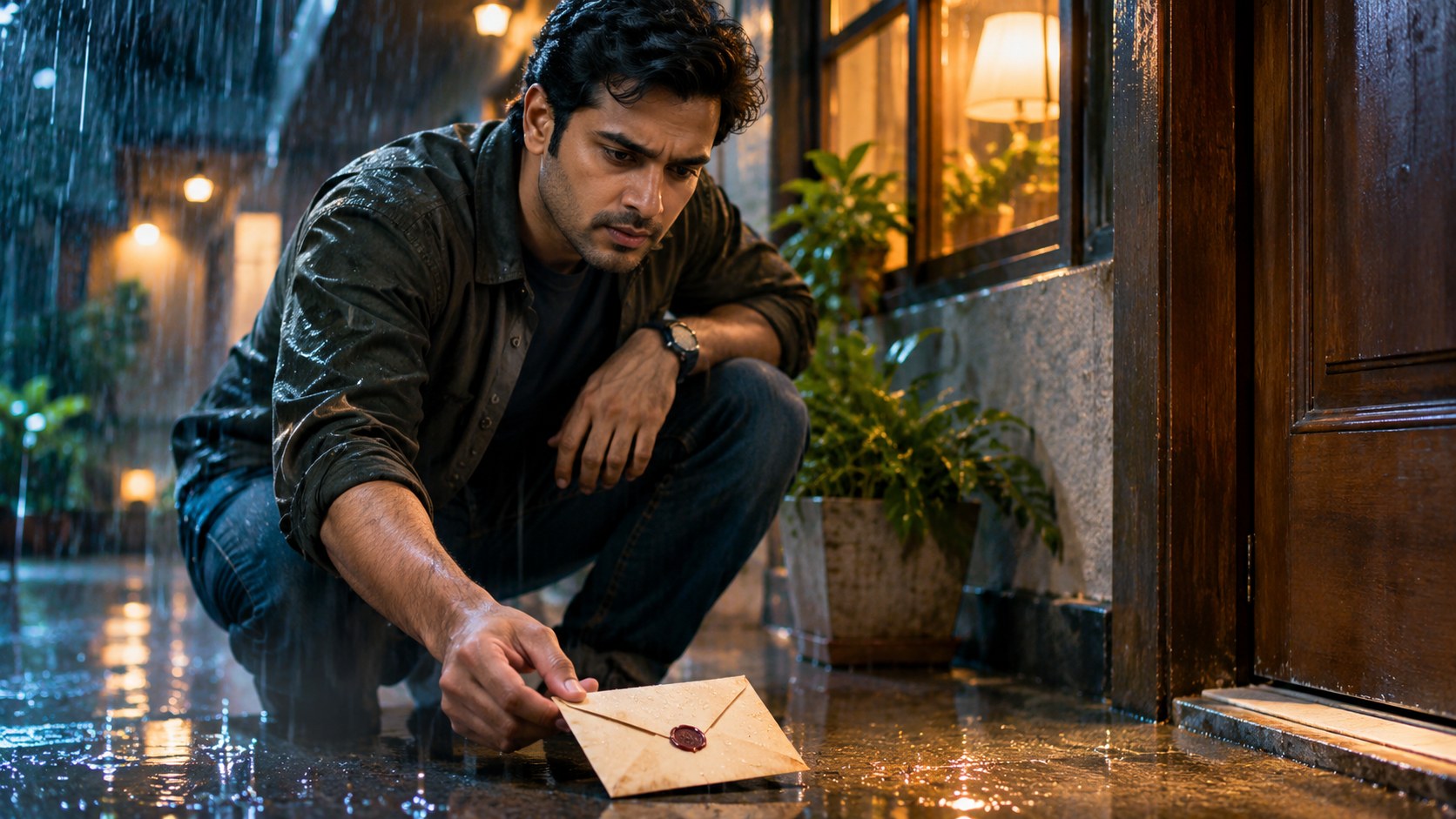
The doorbell rang.
Arjun opened the door.
No one stood in the corridor.
Only an envelope lay on the floor.
He bent down and picked it up.
His name was written on the front.
ARJUN MALHOTRA
The handwriting stopped him.
It was his.
The impatient curve of the R. The narrow spacing. The strange habit of pressing too hard at the end of a word.
He turned the envelope over.
A date was written on the back.
17 October, 2036.
Arjun stared at it.
Then he laughed. Once. Nervously.
He opened the envelope.
Inside was a single sheet of paper.
Arjun,If this letter has reached you, then something went right.You still have time.Please don't waste it trying to become me.— Arjun
For a long time, he stood in the doorway.
Rain whispered against the windows. The city continued moving below him.
Then he noticed one final line.
Written smaller than the rest.
Go to Platform 6. Friday. 7:15 p.m.
Arjun read the sentence again.
And then once more.
As if repetition might make it less impossible.
It didn't.
1 / 12
CHAPTER 1 — THE LIFE THAT LOOKED PERFECT

At nine the next morning, Arjun stood before forty-three people and explained why their company needed to think differently.
The presentation was excellent.
Everyone said so.
His slides were clean. His numbers were convincing. His voice carried the calm confidence of a man who had spent years learning how to look certain.
Someone said, “Brilliant work.”
Another said, “You're going places.”
Arjun smiled.
Inside his laptop bag, the letter waited.
For years, his life had looked like evidence that he should be grateful.
A good salary. A comfortable apartment. Parents who proudly mentioned his name. Friends who called him successful.
And yet, somewhere between the promotions and the applause, an emptiness had entered the room.
It never announced itself.
It simply sat down beside him.
At first on Sunday evenings.
Then on holidays.
Eventually, every night.
That evening, Arjun opened an old drawer.
At the back, beneath receipts and cables he no longer needed, he found a blue notebook with frayed corners.
On the first page, a younger version of himself had written:
THINGS I WILL DO.
- Travel without a plan.
- Write something that matters.
- Teach people what I learn.
- Build something of my own.
- Spend more time with the people I love.
Arjun stared at the list.
He could not remember deciding to stop.
That was the strange thing about losing yourself.
It rarely happens in one dramatic moment.
Sometimes it happens one postponed dream at a time.
I'll do it later.
He closed the notebook.
For the first time in years, curiosity felt stronger than routine.
He decided to go.
2 / 12
CHAPTER 2 — PLATFORM 6
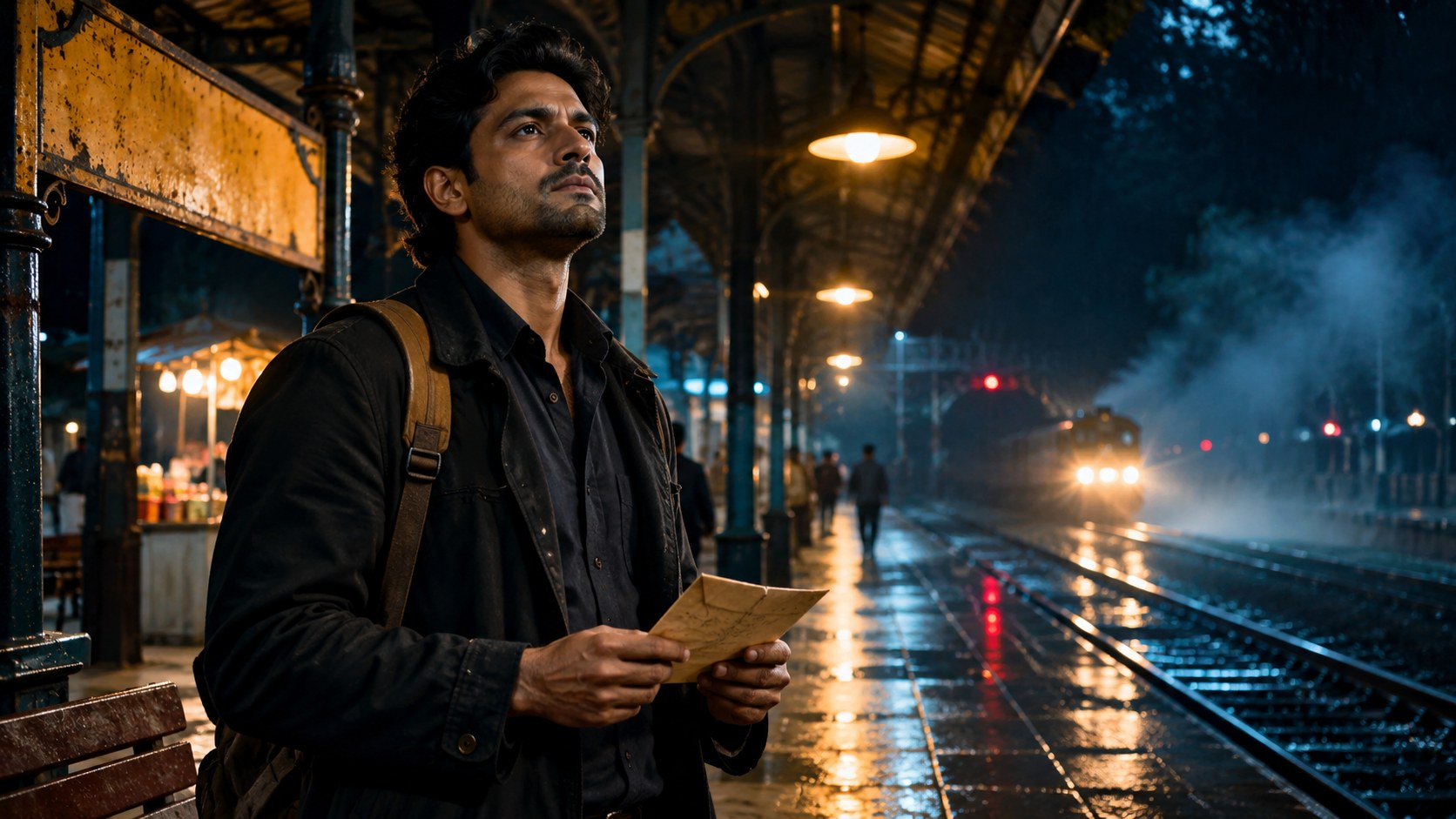
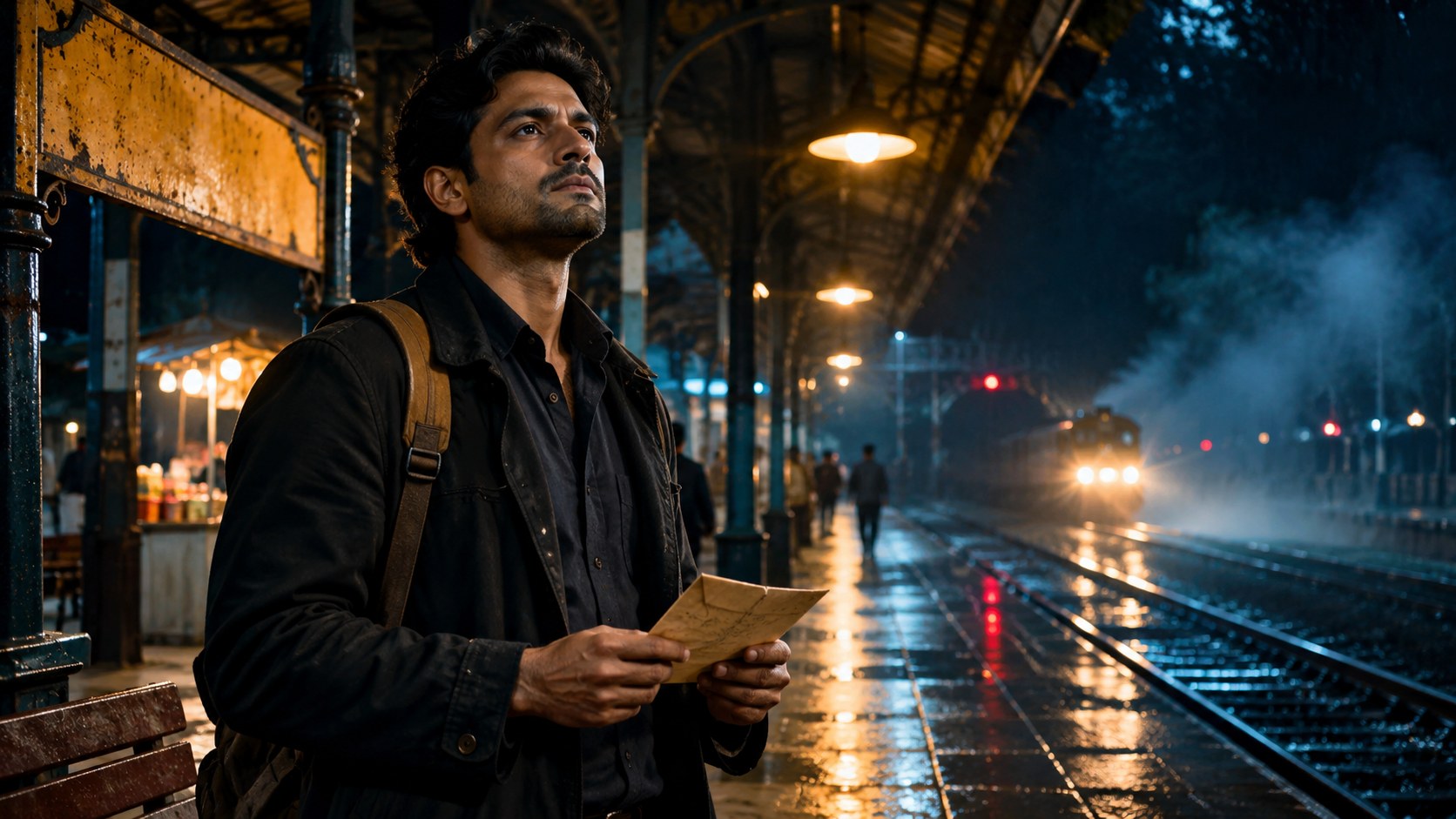
Friday arrived with the patience of a threat.
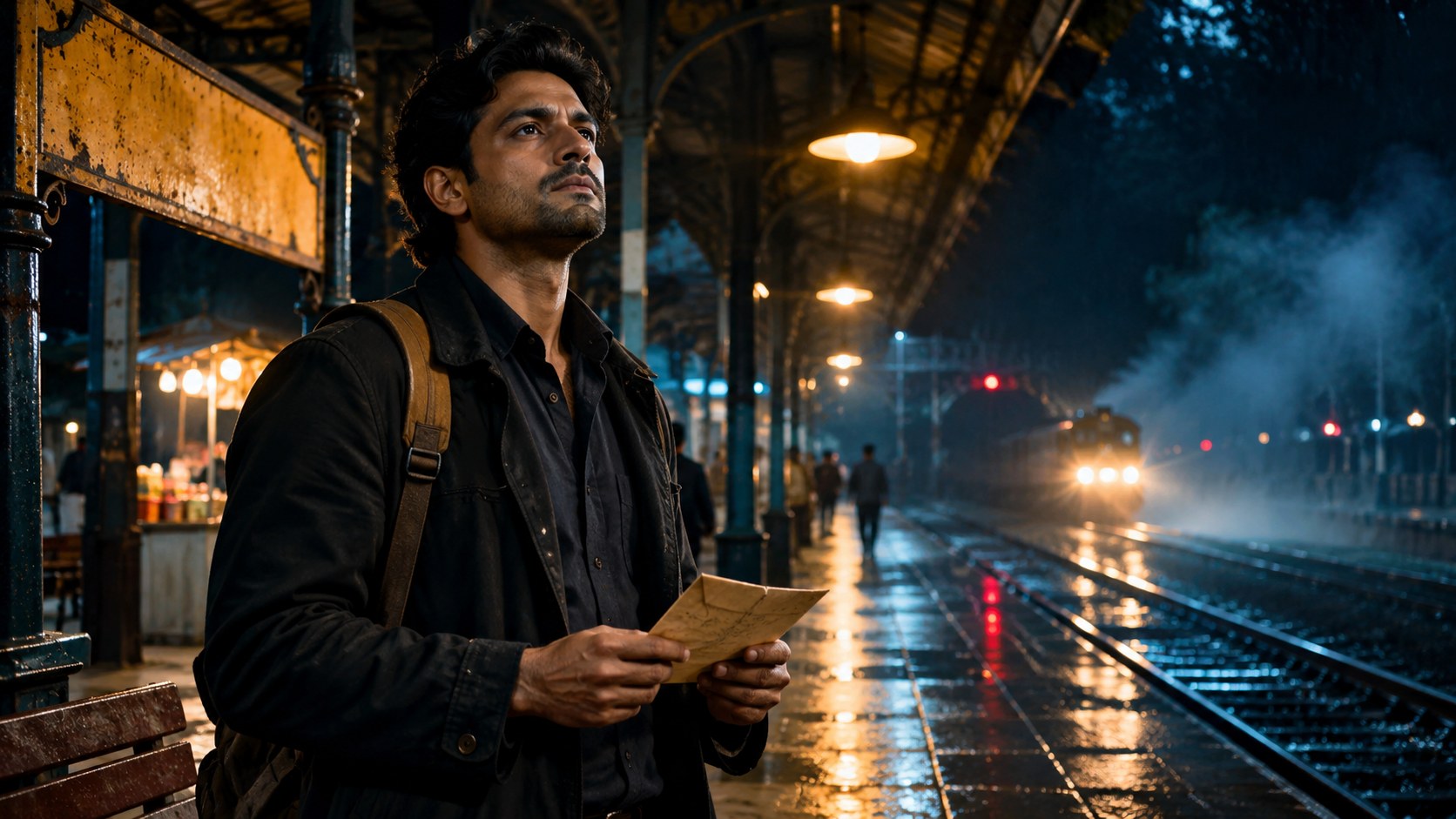
At 7:09 p.m., Arjun entered the old railway station.
Platform 6 was nearly empty.
A tea seller poured chai. A child slept across her mother's lap. Somewhere overhead, an announcement echoed through an old speaker.
At 7:14, Arjun saw a locker.
Number 27.
The key was already in the lock.
Inside was a small metal box.
And another letter.
You came.Good. That means you still listen to curiosity.Inside the box is something you lost before you knew it was important.Tomorrow, call Maya. Don't prepare a speech. Just listen.
Inside the box was a cassette tape.
SUMMER — 2018
His father's old recorder.
Arjun found a repair shop that could still play it.
The tape began with wind. Laughter. A car door closing.
Then his father's voice.
“Arjun, tell me what you want to do with your life.”
A younger version of Arjun laughed.
“Everything.”
His father laughed too.
“That's a good answer.”
“No, really. I don't want to spend my whole life doing one thing because everyone expects me to.”
The tape crackled.
Then his father said:
“Just promise me one thing.”
“What?”
“Don't become so busy building a life that you forget to live inside it.”
The recording ended.
Arjun sat in the darkness.
Some grief does not disappear.
It waits.
And sometimes it returns not to hurt us—
but to remind us what mattered.
3 / 12
CHAPTER 3 — THE ROAD HE DIDN'T TAKE
Maya answered on the third ring.
Arjun had not spoken to his younger sister in eight months.
Not because they had fought.
They had simply become busy.
“How are you?” he asked.
There was a pause.
“Is this really you?”
They met at a small café.
After the usual conversation about work and traffic, Maya looked down at her cup.
“I left my job.”
Arjun waited.
“I want to become an illustrator.”
Their parents were worried.
Maya was worried too.
“But I kept thinking,” she said, “if I wait until everyone is comfortable with my decision, I'll be old before I begin.”
Arjun felt the sentence land somewhere deep inside him.
He had once believed fear was not always a sign to stop.
Sometimes it was proof that something mattered.
“What do you want me to say?” he asked.
“Nothing.”
“Then why tell me?”
“Because you're my brother.”
So he listened.
Not as an adviser.
Not as someone with a solution.
Just as her brother.
That evening, another message waited at his door.
A photograph of an old building.
On the back, a sentence:
THE ROAD YOU DIDN'T TAKE IS NOT ALWAYS CLOSED.
4 / 12
CHAPTER 4 — THE MAN WHO ALMOST WAS

The building had once been a community learning centre.
Arjun remembered it immediately.
During college, he had volunteered there every Saturday.
He taught basic computer skills to young people who could not afford private training.
He had loved it.
Not because he was extraordinary.
Because he felt useful.
The centre was still alive.
An elderly man named Mr. Thomas recognised him.
“Arjun Malhotra,” he said. “You broke three computers in one week.”
“They were old computers.”
“They were older after you finished.”
They laughed.
For two hours, Arjun watched teenagers learn.
Question.
Fail.
Try again.
Finally, a boy raised his hand.
“Sir, how do you know what you're supposed to do with your life?”
The room became quiet.
Mr. Thomas looked at Arjun.
“I don't know if anyone can tell you exactly what you're supposed to do,” Arjun said.
“But there are things that make you feel more alive than others.”
He paused.
“Pay attention to those.”
Later, Mr. Thomas handed him an old notebook.
Inside, Arjun found a sentence written by his younger self.
One day, I want to help people remember that they are more than the job they currently have.
The man he had almost become was still speaking.
Not from the past.
From somewhere inside the present.
5 / 12
CHAPTER 5 — TOMORROW IS WATCHING

The third letter arrived a week later.
You think you are changing because of these letters.That isn't true.The letters are only showing you what you already know.You will soon have to choose something before you feel ready.You will want guarantees.Be careful. Sometimes waiting is only fear wearing a respectable suit.
Arjun knew what the letter meant.
A senior leadership position had been offered to him.
More money.
More travel.
More responsibility.
The kind of opportunity everyone congratulated you for receiving.
His manager smiled.
“This is the next step.”
Arjun imagined the next five years.
The flights.
The meetings.
The notebook returning to the drawer.
The calls he would forget to make.
The ideas he would continue postponing.
Then he remembered the final question in the letter:
If I accept this, what am I saying no to?
“Can I have some time?” he asked.
That night, a message appeared from an unknown number.
You don't have to destroy your old life to begin a new one.Start smaller than your fear expects.
6 / 12
CHAPTER 6 — THE CHOICE THAT CHANGES NOTHING
Arjun expected transformation to feel dramatic.
A resignation letter.
A speech.
A final walk out of the office.
Instead, he made a smaller decision.
He declined the promotion.
He kept his job.
For now.
But every morning before work, he wrote for one hour.
Every Saturday, he returned to the learning centre.
Every Sunday, he called someone he loved.
He began sharing short lessons about careers, skills, purpose, and the pressure people feel to become successful before they understand what success means to them.
At first, almost nobody read them.
Then a few people did.
One message said:
I thought I was the only person who felt this way.
Another said:
I resigned from nothing. But I started learning again.
Arjun printed that message.
He placed it inside his blue notebook.
The letters stopped coming.
Weeks passed.
Then months.
Until Maya handed him a small package.
Inside was a fountain pen and a blank notebook.
On the first page:
The future cannot send you instructions forever.
Below it:
At some point, you have to write back.
7 / 12
CHAPTER 7 — THE LETTER NEVER SENT
Ten years passed.
Not perfectly.
No life does.
Arjun made mistakes.
Projects failed.
Money became uncertain.
He lost people.
And found new ones.
Maya became an illustrator.
Mr. Thomas retired, although he still visited the learning centre every Wednesday.
And slowly, almost without noticing, Arjun built a life that felt more like his own.
He taught.
He wrote.
He worked with people trying to turn knowledge into meaningful work.
He learned that purpose was not a destination hidden somewhere in the future.
It was a relationship.
Something you had to keep choosing.
Then came 17 October, 2036.
The date from the first letter.
Rain began falling against his window.
Arjun opened the drawer.
The letters were still there.
He picked up the fountain pen.
And began writing.
Dear Arjun,
He stopped.
Was he really going to send a warning to the past?
He wanted to tell his younger self everything.
Take the call.
Don't take the call.
Visit your father.
Call your sister.
Write the book.
Don't wait.
But then he remembered.
A life cannot be lived by following instructions from another version of yourself.
Even if that version has seen the consequences.
He turned the page.
Dear Arjun,I spent many years believing that one day I would finally become the person I was meant to be.I was wrong.There was no single person waiting for me in the future.There were only choices. Small ones. Repeated daily.If I could send you one thing, it would not be a warning.It would be permission.Permission to begin before you are ready.Permission to change your mind.Permission to disappoint expectations that were never truly yours.Permission to love people while you still have the chance.And permission to stop treating your life like a rehearsal.You are already on stage.There is no final practice.This is the life.Live inside it.
He folded the letter.
But he did not send it.
He placed it inside the blue notebook.
The future, he realised, was not a place that happened to us.
It was something quietly being written by what we chose next.
8 / 12
EPILOGUE — THE MORNING AFTER
The next morning, Arjun woke before his alarm.
Sunlight entered the room.
A bird called outside.
The city was beginning again.
His phone contained messages.
Emails.
Reminders.
He placed it down.
Not forever.
Just for a moment.
He opened the window.
Traffic.
A bicycle bell.
Someone laughing below.
Nothing extraordinary.
And yet, everything was.
The letter had never truly come from tomorrow.
Tomorrow had no hands.
No address.
No postman.
The letter had come from a question Arjun had avoided for years.
What happens if I keep living like this?
The answer frightened him.
So he changed the question.
What might happen if I begin?
That answer was still being written.
And perhaps it always would be.
9 / 12
YOUR TURN — A LETTER TO YOURSELF
These questions are not a test.
They are an invitation.
YOUR SEVEN-DAY PROMISE
Complete this sentence:
Make the promise small enough to keep and meaningful enough to matter.
10 / 12
A SEVEN-DAY PRACTICE — WRITE BACK TO YOUR LIFE
DAY 1 — OPEN THE OLD NOTEBOOK
Write down three dreams, interests, or ideas you once cared about.
Don't judge them.
Just remember them.
DAY 2 — MAKE THE CALL
Contact someone you love.
Don't wait for the perfect reason.
Sometimes the call itself is the reason.
DAY 3 — REMOVE ONE “SOMEDAY”
Choose one thing you keep postponing.
Take one small action this week.
Not the entire journey.
Just the first step.
DAY 4 — NOTICE THE COST
Before accepting a commitment, ask:
What will this require me to say no to?
Every yes creates a shape around your life.
Choose carefully.
DAY 5 — TEACH SOMETHING
Share one useful thing you know.
A lesson.
A skill.
An insight.
Your knowledge may be ordinary to you and valuable to someone else.
DAY 6 — SPEND AN HOUR WITHOUT PERFORMING
Do something simply because you enjoy it.
Don't turn it into productivity.
Don't measure it.
Don't post it.
Just live inside the hour.
DAY 7 — WRITE THE LETTER
Write from your future self.
Or write to your future self.
Don't try to predict the future.
Instead, ask yourself:
What do I already know but keep avoiding?
Then listen to the answer.
11 / 12
A NOTE FROM THE AUTHOR
We often imagine that the future will arrive with answers.
More confidence.
More certainty.
A clearer plan.
But life rarely waits for us to become completely ready.
The most important changes often begin quietly.
A conversation.
A notebook.
A phone call.
A decision not to wait another year.
The Letter From Tomorrow is not really about predicting the future.
It is about remembering that the future is influenced by the ordinary choices we make while nobody is watching.
The life you want may not require you to destroy the life you have.
Sometimes the first change is smaller.
Wake up an hour earlier.
Make the call.
Write the first page.
Teach the first lesson.
Return to something you once loved.
The future does not always arrive dramatically.
Sometimes it begins with a quiet decision:
I don't want to keep postponing my life.
The future is not asking you to be perfect.It is asking you to be present.
— Dharmendra Singh
12 / 12