
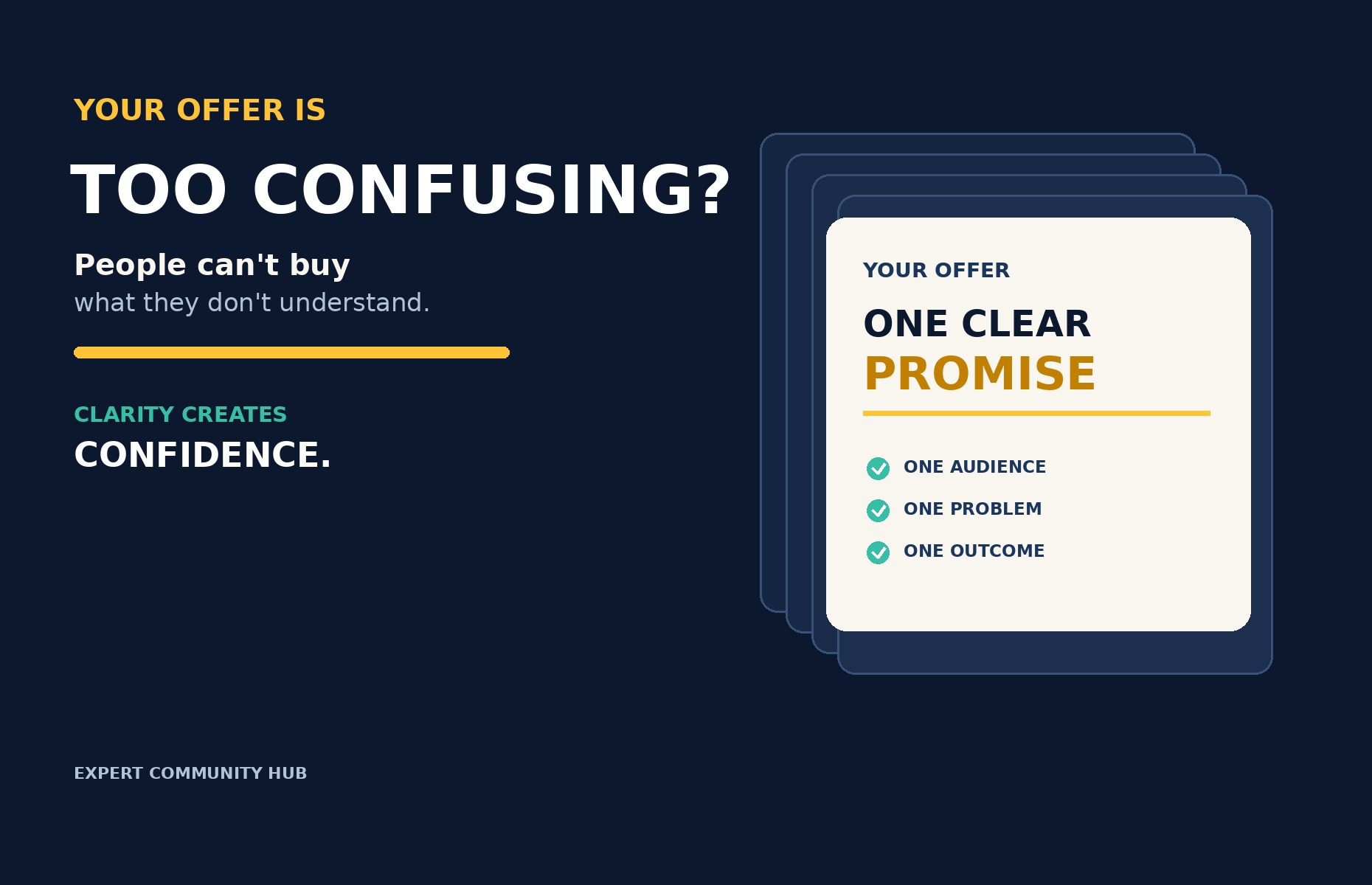
You know your subject. You have skills and experience. But if people cannot quickly understand what you help them achieve, they may keep scrolling. Learn how to make your offer clear and easier to choose.
Someone visits your page. They read your headline. Then they leave.
They may like you. They may respect your experience. They may even need your help.
But they still do not enquire.
Why?
Sometimes the problem is not your expertise. It is not your price. It is not even your marketing reach.
People may simply struggle to understand what you are offering.
By Dharmendra Singh | Expert Community Hub
You know too much to explain it simply
You have learned a lot.
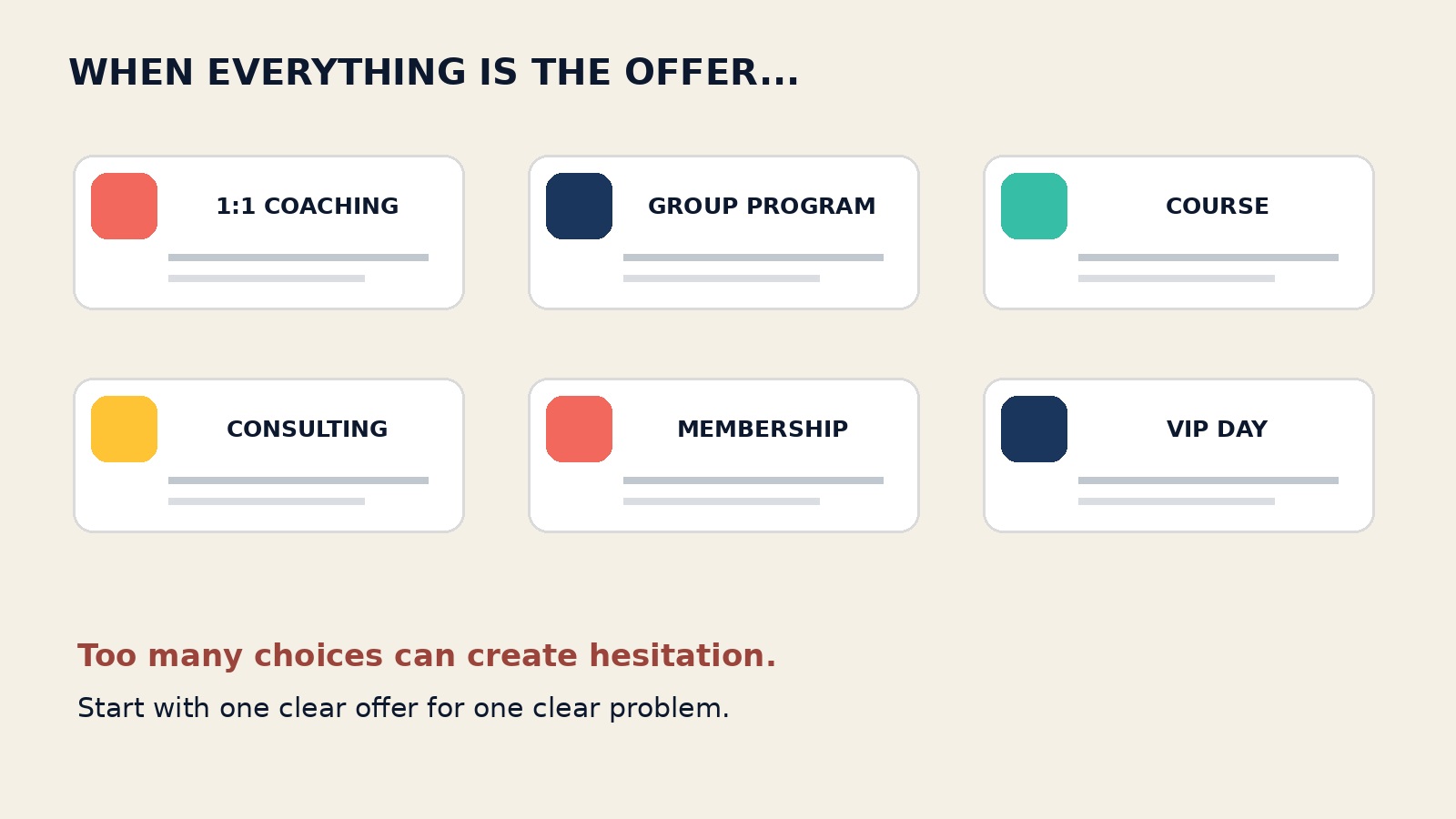
You can help people in several ways. You know different methods. You have courses, frameworks, tools, and experience.
So you try to include everything.
Your website says you help people with mindset, strategy, marketing, leadership, productivity, confidence, and growth.
You want people to see the full value you bring.
But a potential client may have one urgent question:
"Can you help me solve my problem?"
If your message makes them work hard to find the answer, they may move on.
This is the hidden pain of being an expert. You have so much knowledge that choosing what to say becomes difficult.
The answer is not to hide your expertise.
It is to make the first step easy to understand.
The pain behind the pain
An unclear offer creates more than a marketing problem.
It can make you question your value.
You may think your audience is not serious. You may assume people only want cheap services. You may start changing your price or creating another course.
You work harder. You add more features. You redesign your page.
Yet the response stays weak.
That can feel personal.
You know you can help people. You have seen your methods work. But strangers do not know that yet.
They need a clear reason to pay attention.
They need to recognise their problem in your message. They need to understand the outcome you help them pursue. They need to see the next step.
Clarity cannot guarantee a sale. But confusion can make a good offer much harder to buy.
Three signs your offer needs more clarity
1. You need five minutes to explain what you do
A detailed conversation has its place. Your first message should still give people a simple starting point.
Can you explain who you help and what problem you solve in one or two sentences?
2. Your audience says, “Interesting,” but rarely enquires
People may enjoy your content without understanding how to work with you.
Your content and your offer need a clear connection.
Show how your service helps with the problem you discuss.
3. You keep adding bonuses
You may believe more content makes the offer more valuable.
Sometimes it does. But more features cannot fix a message that is hard to understand.
Before adding another bonus, make the main promise clearer.
Use the clarity formula
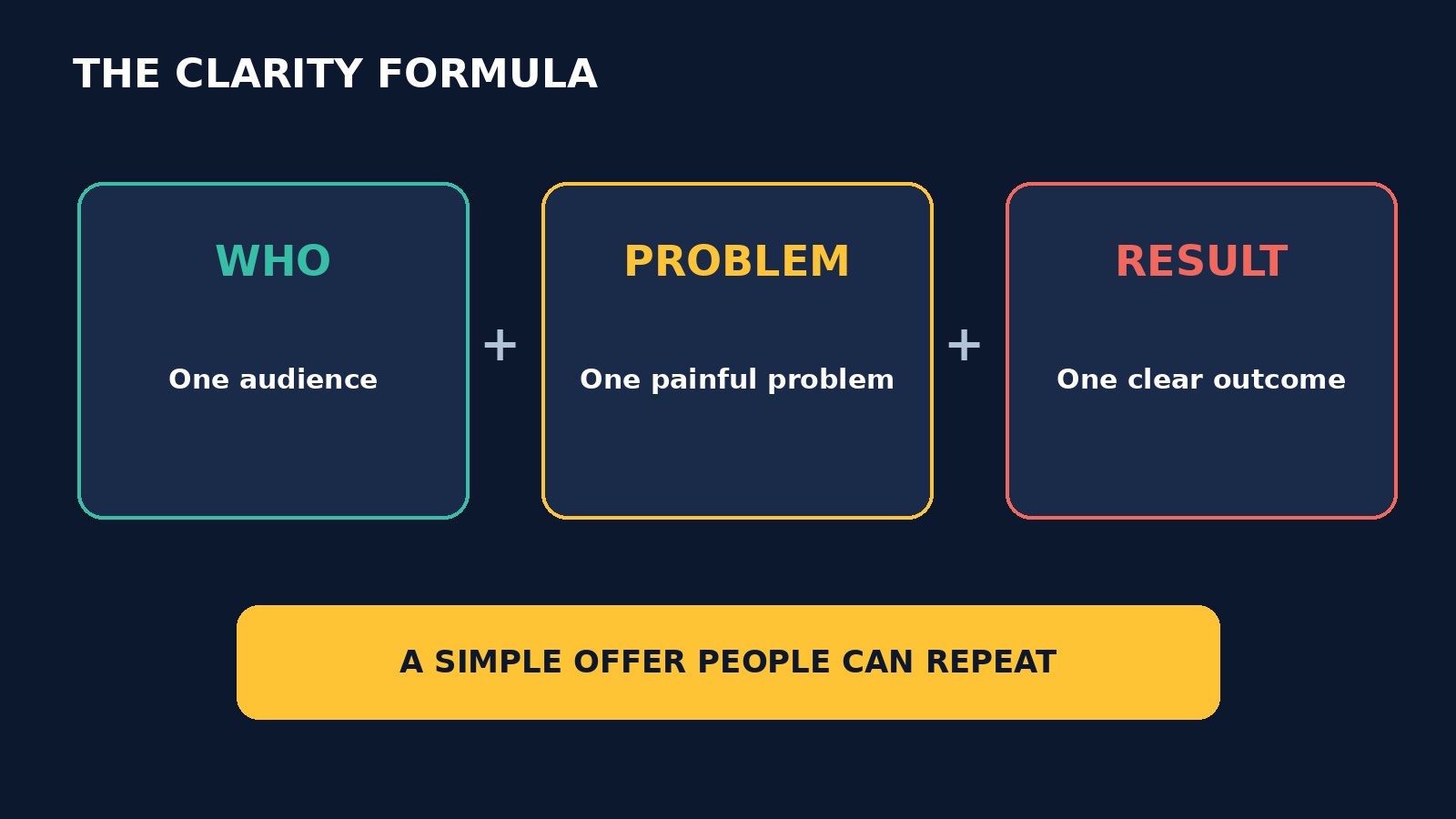
A clear offer begins with three choices.
1. Who do you help?
Choose a specific group you understand.
For example, “coaches who are starting their first online business” is easier to picture than “anyone who wants success.”
You can expand later. Start with an audience you can serve well.
2. What problem do they want to solve?
Choose a problem that matters to them.
“Improve business performance” is broad. “Get a reliable process for following up with potential clients” is more concrete.
Use the words your audience uses. Do not rely on industry jargon.
3. What outcome do you help them pursue?
Describe the result of your work.
Avoid promising outcomes you cannot control. Be clear about what your process helps people do.
Put the three parts together.
I help [specific audience] solve [specific problem] so they can [meaningful outcome].
This is a starting point, not a magic formula. Use it to make your message easier to understand.
Example: from vague to clear
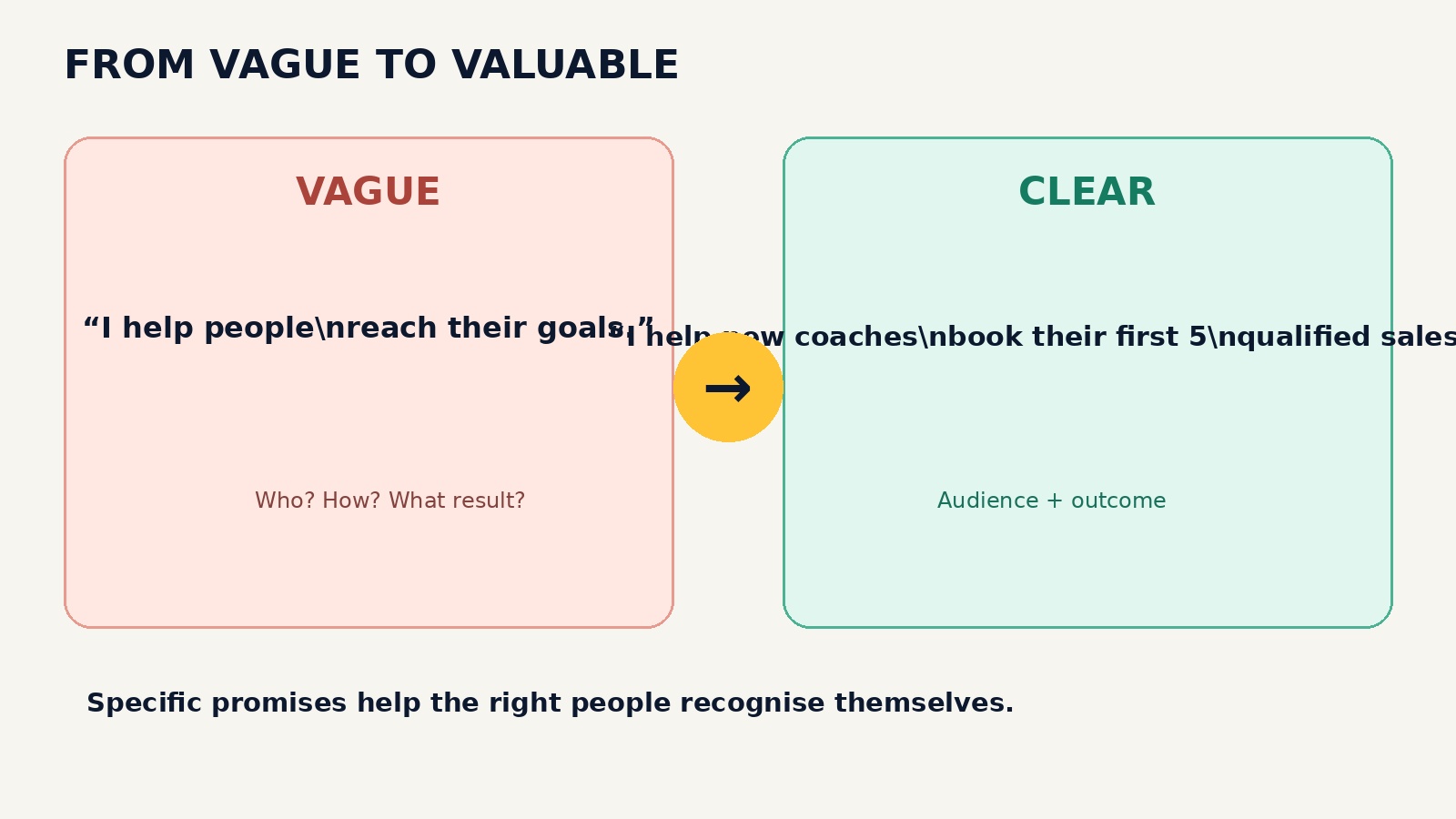
Consider this message:
“I help people grow and achieve their goals.”
It sounds positive. But it could describe thousands of services.
Now try:
“I help new coaches create a clear starter offer and a simple client follow-up process.”
The second message gives people more information.
They can identify whether they are a new coach. They can recognise the tasks involved. They can decide whether that help is relevant.
Your offer does not need exaggerated claims. It needs useful detail.
Use this test:
- Can the right person recognise themselves?
- Is the problem specific enough to understand?
- Is the outcome meaningful?
- Can someone explain your offer to another person?
If the answer is no, simplify the message.
Do not confuse a clear offer with a narrow identity
Choosing one main offer does not mean you must abandon your other skills.
It means you give new people a clear entry point.
You may have several services. You can still lead with the one that best fits your audience and current business goal.
Once people understand your main offer, you can explain other ways to work with you.
Think of clarity as the front door. It is not the entire house.
A 20-minute offer clarity exercise
Take a blank page and answer these questions.
Minute 1–5: Describe your best-fit client.
Who do you understand? Who can you help well? What situation are they in before they work with you?
Minute 6–10: Name their urgent problem.
What do they complain about? What have they already tried? What makes the problem frustrating?
Minute 11–15: Describe the outcome.
What can your coaching, consulting, or service help them do? Be specific and realistic.
Minute 16–20: Write one sentence.
Use this structure:
“I help [audience] achieve [outcome] by helping them [your method or process].”
Read it aloud. Remove vague words. Ask someone from your target audience what they think it means.
Their response will teach you more than another hour of guessing.
Key takeaways
1. Expertise is not enough. People must understand how your expertise applies to their problem.
2. More features do not always create more value. Make the core promise clear before adding bonuses.
3. Name a specific audience. Help the right people recognise themselves in your message.
4. Describe a meaningful outcome. Be concrete without making guarantees you cannot control.
5. Test your message with real people. Their questions can reveal where your offer is confusing.
Final thought: make it easy to say, “This is for me”
Your potential clients are busy.
They are dealing with their own problems. They do not want to decode a complicated description of your services.
Help them understand.
Tell them who you help. Explain the problem. Show the outcome you work toward. Make the next step obvious.
You do not need to sound impressive to everyone.
You need to be clear to the people you are best equipped to serve.
At Expert Community Hub, we help coaches, consultants, and experts turn their knowledge into clear offers and practical client acquisition systems.
Start with your message. Make it easy to understand. Then improve it through real conversations.
Your turn
Complete this sentence:
“I help ______ solve ______ so they can ______.”
If it is difficult to fill in the blanks, that is a useful place to start.
Share your draft in the comments. Clarity grows when you put your message into words.