
When prospects say your offer costs too much, discounting may not be the answer. Learn to explain the problem you solve, the process you provide, and the value buyers can realistically evaluate.
“It's too expensive.” Those four words can make an expert question the entire offer.
You may immediately think about lowering your price. Perhaps you should add more bonuses, extend access, include extra calls, or create a cheaper package.
But pause before changing the price.
Sometimes the price genuinely exceeds a prospect's budget. Sometimes the offer is not the right fit. And sometimes the person simply does not understand why the service is worth considering.
A price objection is information. It is not automatic proof that your price is wrong.
Your job is to understand what the person means, communicate your offer clearly, and help them decide whether it fits their needs and circumstances.
The exhausting cycle of discounting
Many coaches and consultants build their offers around everything they know.
They include modules, templates, live calls, workbooks, recordings, bonuses, and community access. Then they present the list and hope the prospect sees the value.
But the prospect may still be wondering:
- Is this designed for someone like me?
- Which problem will it help me work on?
- What will the process involve?
- How much time and effort will I need to contribute?
- Why should I choose this rather than another option—or do nothing right now?
If these questions remain unanswered, adding another bonus may not help. It may make the offer feel more complicated.
The answer is not always to add more. Often, it is to explain the existing value more clearly.
What “too expensive” might actually mean
Do not assume every price concern has the same cause.
1. The offer is unclear
The prospect cannot connect what you provide with the problem they want to solve.
2. The fit is uncertain
They are unsure whether your approach, format, or level of support matches their situation.
3. The risk feels too high
They do not yet understand the process, expectations, or evidence that would help them evaluate the service.
4. The budget is genuinely unavailable
They may understand the value and still be unable or unwilling to make the investment now.
5. The priority is not strong enough
The problem may matter, but other responsibilities currently take precedence.
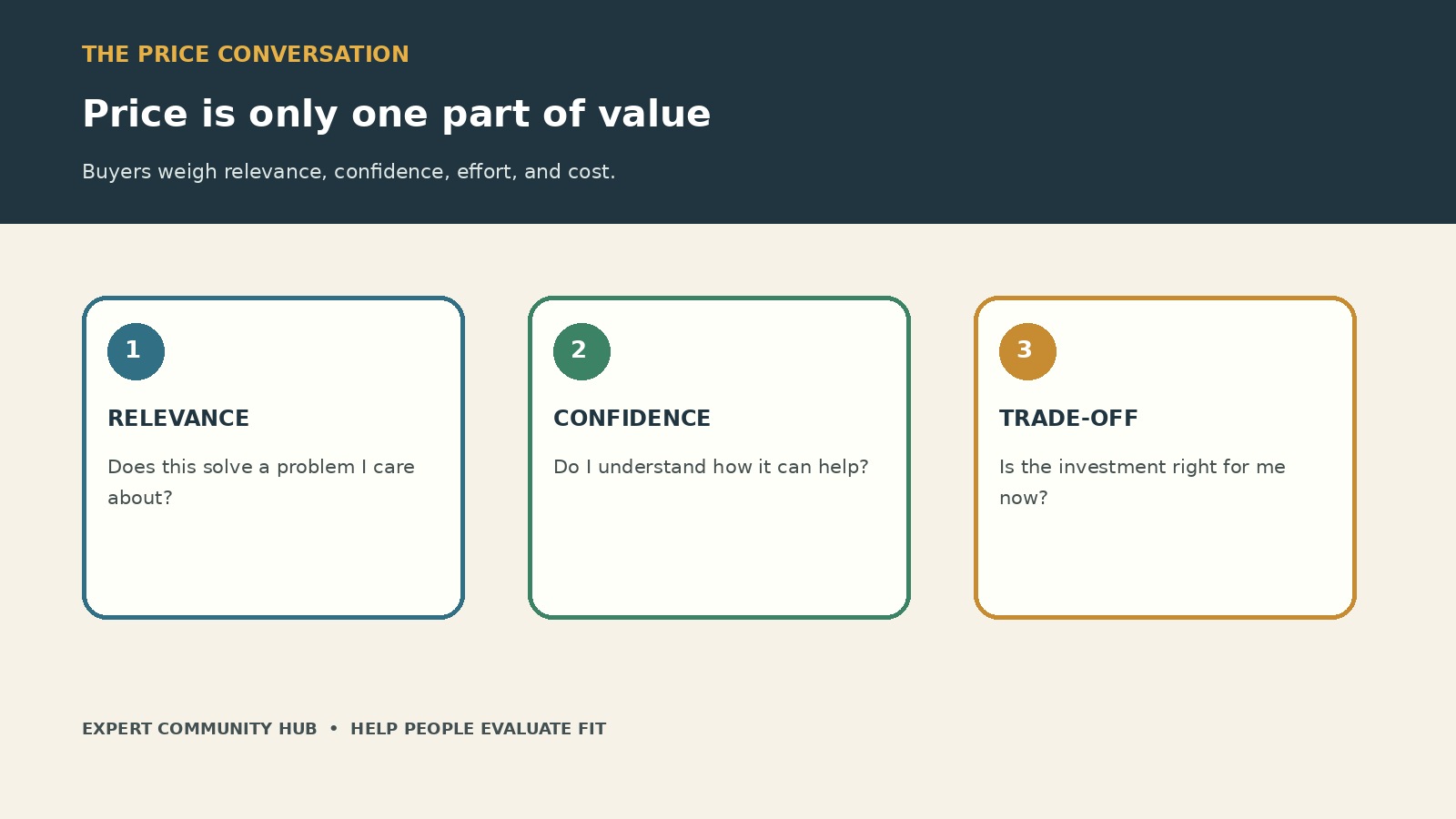
These situations require different responses. Better explanations can address confusion, but they cannot make every offer affordable or appropriate for every person.
The VALUE Framework
Use this framework to make your offer easier to understand and assess.
V — Voice the problem clearly
Describe the specific problem your service is designed to address.
Instead of “I help you transform your business,” you might say, “I help independent coaches create a more consistent process for managing enquiries and following up.”
A specific problem helps the prospect decide whether the offer is relevant.
A — Articulate the intended outcome
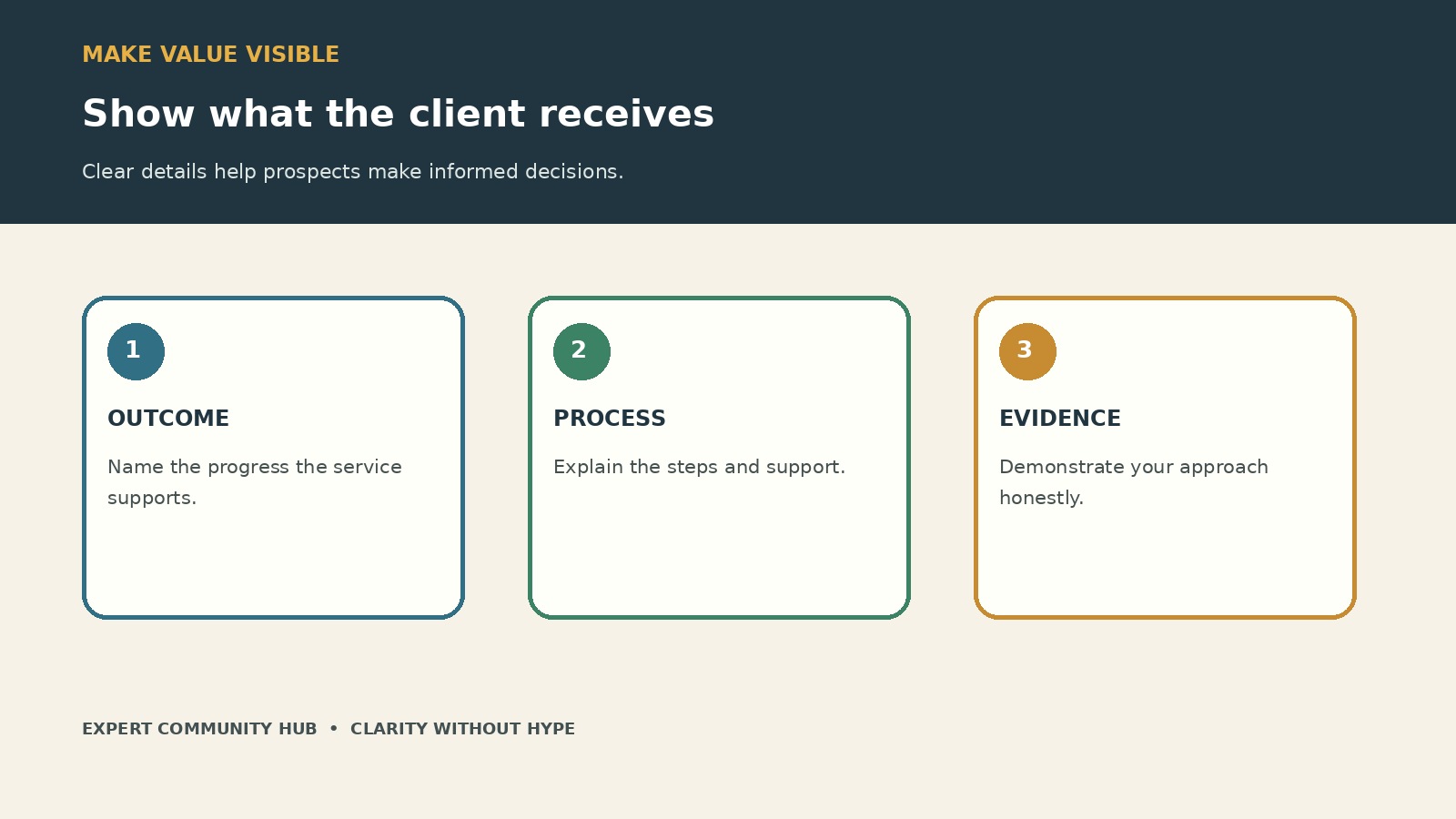
Explain what progress the service is designed to support.
Be concrete and realistic. You may help a client develop a clear offer, build a repeatable workflow, or practise a skill. Avoid implying that buying the service guarantees revenue, clients, or any result outside your control.
L — Lay out the process
Show what happens after someone joins or hires you.
Explain the steps, deliverables, support, timeline, and responsibilities. State what is included—and what is not.
A transparent process makes the offer easier to evaluate.
U — Use credible evidence
Demonstrate how you work. Share a relevant example, a sample deliverable, your method, or a genuine case study with appropriate context and permission.
Evidence should help people assess your approach. Do not fabricate testimonials or present exceptional results as typical.
E — Explain the investment honestly
State the price and any payment terms clearly. Help prospects understand the scope of the service and decide whether it is appropriate for their budget and priorities.
Do not hide costs or use artificial urgency. A well-informed “not now” is better than a pressured purchase that is not right for the person.
What to say when someone says, “It's too expensive”
You do not need to argue, defend yourself, or immediately offer a discount.
Try a calm response:
“Thanks for being open about that. When you say it's too expensive, is it mainly that the investment doesn't fit your budget right now, or that you're still unsure whether the offer is the right fit for what you need?”
Then listen.
If the issue is budget, respect it. You can explain any genuinely available lower-cost option, suggest a free resource, or leave the door open for a future conversation—without pressuring the person.
If the issue is uncertainty, answer their questions. Explain the scope, process, and realistic expectations. Give them the information they need to make their own decision.
If the offer is not a fit, acknowledge that. Not every prospect should become a client.
Make your offer easier to evaluate
Before adding bonuses or changing your price, review the information a potential client sees.
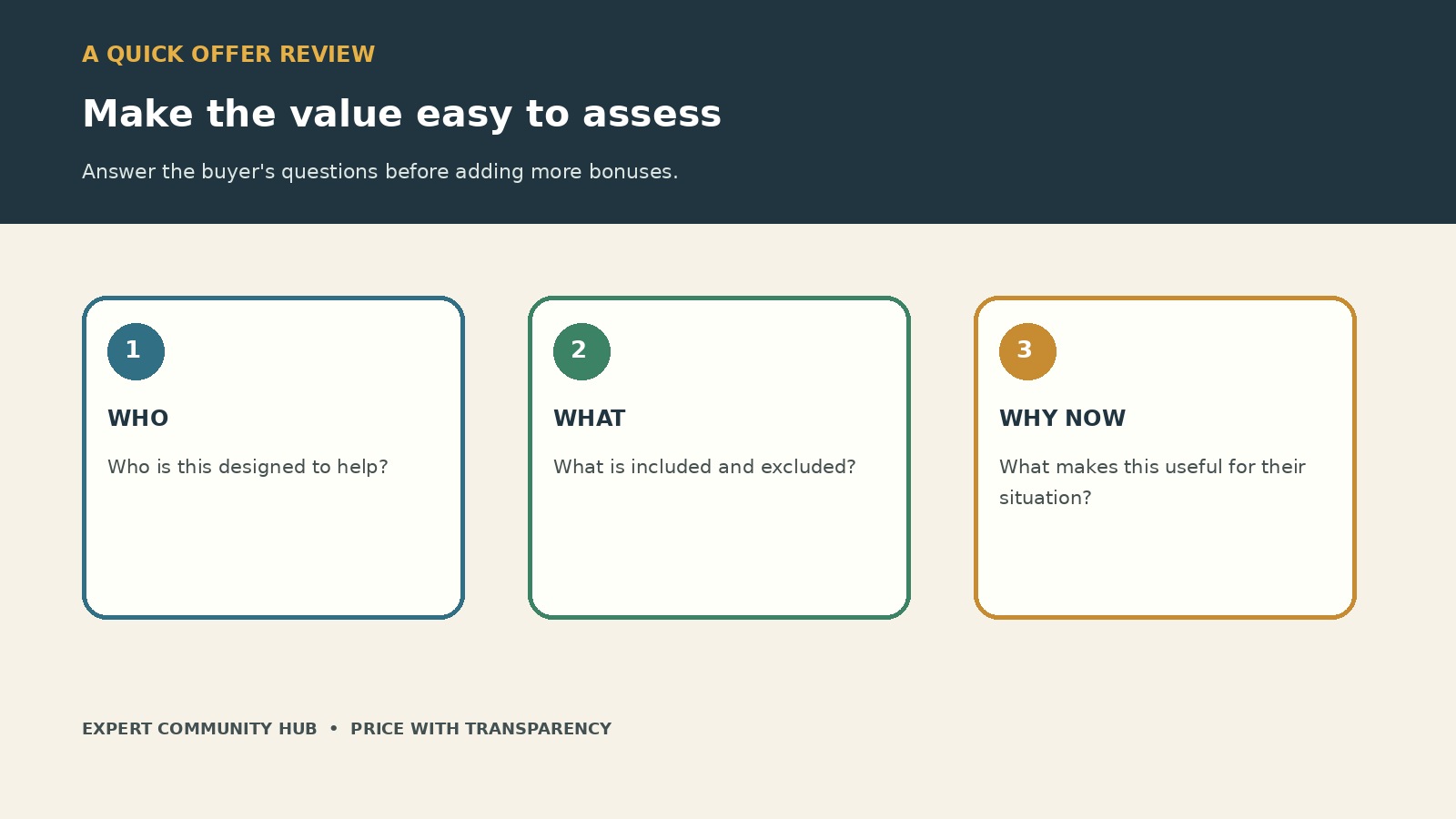
Who is it for? Name the audience and the situation the service is designed to address.
What does it help with? Describe the problem and intended progress in plain language.
What is included? List the main deliverables, support, format, and timeline.
How does it work? Explain the process and what the client needs to contribute.
What does it cost? Present the investment and payment terms transparently.
Who may not be a fit? State relevant limitations or prerequisites when appropriate.
This clarity helps prospects compare your offer fairly. It also helps you avoid spending time persuading people who need a different solution.
Your 20-minute value clarity exercise
Choose one offer you currently sell or plan to launch.
Minutes 1–5: Write down the main problem the offer addresses in the words your audience might use.
Minutes 6–10: Describe one realistic improvement the service is designed to support.
Minutes 11–15: List the process, deliverables, support, and responsibilities involved.
Minutes 16–20: Rewrite the first paragraph of your offer page so a suitable prospect can understand who it is for, what it helps with, and what happens next.
Ask a person unfamiliar with your offer to read it. Can they explain what you do and who might benefit? If not, simplify the message before adding more material.
When should you change your price?
Sometimes you should.
If suitable prospects consistently find the price out of line with the scope, if delivery costs make the offer unsustainable, or if feedback reveals a genuine mismatch between what is included and what the audience needs, review your pricing and structure.
You might change the scope, create a smaller entry-level service, adjust payment options, or serve a different audience. Make these decisions using evidence—not only the discomfort of hearing “too expensive.”
Your price should reflect your costs, expertise, delivery model, market context, and the value of the service. Clear communication is important, but it cannot rescue an offer that is poorly designed or unsuitable for the intended audience.
Your turn
When someone says your offer is too expensive, what do you usually do first: discount the price, explain the value, or ask a question to understand their concern?
Share your experience. Your answer may help another expert handle pricing conversations with more confidence and respect.
Your next step
If you are a coach, consultant, or knowledge-based professional, Expert Community Hub can help you explore how to clarify your offer, communicate its value, and build a more structured approach to client acquisition.
Before lowering your price, make sure the right people can understand what they are paying for—and can decide freely whether it fits their needs.
Written for coaches, consultants, and knowledge-based entrepreneurs by Expert Community Hub.