Posting on every platform will not help if each channel tells a different story. Learn how to create one clear core message that connects your content, brand, offer, and client-acquisition efforts.
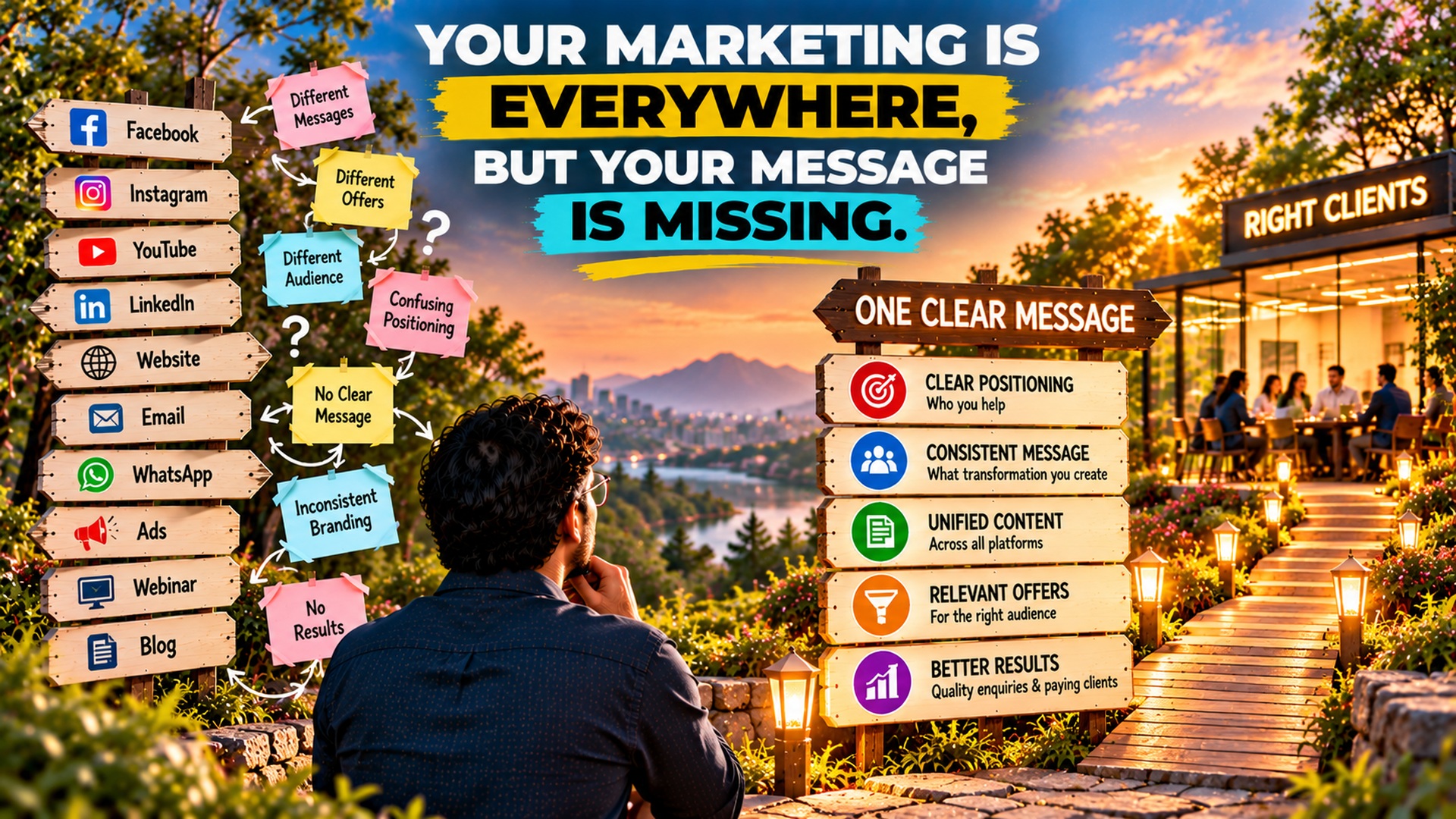
You are on Instagram. You post on Facebook. You have a website, a YouTube channel, a WhatsApp community, and maybe a newsletter.
You are showing up.
But ask a new visitor what you actually help people achieve, and they may struggle to answer.
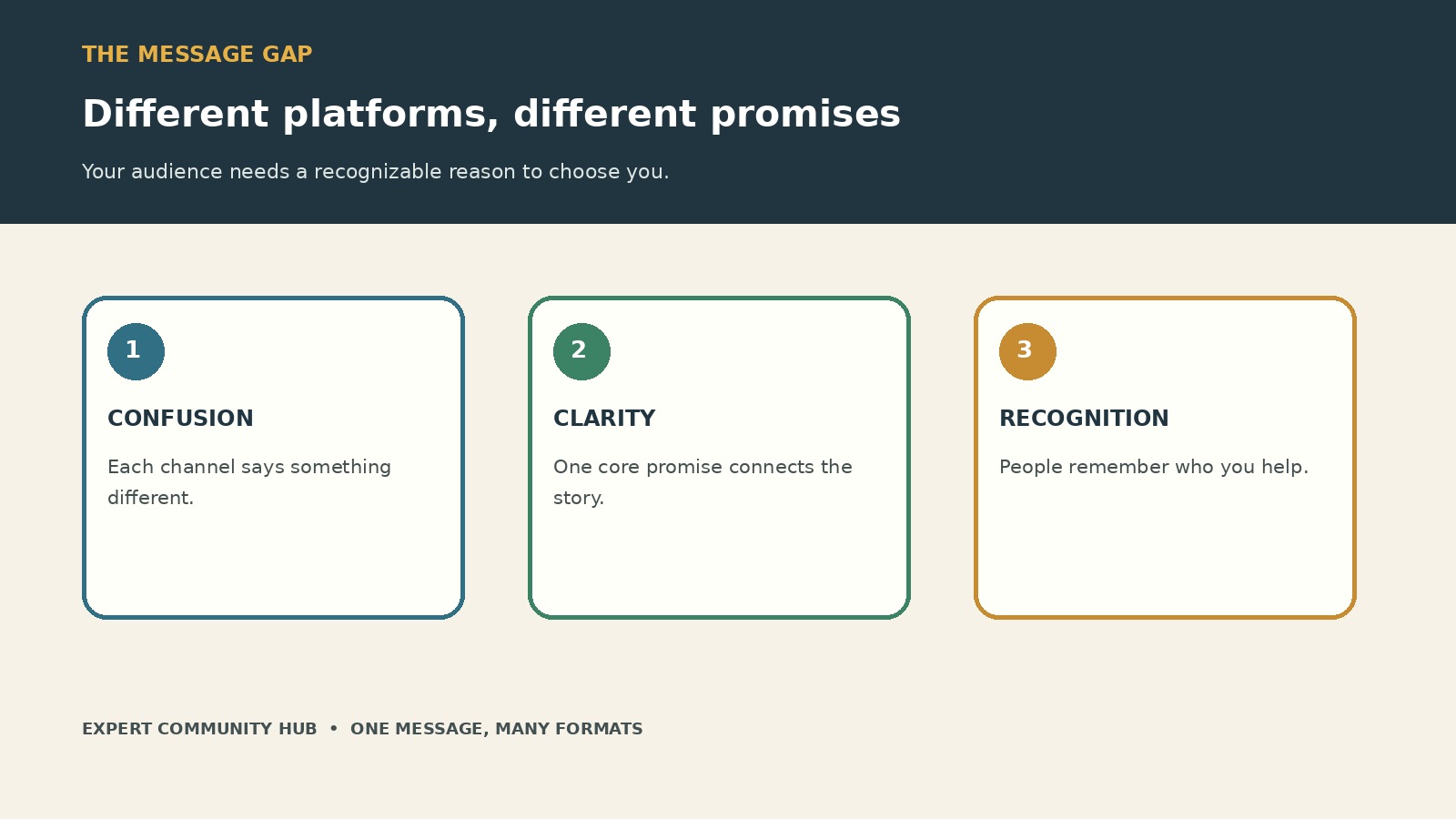
Your Instagram talks about mindset. Your website lists digital marketing services. Your videos cover AI tools. Your offer page promises business growth. Each piece may be useful, yet the overall picture feels disconnected.
The problem may not be that you need another platform.
You may need one clear message that connects everything you already do.
A recognizable message helps people understand who you help, what problem you address, and why your work is relevant to them. Your content can take many forms, but the underlying story should be consistent.
The hidden cost of scattered marketing
When you are building a business, it is tempting to follow every opportunity.
A trending topic gets attention, so you create content about it. Someone suggests a new platform, so you open an account. You add a new service because a potential customer asked about it. Soon, your marketing looks busy—but it does not build a clear picture of your expertise.
Potential clients have to connect the dots themselves.
They may enjoy a video without realizing you offer a service. They may visit your website and see a different promise from the one they heard on social media. They may not know which audience you serve best or what problem to contact you about.
That confusion adds effort to the buying decision.
Consistency does not mean repeating the same sentence everywhere. It means giving people a recognizable reason to remember you, even when the format and topic change.
Three signs your message is getting lost
1. Your audience cannot describe what you do
If your bio, website, and content all emphasize different things, a visitor may leave without understanding your core expertise.
You can have many skills. But your marketing needs a clear starting point.
2. Every platform attracts a different kind of audience
Experimentation is normal, and different platforms may reach different people. But if your topics have no connection to the problem your business solves, your audience may grow without becoming more relevant to your offer.
Review what each channel contributes instead of trying to be everywhere.
3. Your offers feel disconnected from your content
If you teach one subject but sell an unrelated service without explaining the connection, people may not understand why the offer is the logical next step.
Build a visible bridge between the problems you discuss and the deeper help you provide.
The ONE Message Framework
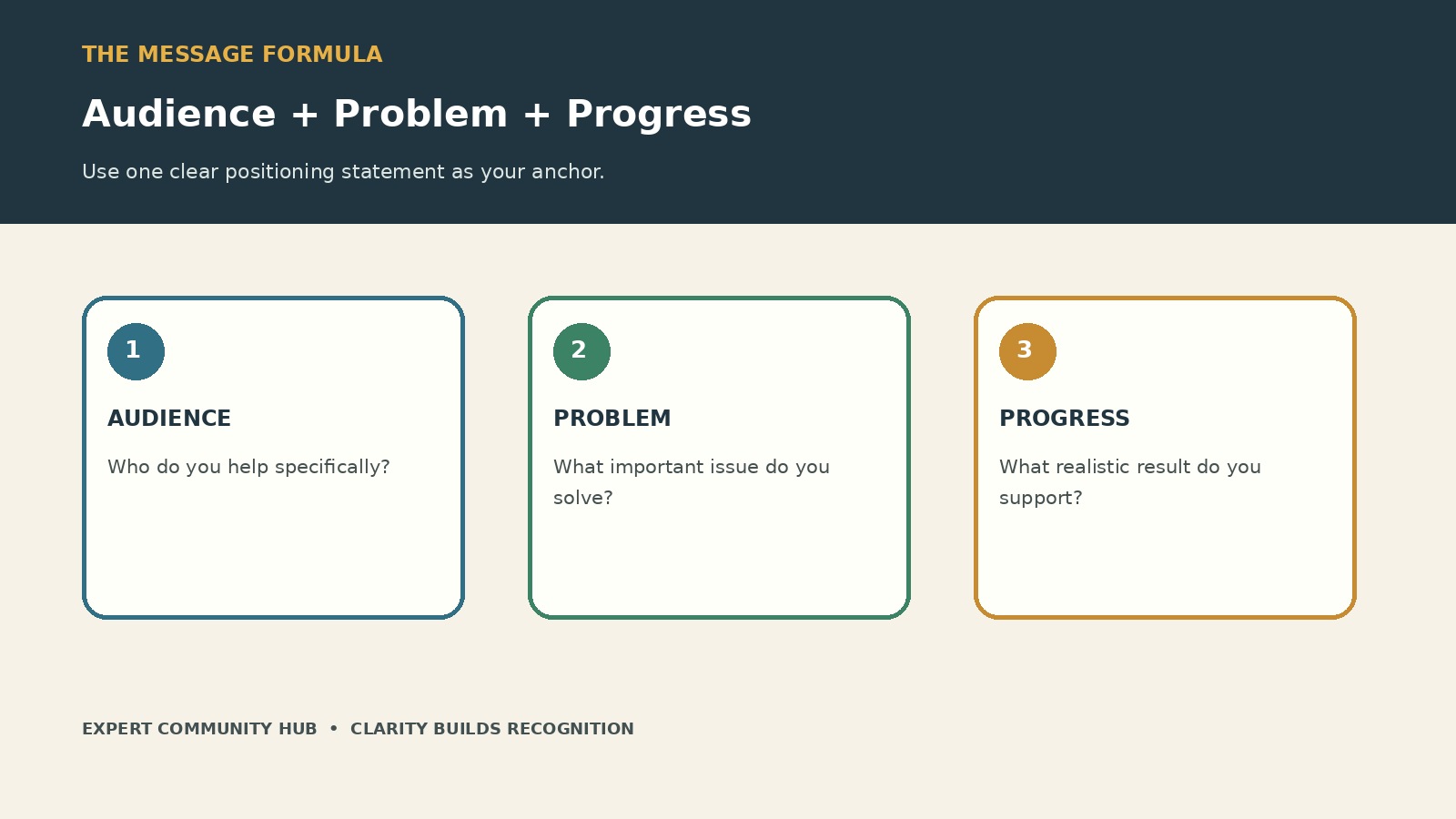
Use this simple formula to create a core positioning statement:
I help [specific audience] solve [important problem] so they can work toward [realistic progress].
For example:
“I help coaches and consultants build a clearer client-acquisition process so they can manage enquiries and communicate their offers more consistently.”
This is a starting point, not a slogan you must use word for word everywhere. Adjust the language for your audience and make sure it accurately reflects what you do.
O — Own a clear audience
Be specific enough that the right person can recognize themselves.
“Everyone who wants success” is too broad to guide your content. “Independent coaches who struggle to turn enquiries into client conversations” gives you a more useful focus.
You can serve other audiences too. Start your public message with the group you are best equipped to help.
N — Name the problem
Choose a problem your audience recognizes and cares about.
Avoid relying only on broad terms such as growth, transformation, freedom, or success. Explain the real situation behind the words.
For example, instead of saying “I help you grow,” describe how you help people clarify their offer, improve follow-up, or create a repeatable marketing workflow.
E — Explain the progress
Describe what your service is designed to help people do.
Use realistic language. Focus on the skills, systems, decisions, or improvements your work supports. Avoid promising outcomes that depend on factors outside your control.
One message, adapted to different platforms
Your message should remain recognizable, but your content does not need to be identical everywhere.
On your website: Explain who you help, the problem you solve, your approach, and how someone can explore your services.
On Instagram: Use short examples, reels, stories, and carousels to highlight specific problems and lessons.
On YouTube: Demonstrate your thinking with deeper explanations, tutorials, or case studies.
In your newsletter or community: Continue the conversation, answer questions, and help people apply your ideas.
On your offer page: Show how the paid service provides structured support for the problem your free content discusses.
Each platform has a different job. The core message connects those jobs into one coherent experience.
Build a message map before creating more content
Create a simple one-page document with five elements:
- Audience: Who are you primarily trying to help?
- Problem: What important issue do they want to address?
- Approach: How do you help them work on it?
- Evidence: What relevant examples, demonstrations, or experience can you share honestly?
- Next step: What can an interested person do to learn more?
Use this map when planning posts, writing your bio, updating your website, or preparing a webinar.
It does not restrict your creativity. It gives your creativity a recognizable direction.
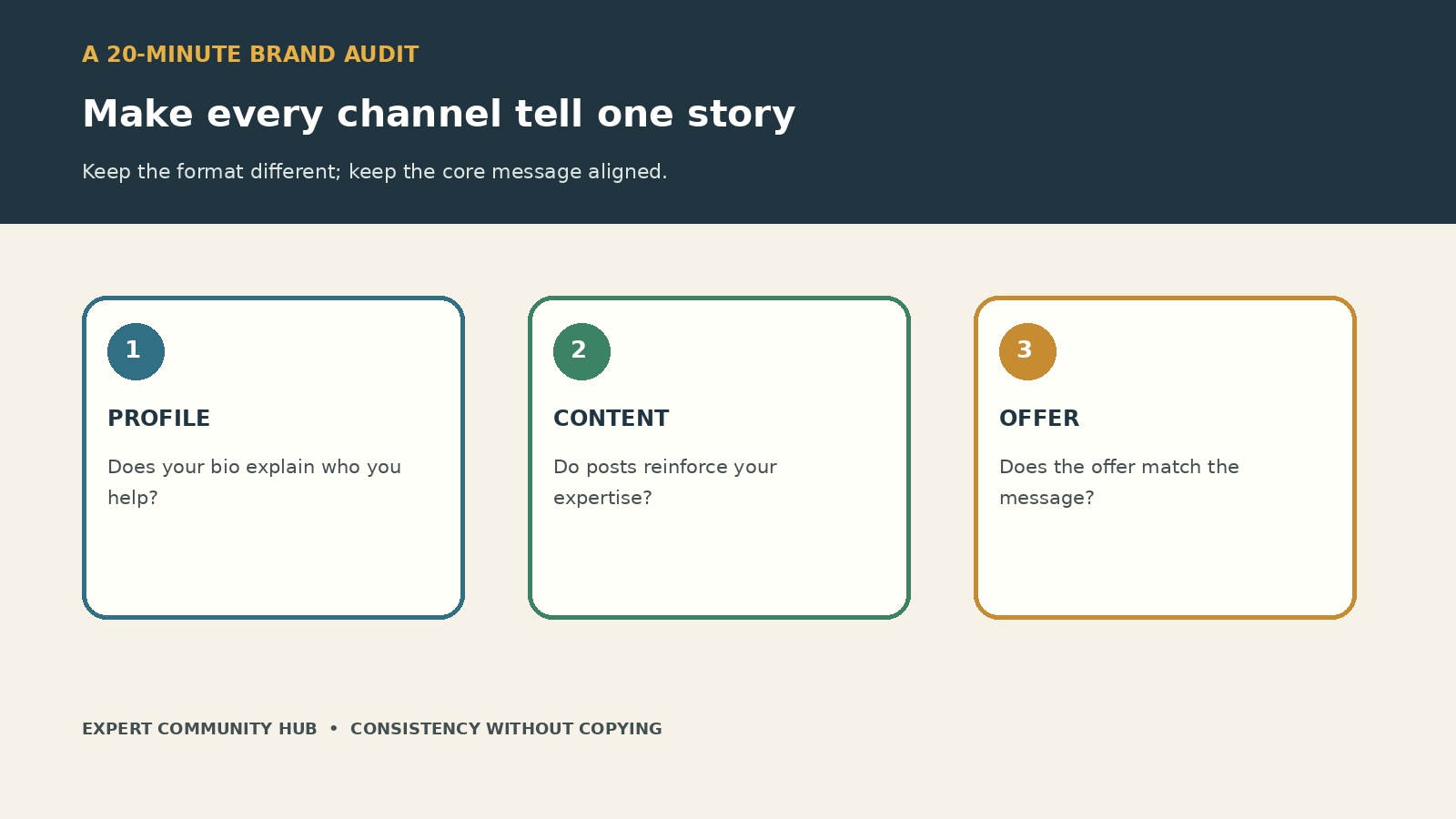
Your 20-minute message reset
You do not need to rebrand your entire business today.
Minutes 1–5: Write one sentence describing the audience you help, the problem you address, and the progress your work supports.
Minutes 6–10: Review your main social profile and website homepage. Can a new visitor find the same core message on both?
Minutes 11–15: Review your last five posts. Identify which ones reinforce your expertise and which ones feel unrelated to your current business direction.
Minutes 16–20: Choose one inconsistency to fix first—your bio, homepage headline, offer description, or content themes.
Keep what is working. Change only what makes your message harder to understand.
What if you genuinely have multiple services?
You do not have to abandon every service or interest.
Organize your work around a clear central theme, then explain how each offer serves a particular need within that theme. If two services address entirely different audiences and problems, separate messaging may be appropriate.
The objective is not artificial simplicity. It is to make each offer understandable to the people it is designed for.
Your turn
If someone discovered your business today, could they explain in one sentence who you help and what you help them do?
If not, what part of your message needs the most clarity: your audience, the problem, your offer, or the next step?
Share your thoughts in the comments. Your answer may help another expert simplify their marketing.
Your next step
If you are a coach, consultant, or knowledge-based professional, Expert Community Hub can help you explore how to communicate your expertise, clarify your offer, and build a more structured approach to client acquisition.
Before adding another channel, strengthen the message that connects the channels you already use. One clear story, adapted thoughtfully, is easier for the right people to recognize and remember.
Written for coaches, consultants, and knowledge-based entrepreneurs by Expert Community Hub.