Views and likes can feel rewarding, but clients need more than attention before they trust an expert. Learn a practical way to build credibility through useful content, consistency, transparency, and relevant next steps.
Your post gets hundreds of likes. People share it. Your follower count rises. But when you offer your service, the enquiries barely move.
It is easy to assume you need more reach.
More reels. More posts. Better hooks. A stronger posting schedule.
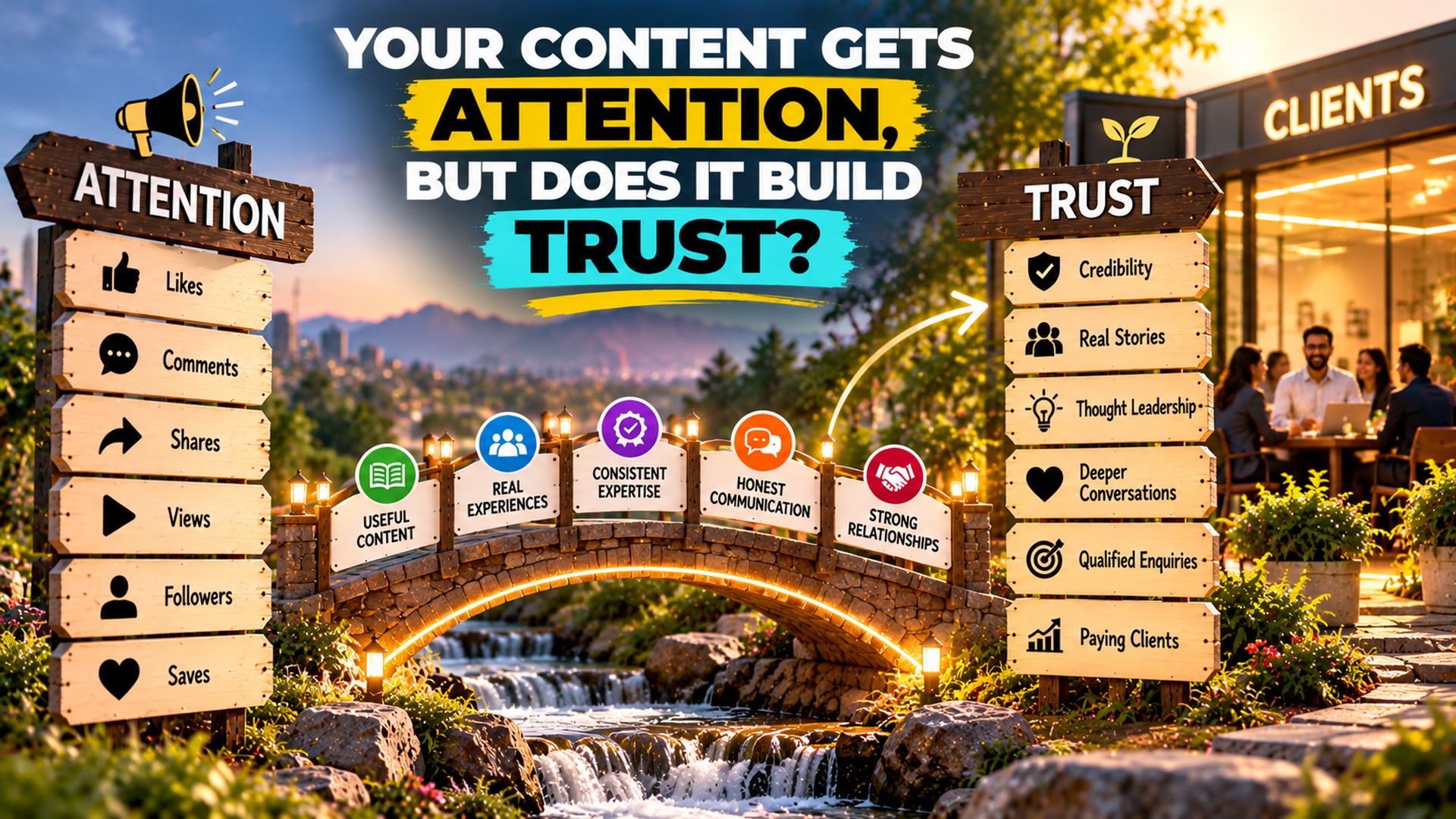
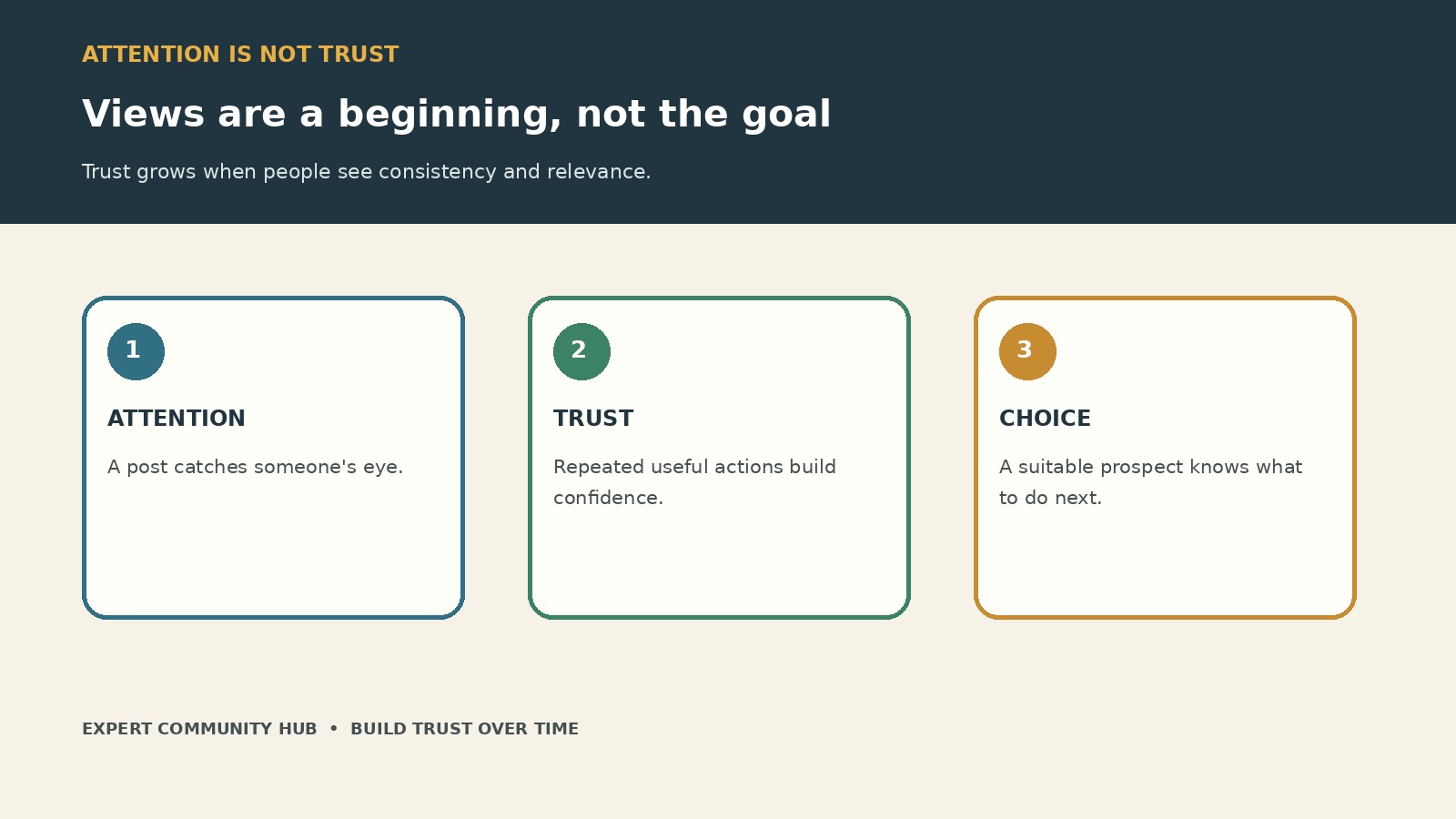
But attention and trust are different things.
A person can enjoy your content without believing you are the right expert to help them. They can agree with your advice without understanding your process. They can follow you for months and still have no idea what working with you would look like.
Attention makes people notice you. Trust helps them feel confident enough to consider you.
If your content attracts views but does not create meaningful conversations, it may be time to examine what your audience learns about you—not just how many people see you.
The hidden gap between being seen and being trusted
Think about the experts you trust.
You probably do not trust them because one post went viral. You trust them because their ideas make sense, their advice feels relevant, and their actions over time match what they say.
You begin to understand how they think. You see how they approach problems. You learn where their expertise is useful—and where it has limits.
Your potential clients need similar signals.
A viral post can introduce you to someone. But it rarely gives them the full picture they need to decide whether your service fits their situation.
If your content is designed only to attract attention, you may end up creating an audience that enjoys your ideas but does not understand your value.
Three reasons attention may not turn into trust
1. Your content is memorable, but your expertise is unclear
A clever quote or entertaining video can get engagement. But if every post covers a different subject, people may struggle to understand what you are known for.
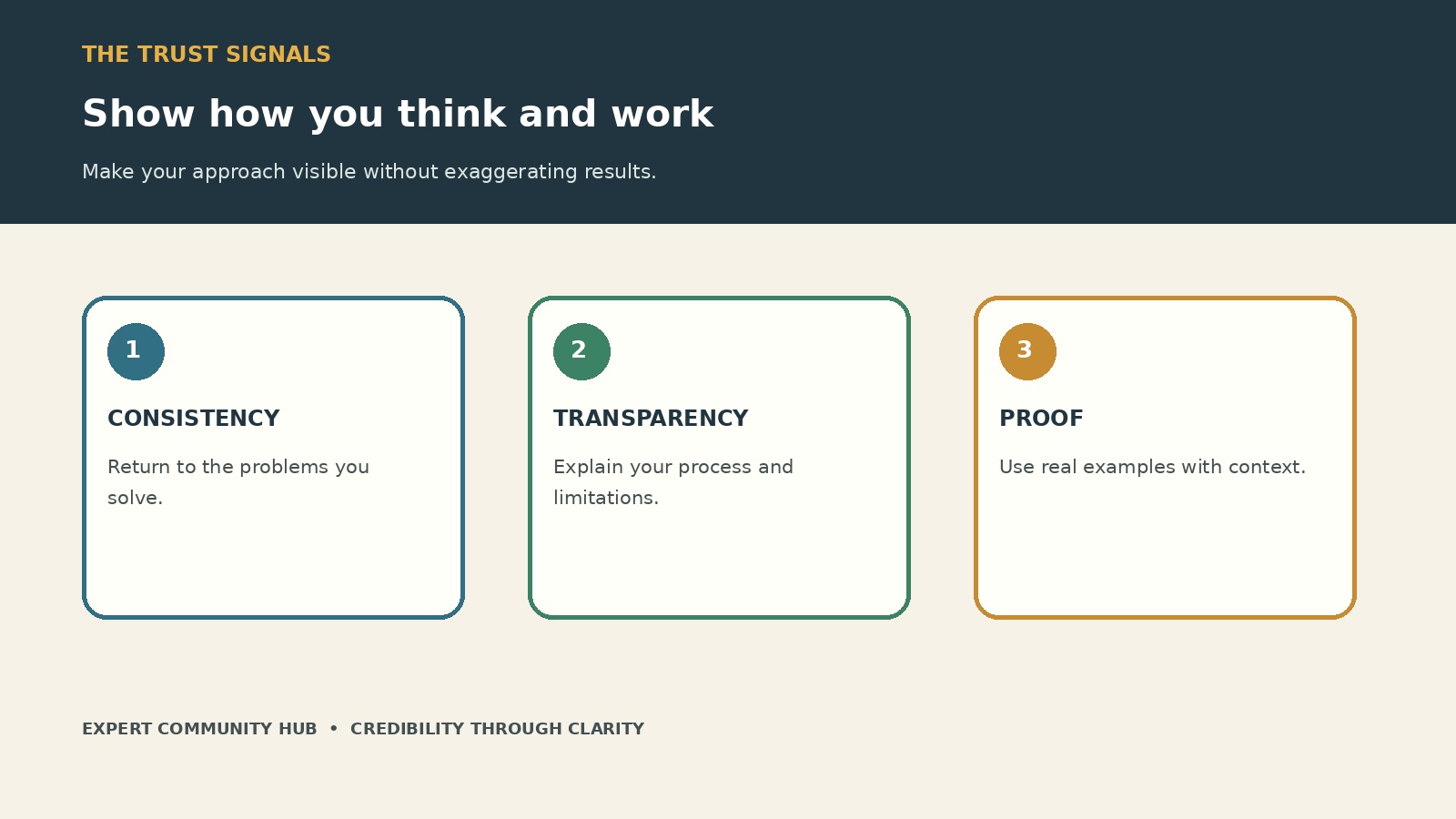
You do not need to repeat the same message word for word. Return consistently to the problems you help solve, using different examples, stories, and practical lessons.
2. You make claims without showing your process
Statements like “I help businesses grow” or “I can transform your life” may sound appealing, but they do not tell readers how you work.
Show your thinking. Explain the steps you take, demonstrate a method, or walk through an example. Let people evaluate your approach rather than asking them to accept a claim on faith.
3. Your content hides the person behind the advice
Trust is not built by pretending to be perfect. It grows when your communication is honest and consistent.
Share relevant lessons from your experience. Explain what did not work and what you learned, without exaggerating or turning every personal story into a sales pitch. Protect clients' privacy and obtain permission before sharing their stories.
The TRUST Framework
Use this five-part framework to make your content more credible and useful.
T — Teach something genuinely useful
Help the reader understand a problem or take a practical step. Do not hold back the central idea just to force a purchase.
Useful teaching demonstrates how you think. It also helps readers decide whether your approach suits them.
R — Return to your core expertise
People need repeated exposure to understand what you do. Choose a small number of themes closely connected to your audience's problems and revisit them from different angles.
Consistency is not copying yourself. It is helping people build a clearer picture of your expertise over time.
U — Use real examples
Show how a principle works in practice. Use demonstrations, sample workflows, anonymized scenarios, or genuine case studies with permission and accurate context.
Never invent results or imply that one person's outcome is guaranteed for everyone.
S — Speak with transparency
Explain your process, what is included, what the client needs to contribute, and what your service cannot guarantee.
Clear boundaries do not weaken your message. They help suitable people make informed decisions.
T — Tell people the next step
If a reader wants more help, make it easy to find a relevant resource, workshop, service page, or way to ask a question.
A clear invitation is not pressure. It simply gives interested people a path forward.
What this looks like in practice
Imagine you are a business coach helping independent experts improve client acquisition.
A reach-focused post might say:
“Three secrets to get more clients! Follow for more tips.”
It may attract attention, but it gives little indication of your process or the type of problem you help solve.
A trust-building post might explain why enquiries are being lost after the first conversation, show a simple follow-up tracker, explain how to adapt it, and note when the problem may actually be offer fit rather than follow-up.
The reader receives useful information. They also see how you diagnose a problem and how you think about solutions.
If you offer deeper support, you can then invite readers to explore it. The invitation makes sense because the content has already demonstrated relevant expertise.
Create a recognizable body of work
One post rarely tells the whole story. A useful content library lets people explore your ideas at their own pace.
Build around three types of content:
Teach: Explain a common problem, correct a misconception, or share a practical method.
Demonstrate: Show how you apply your method through a walkthrough, example, or thoughtful analysis.
Clarify: Explain who your service is for, how you work, what it includes, and what someone should consider before deciding.
Together, these help people understand your expertise, see it in action, and evaluate whether working with you makes sense.
You do not need to publish every format every day. Choose a rhythm you can maintain without sacrificing quality.
Your 15-minute trust audit
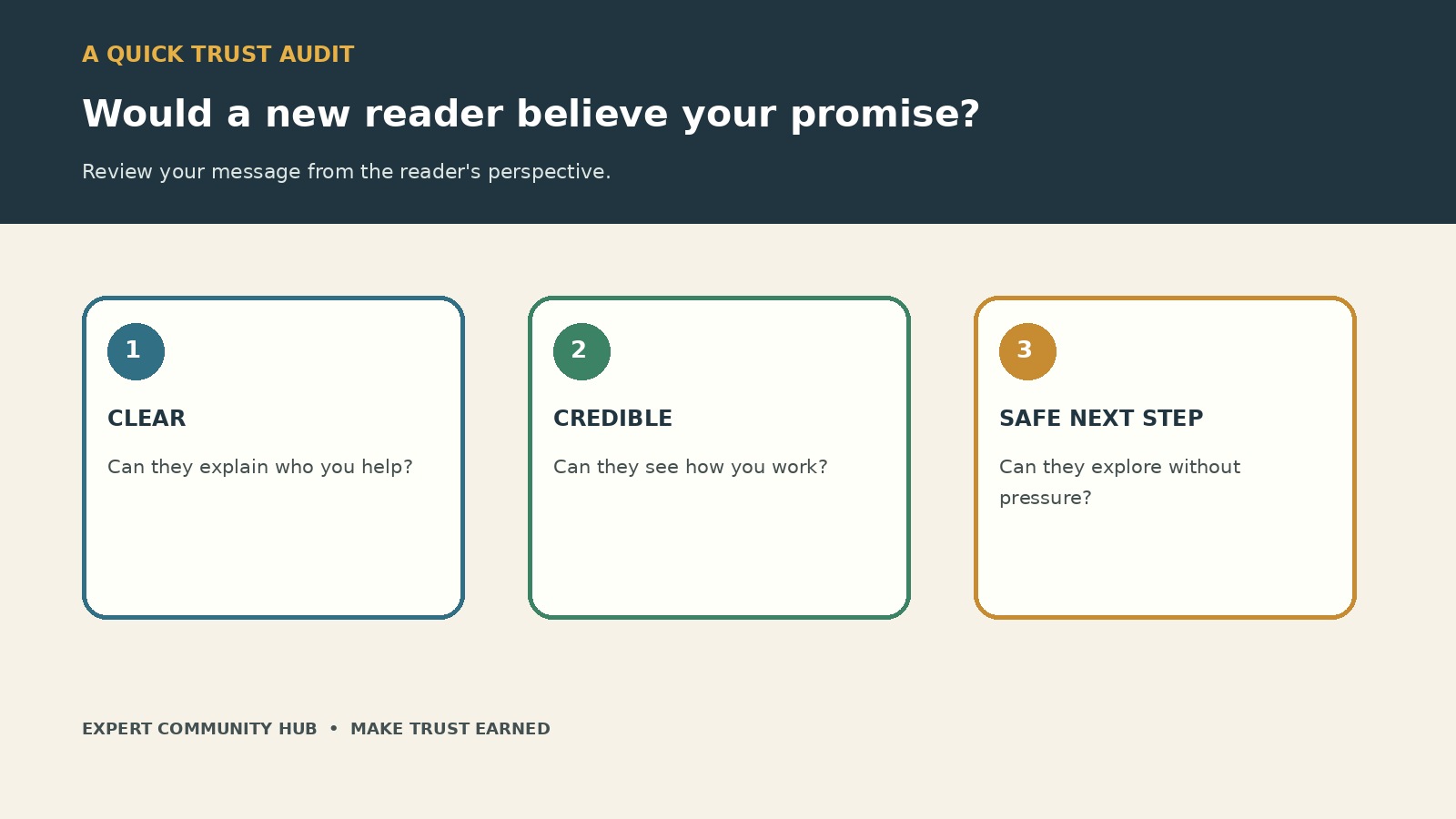
Open your last five posts and review them from the perspective of someone who has never met you.
Minutes 1–5: Identify the main problem or theme each post addresses. Is there a recognizable connection to your expertise?
Minutes 6–10: Look for evidence of how you think and work. Have you shown a process, a real example, or a useful explanation—or only made broad claims?
Minutes 11–15: Check your profile or website. Can a reader quickly understand who you help, what you offer, and how to take a next step?
Choose one gap and improve it this week. You do not need to delete everything or start again.
Measure more than likes
Likes and views can help you understand reach. They are not useless. But they do not fully measure trust or buying intent.
Also look for meaningful signals:
- People ask thoughtful questions related to your expertise.
- Readers return to your content or share it with someone facing the problem.
- Suitable prospects mention a specific article or lesson when they contact you.
- People visit your service page or register for a relevant workshop.
- Enquiries become more informed because prospects understand your approach.
These signals do not prove trust on their own, but they can help you understand whether your content is attracting the right people and helping them take useful next steps.
Your turn
When people consume your content, what helps them trust your expertise—your teaching, your examples, your consistency, or the way you communicate?
Share one thing you could do to make your content more credible and useful to the people you want to serve.
Your next step
If you are a coach, consultant, or knowledge-based professional, Expert Community Hub can help you explore how to communicate your expertise, clarify your offer, and build a more structured approach to client acquisition.
Do not chase attention at the expense of trust. Teach generously, show your thinking, communicate honestly, and make the next step clear for people who want deeper help.
Written for coaches, consultants, and knowledge-based entrepreneurs by Expert Community Hub.