More followers and engagement can feel like progress, but they do not guarantee revenue. Learn how to connect audience growth to a relevant offer, meaningful conversations, and a measurable path to clients.
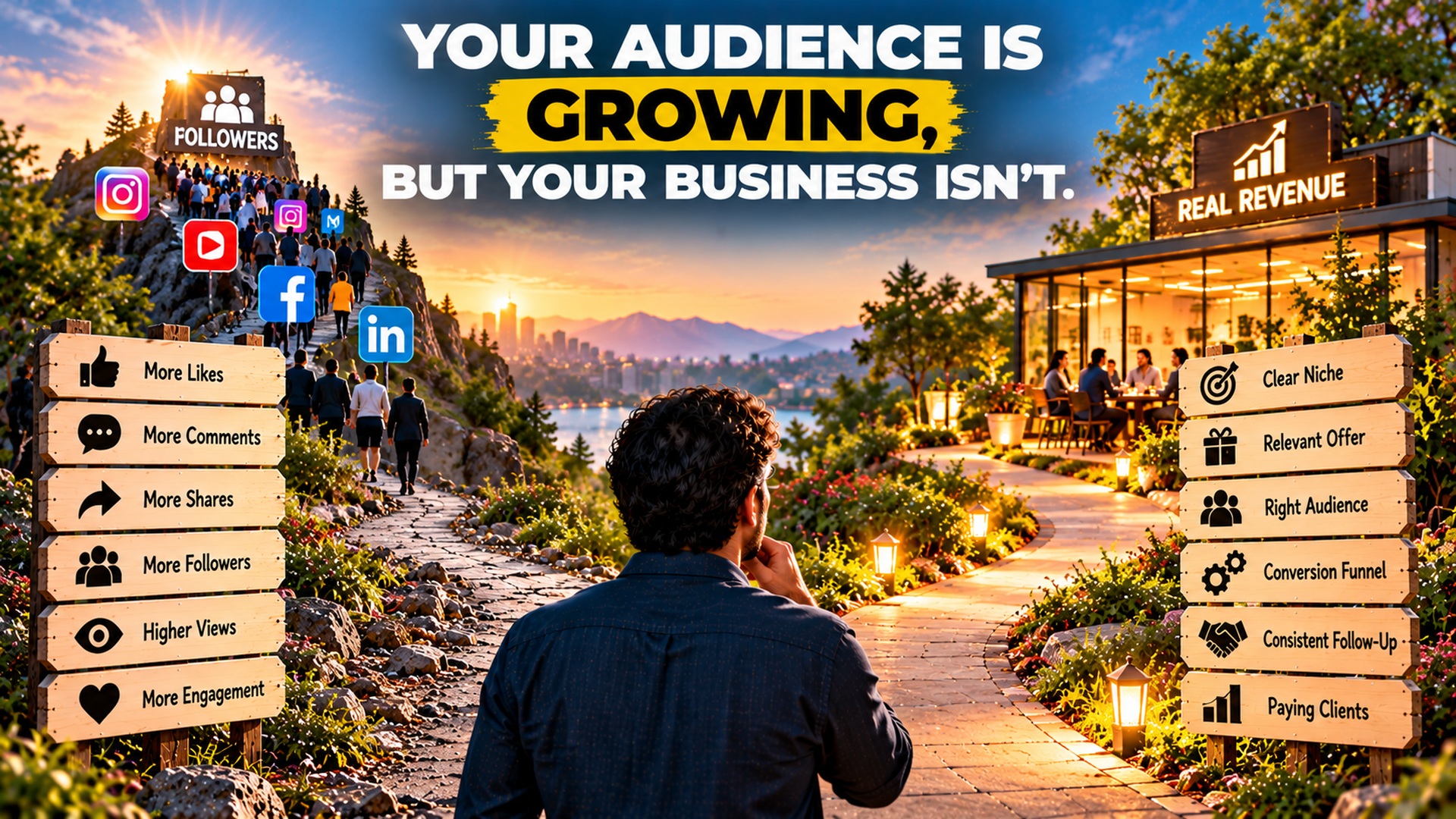
Your follower count is rising. Your posts get likes. People share your videos. Yet your revenue looks almost the same as it did months ago.
That gap can be discouraging.
You may decide you need to post more often, chase a viral reel, or grow your audience even faster.
But what if the missing piece is not reach?
What if your audience is growing without a clear path from attention to a paid solution?
An audience can create opportunities. A business system helps turn suitable opportunities into clients.
The goal is not to stop growing your audience. It is to connect that growth to a clear problem, a relevant offer, and a useful next step.
The vanity-metric trap
Follower counts and views are visible. They rise, fall, and give you an immediate sense of progress.
Revenue is less predictable. It depends on who is watching, what they need, whether your offer fits, how clearly you communicate it, and whether the buying process makes sense.
This is why a creator with a large audience may have few clients, while a specialist with a smaller but more relevant audience may build a sustainable service business.
Reach is not useless. It helps more people discover you. Engagement can show that a topic resonates. But neither metric alone tells you whether the right people are moving closer to working with you.
The important question is not only, “How many people saw this?”
It is also, “What useful next step did this attention make possible?”
Three reasons audience growth may not grow revenue
1. You attract attention from people who are unlikely to buy
A funny or broad post can reach many people who enjoy it but do not need your service.
That is not necessarily a bad post. It may serve awareness or community building. But if every post is designed for reach, your audience may not understand the problems you help solve.
Balance discovery content with practical teaching that speaks to your intended clients.
2. Your offer is hard to find or understand
People may follow you without knowing that you offer coaching, consulting, workshops, or a paid program.
Make it easy to understand who you help, what problem your offer addresses, what working with you involves, and how someone can learn more.
Do not expect every follower to infer your offer from your expertise.
3. Your content has no clear next step
A useful post may end with “Follow for more.” That can help build an audience, but it does not always help an interested person move forward.
Depending on the topic, the next step could be a relevant guide, a workshop, a service page, or an invitation to ask a question.
Not every post needs a sales pitch. Your overall content journey should simply make the next step visible.
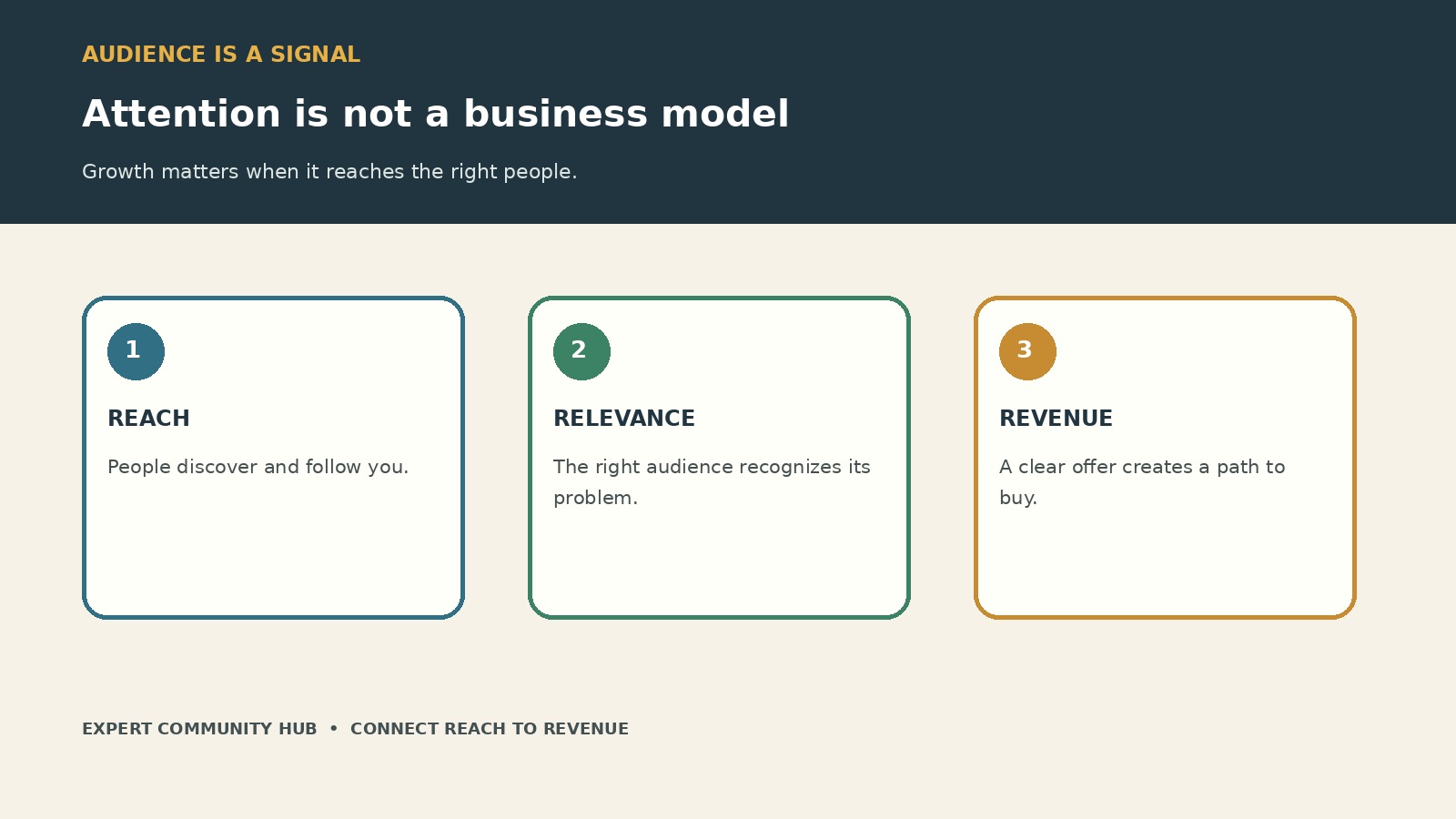
The RAR Framework: Reach, Relevance, Revenue
Use this framework to review whether your audience growth supports your business goals.
R — Reach the right people
Look beyond the total follower count. Ask whether the people discovering your content resemble the audience you are equipped to help.
Review the topics, platforms, and formats that bring relevant conversations—not just the highest view counts.
You do not need to reject broad content. Understand what role it plays and whether it connects to your core expertise.
A — Align attention with a real problem
Create content that helps your intended audience recognize a problem, understand why it matters, or take a practical step.
For example, if you help coaches improve client acquisition, a post about “three reasons enquiries go cold” may attract more relevant interest than a generic motivational quote.
The point is not that one topic always performs better. It is that relevance makes it easier for suitable readers to see why your expertise may matter to them.
R — Route interested people toward an offer
Explain how someone can take the next step if they want deeper help.
Your path might be:
Useful content → relevant resource → workshop or conversation → suitable offer.
This is not a funnel that every person must follow. People may enter at different points, take their time, or decide not to proceed. The path simply makes options clear.
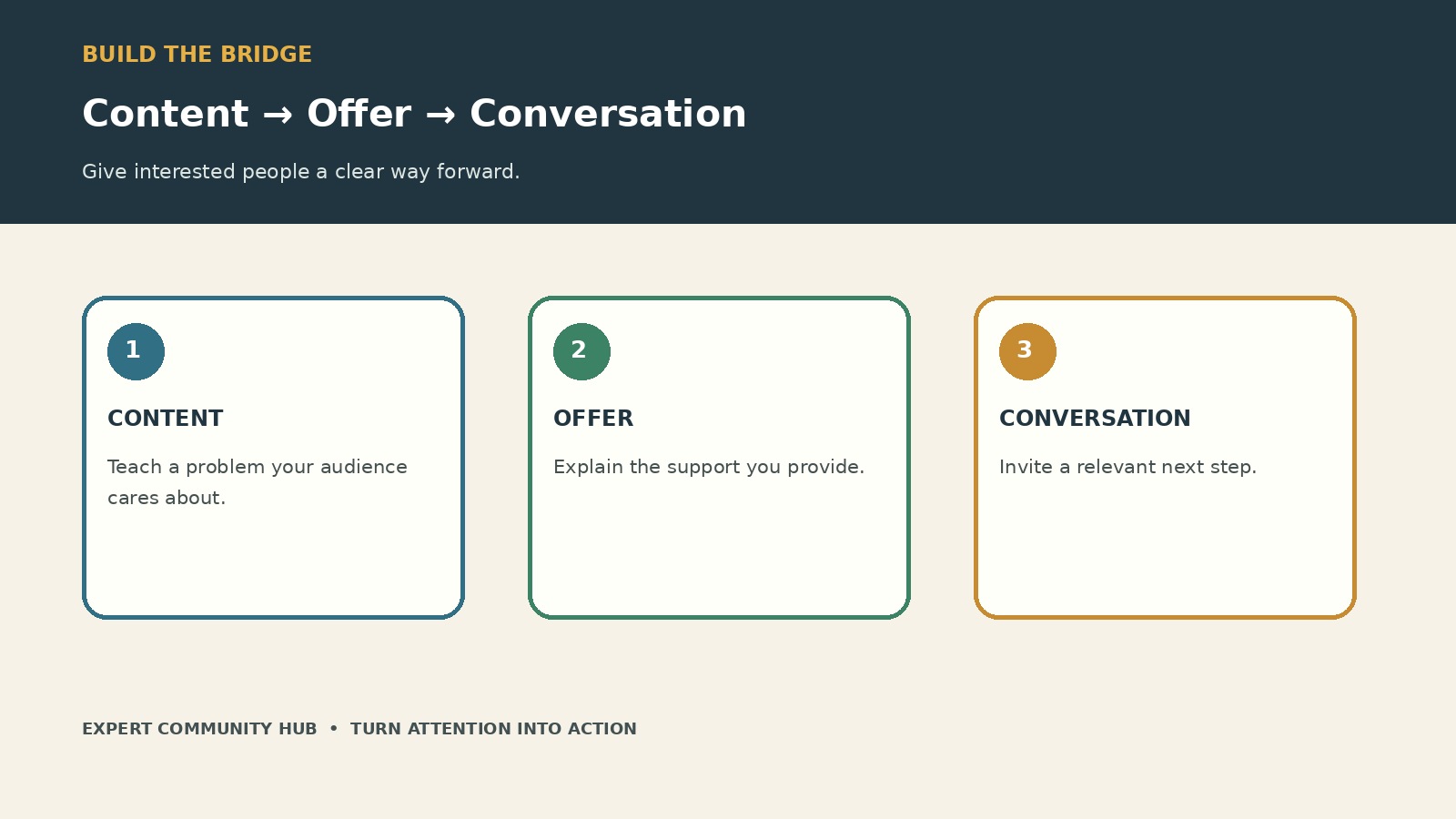
Build a simple content-to-client journey
Imagine you help independent coaches create a more consistent client-acquisition process.
The content: Share a practical post about why leads go cold after an initial enquiry.
The resource: Offer a follow-up checklist that helps readers review their current process.
The conversation: Invite people who want help applying the checklist to ask a question or attend a workshop.
The offer: Explain your service, its scope, its price, and who it is designed for.
Each step has a purpose. The content delivers value. The resource helps with implementation. The conversation helps establish fit. The offer provides a way to receive deeper support.
Some people will only read the post. Others may use the resource and never buy. That is normal. The objective is not to force conversion; it is to help interested, suitable people make informed choices.
Track the full journey—not just the first number
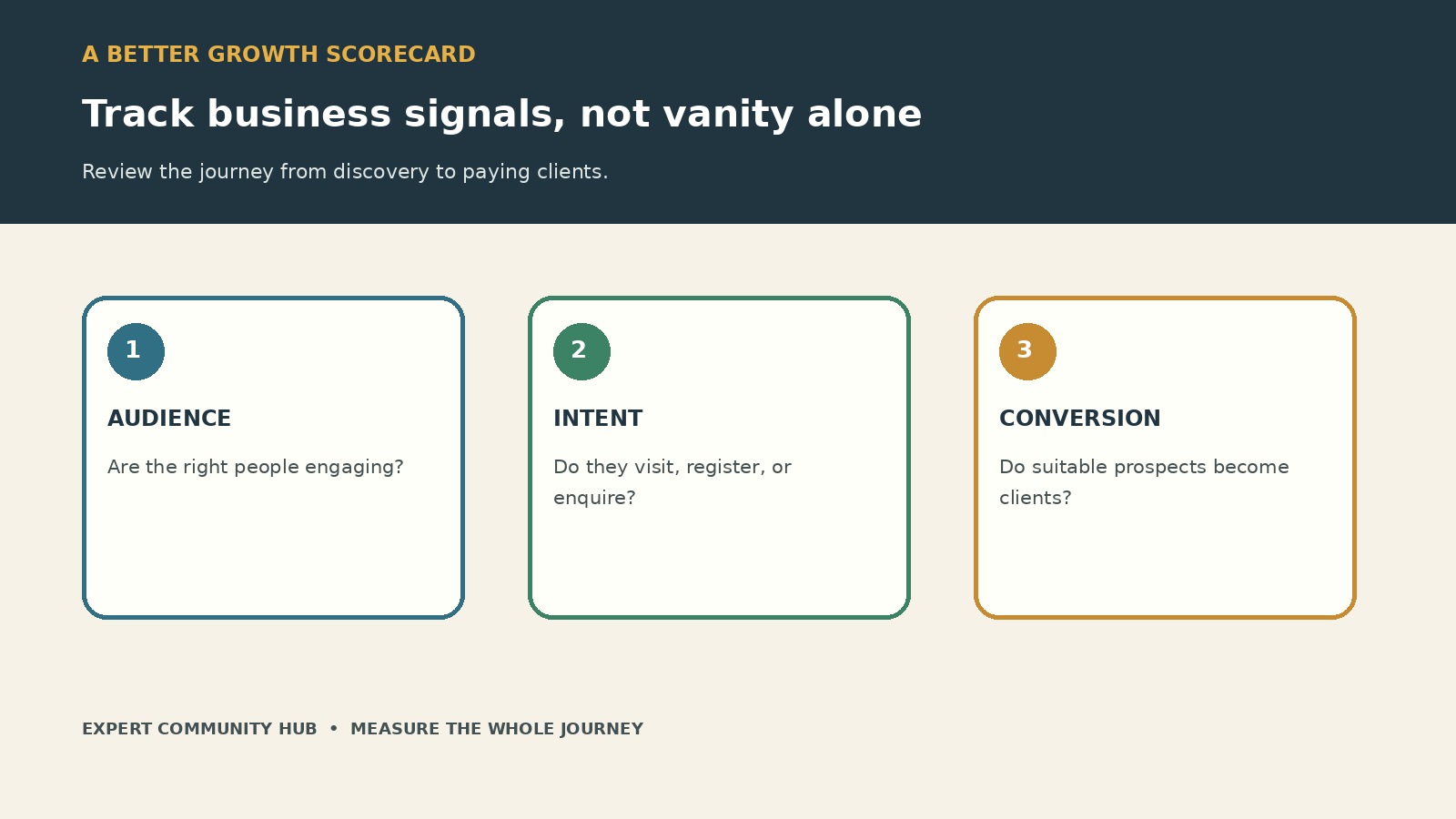
A useful growth scorecard can include a small set of measures:
| Stage | What to review |
|---|---|
| Discovery | Reach and new visitors |
| Relevance | Engagement from the intended audience |
| Intent | Resource downloads, registrations, service-page visits, enquiries |
| Conversion | Suitable prospects who become clients |
| Business result | Revenue, delivery capacity, and client satisfaction |
Use metrics that match your business model and track them consistently. Do not assume every view should become a lead or every lead should become a sale.
If reach is growing but relevant enquiries are not, examine audience relevance and your calls to action. If enquiries grow but sales do not, review offer fit, clarity, pricing, and the buying process. If sales improve but delivery becomes unsustainable, your next challenge may be capacity.
Each stage tells you something different.
Your 20-minute audience-to-business audit
Choose one platform that matters to your business.
Minutes 1–5: Review your last ten posts. Mark which ones attract attention and which ones address problems your ideal clients actually face.
Minutes 6–10: Check your profile or website. Can a new visitor quickly understand who you help, what you offer, and how to learn more?
Minutes 11–15: Choose one post that is relevant to your ideal client and add a natural next step, such as a useful resource or workshop.
Minutes 16–20: Write down the signals you will review over the next month: relevant enquiries, registrations, conversations, and conversions—not just follower growth.
Keep the exercise simple. The goal is to identify one gap you can improve, not rebuild your entire marketing system in an afternoon.
What if your business is growing more slowly than your audience?
Do not immediately conclude that your content is failing.
A long buying cycle, a high-consideration service, limited capacity, or seasonal demand can create a delay between attention and revenue. Your audience may also be at an early stage of getting to know your work.
Look at the full picture. Ask new clients how they discovered you. Notice which content leads to meaningful conversations. Review your offer and sales process. Use patterns over time rather than judging your business by one post or one week.
The purpose of measurement is to make better decisions—not to turn every piece of content into a direct sales instrument.
Your turn
Which number do you pay the most attention to today: followers, engagement, enquiries, or paying clients?
And what one change could help connect your audience growth more directly to your business goals?
Share your experience in the comments. Your insight may help another coach or consultant move beyond vanity metrics.
Your next step
If you are a coach, consultant, or knowledge-based professional, Expert Community Hub can help you explore how to clarify your offer, communicate your expertise, and build a more structured approach to client acquisition.
Keep growing your audience—but give that audience a clear reason and a simple way to take the next step when they are ready.
Written for coaches, consultants, and knowledge-based entrepreneurs by Expert Community Hub.