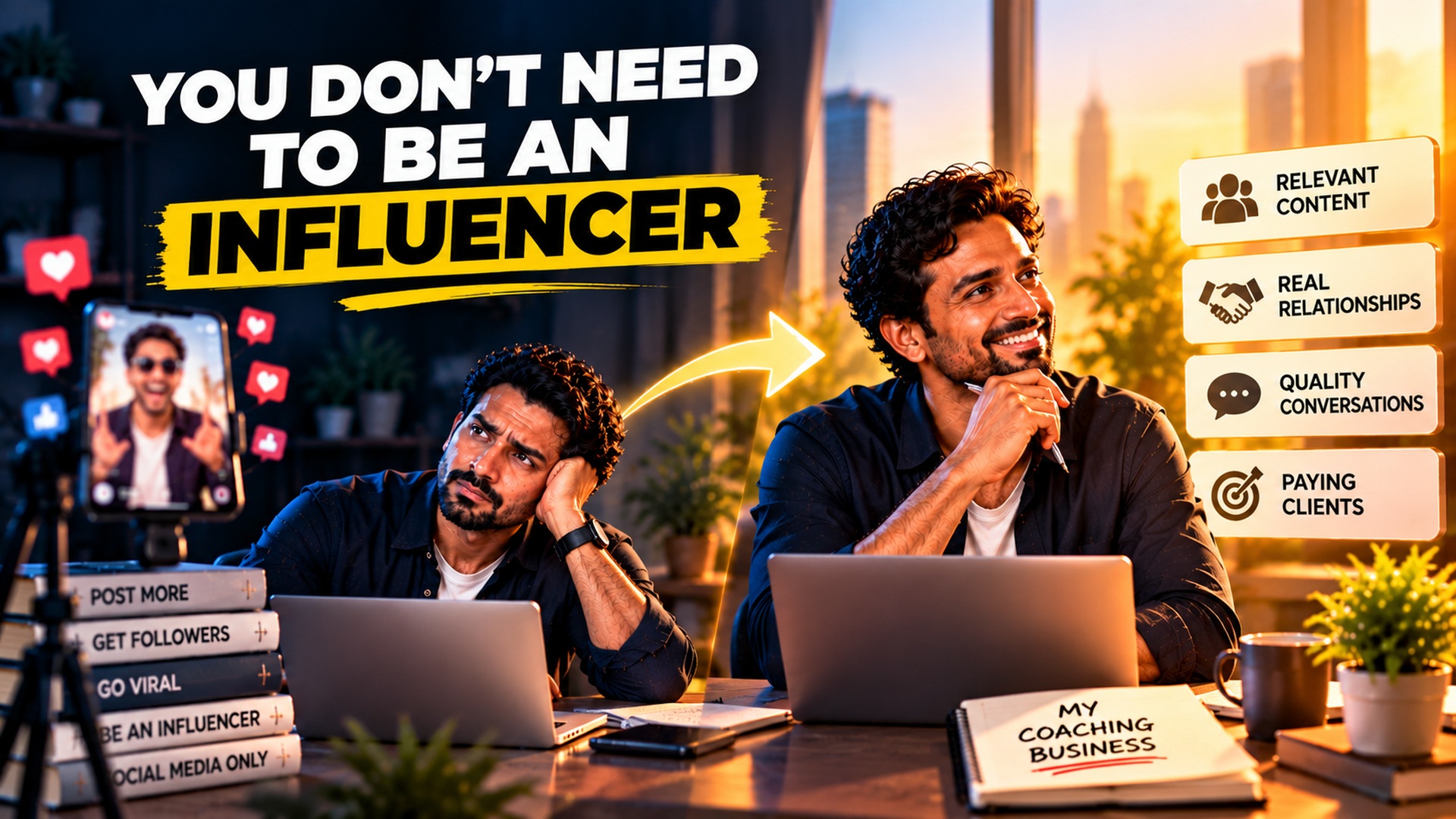
You don't need millions of views to find clients. Learn how relevant content, real relationships, and clear offers can help coaches build a business without chasing influencer status.
What if the reason you are not getting clients has less to do with your follower count—and more to do with what happens after someone discovers you?
You open social media and see creators with thousands of followers.
Their videos get shared. Their posts attract hundreds of comments. Their names seem to appear everywhere.
Then you look at your own profile.
You have expertise. You know you can help people. But your audience is smaller, your posts receive modest engagement, and client enquiries are inconsistent.
It is tempting to conclude that you need to become more popular before you can build a successful coaching or consulting business.
But that conclusion can send you in the wrong direction.
You do not need to become famous to become useful to the right people.
A large audience can help. But attention alone does not guarantee trust, qualified conversations, or paying clients.
The exhausting pressure to become an influencer
When you believe visibility means popularity, marketing can turn into a never-ending performance.
You start chasing trends that do not fit your personality. You publish content because a format is popular, not because it answers a real audience question. You watch follower counts and compare your early progress with someone else's established platform.
The work becomes exhausting because the target keeps moving.
One week, you think you need better videos. The next, you need more followers. Then you decide you need a personal brand makeover or a viral post.
Meanwhile, the basic questions may remain unanswered:
- Does the right audience understand what I help with?
- Can people see why my approach is useful?
- Is there a clear next step for someone who wants help?
- Do I follow up when someone expresses genuine interest?
You can spend months improving reach without fixing the path from attention to a client conversation.
The hidden truth: popularity and client acquisition are different jobs
An influencer often earns value from broad attention, entertainment, sponsorships, or a large audience. A coach or consultant usually needs to reach people with a specific problem and help them decide whether a service fits.
These models can overlap, but they are not identical.
Imagine two coaches.
Coach A publishes a viral motivational video. Thousands of people watch it, but few are looking for the coach's service.
Coach B publishes a practical explanation of a problem experienced by independent consultants. The post reaches fewer people, but several suitable readers ask questions and one requests a consultation.
The second post may create more direct business value despite receiving less attention.
This is not an argument against reach. It is a reminder to measure reach alongside relevance, trust, and action.
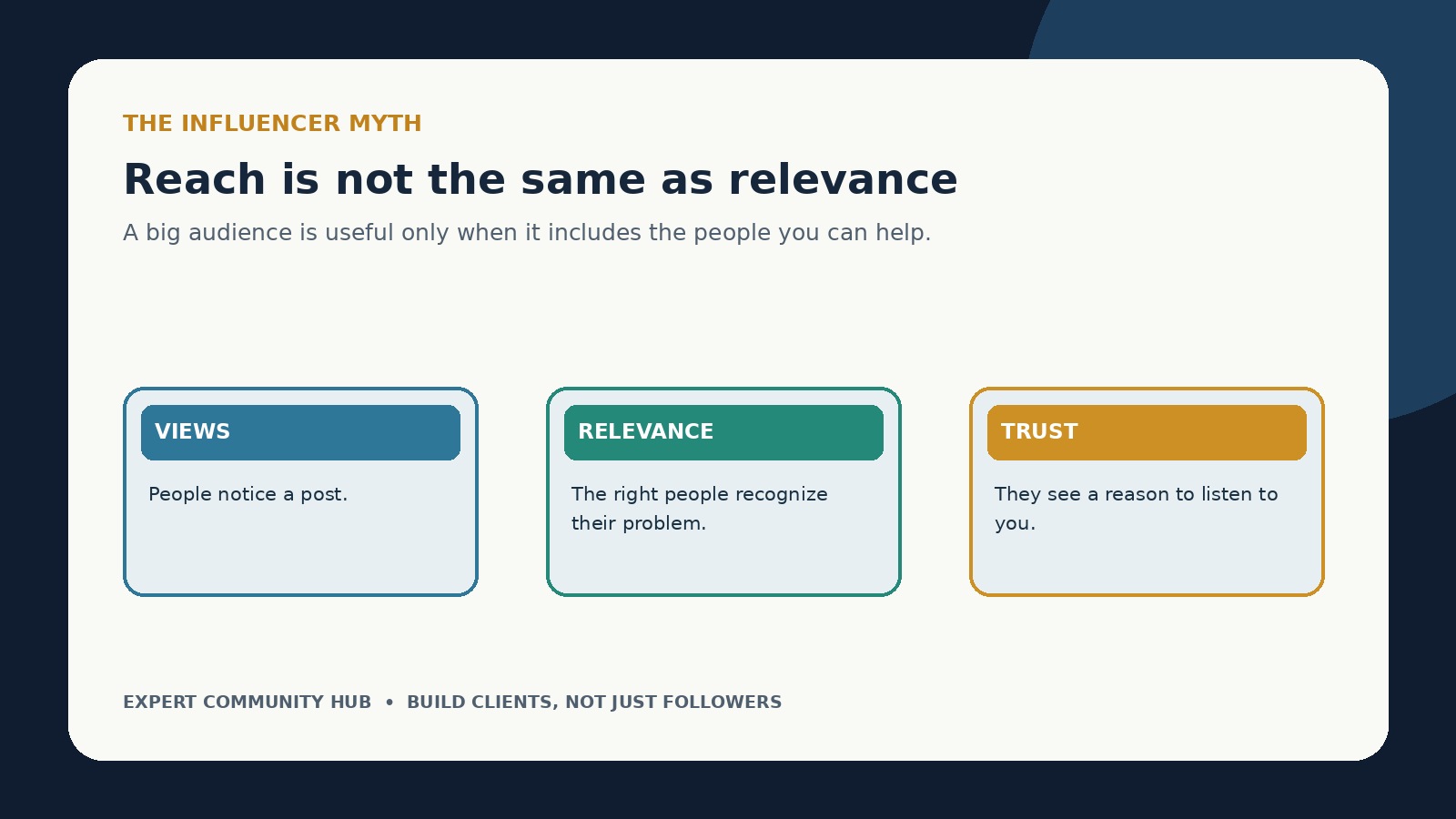
The Right-People Framework
Instead of asking, “How do I get more followers?” start with three better questions.
1. Who needs the problem solved?
Choose a group you understand and can genuinely help.
“Anyone who wants success” is too broad to guide a focused message. “Independent coaches who struggle to turn enquiries into paid clients” gives you a clearer audience and a more concrete set of problems to discuss.
You can serve more than one type of client over time. Start with a group whose needs you can describe clearly.
2. What do they need to understand?
Create content around questions your audience already asks.
Explain a common mistake. Break down a process. Share a checklist. Describe how to evaluate a decision. Use an example to show how you think.
Useful content helps people recognize a problem and judge whether your approach is relevant. You do not need every post to go viral. You need your intended audience to understand it.
3. What is the next step?
If someone finds your content helpful, make it easy to continue the relationship.
Depending on your business, that next step might be a useful guide, an email newsletter, a workshop, a discovery conversation, or a service page.
Keep the invitation relevant and honest. Do not force every reader into a sales call. Give interested people a clear way to learn more.
Five ways to attract clients without chasing viral fame
1. Publish for a specific person
Before writing a post, imagine one suitable client and one problem they want to solve.
Use their language. Address the situation they recognize. Give them a useful next step.
Specificity may reduce broad appeal, but it can make the message more meaningful to the people you want to reach.
2. Demonstrate your thinking
Do not rely only on claims such as “I am an expert” or “I help businesses grow.”
Show how you approach a problem. Explain the questions you ask, the steps you follow, or the mistakes you help people avoid.
Use client examples only with appropriate permission, and be accurate about results. Credibility grows when people can see your method rather than just hear your claims.
3. Build relationships around shared problems
Join relevant professional discussions. Collaborate with complementary experts. Respond thoughtfully to comments and questions. Reconnect with people who already know your work.
Relationships are not a shortcut for spamming strangers. They are an opportunity to understand people, contribute something useful, and build familiarity over time.
4. Make your offer easy to understand
Someone may enjoy your content but still not know what they can hire you for.
Explain who your service is for, what problem it addresses, what is included, and how to explore working with you.
A clear offer gives the right person a reason to move beyond passive consumption.
5. Measure meaningful signals
Keep track of more than likes and follower growth.
Notice whether relevant people reply, ask questions, request resources, book calls, or refer someone who needs your help.
These signals are not perfect measures, and results can take time. But they can help you decide whether your content and outreach are attracting the right audience.
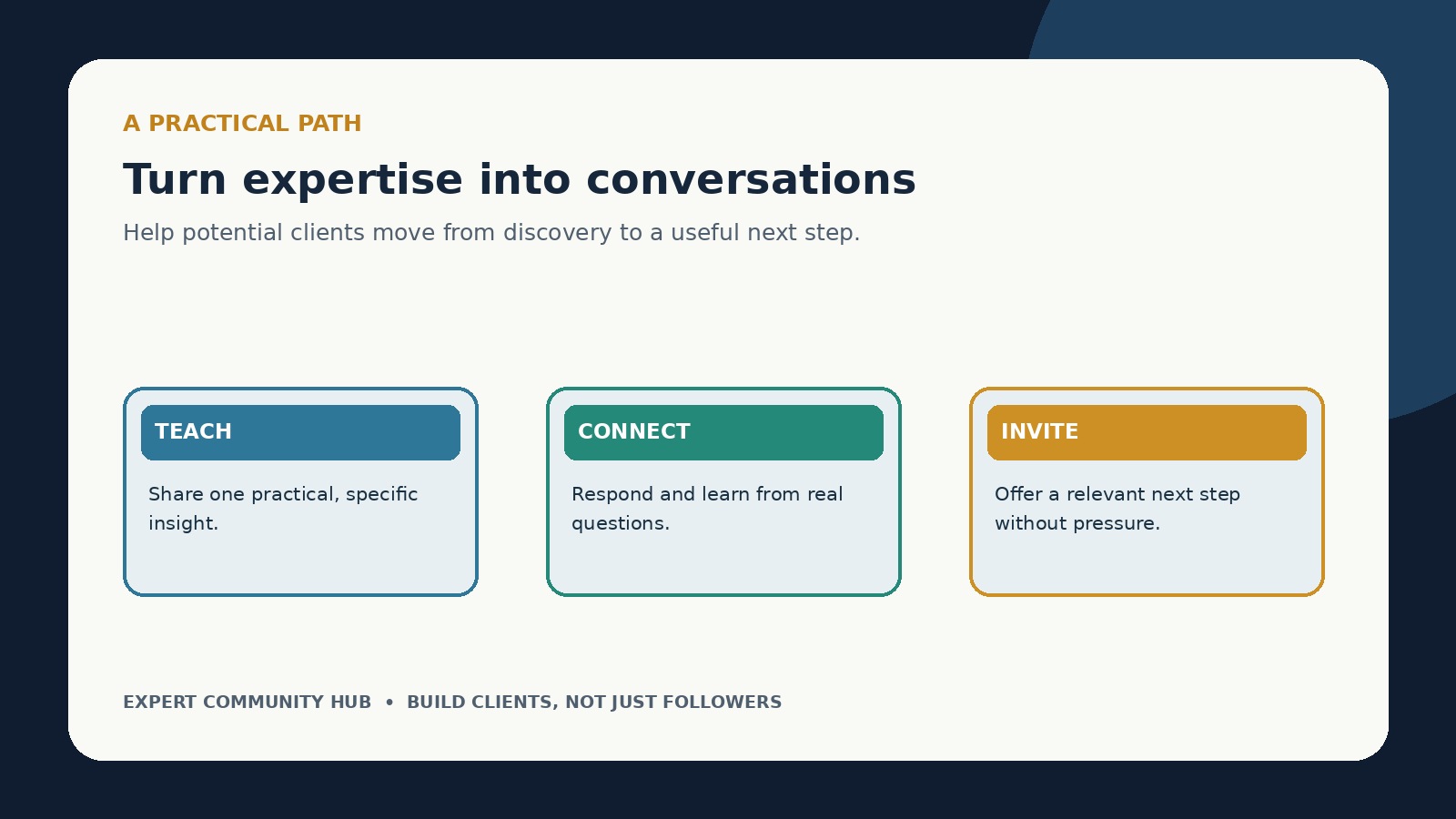
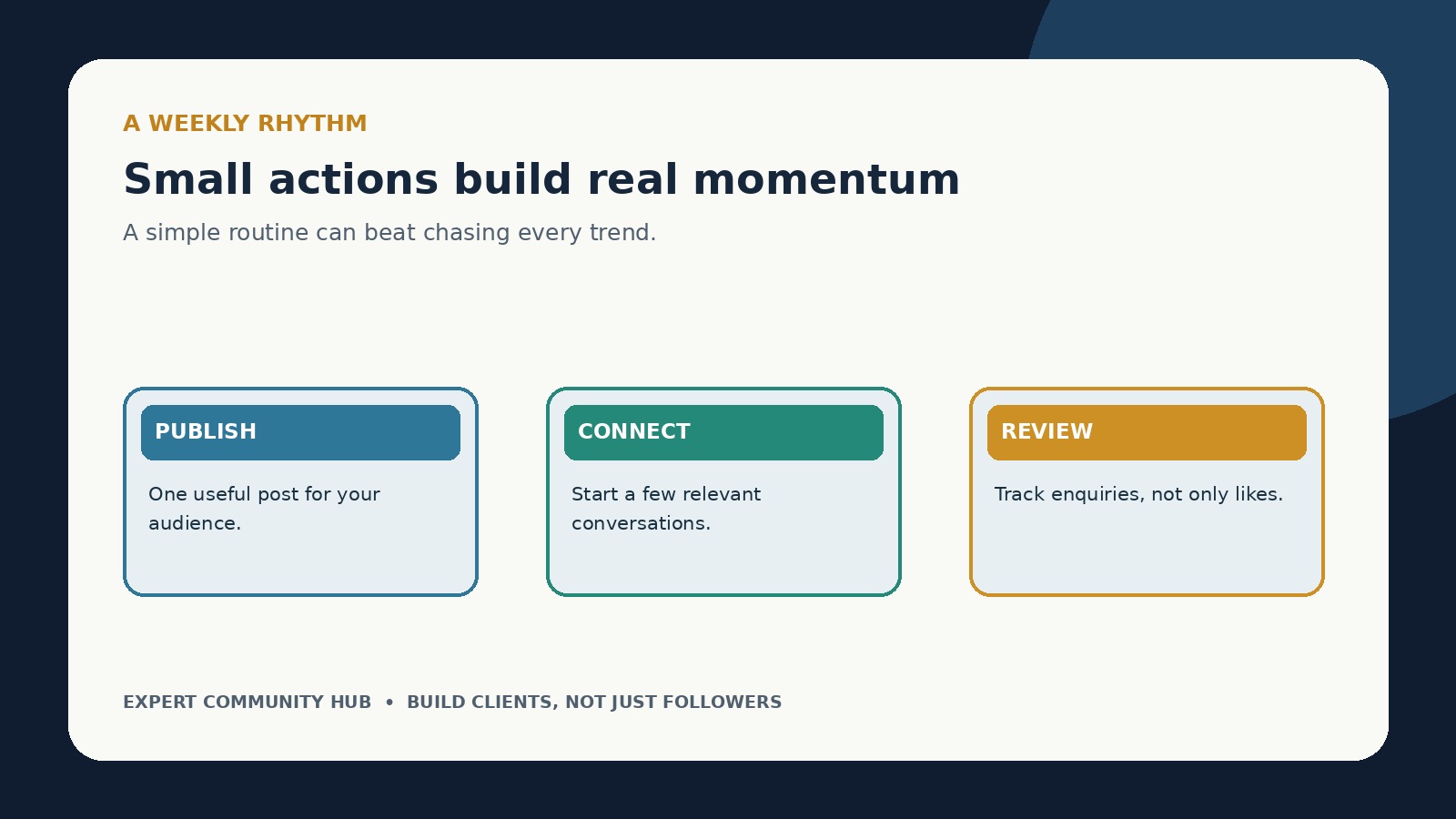
A simple weekly routine for a non-influencer business
You can start with a manageable routine and adjust it around your workload.
Publish one useful post. Answer a real question your audience has.
Start five relevant conversations. Participate in discussions or reconnect with people naturally. Avoid sending generic pitches.
Make one clear invitation. Offer a suitable resource, workshop, or way to explore your service.
Follow up with interested people. Respond with context and respect their preferences.
Review the results. Look at relevant conversations and enquiries, not just reach.
This routine is not a guarantee of clients. It is a practical way to learn which messages attract the people you can help and which next steps encourage genuine interest.
What if you have a very small audience?
Start where you are.
You can interview potential clients before you have a large platform. You can contribute to professional communities where your audience already spends time. You can ask past colleagues for feedback on your offer. You can publish useful answers to specific questions and share them with relevant people.
A small audience can still provide valuable conversations. It can also help you refine your positioning before investing heavily in content production or advertising.
Do not assume that a small following means nobody wants your help. Test the offer and listen to the response.
Your 20-minute action
Write down the answers to these four questions:
- Who is the one type of person I most want to help?
- What is one problem they regularly struggle with?
- What useful insight can I share about that problem today?
- What is one natural next step for someone who wants more help?
Now create a short post answering that problem. End with a thoughtful question or a relevant invitation.
You do not need to wait for a viral moment to begin building relationships with suitable clients.
Build a business, not a popularity contest
Followers can create opportunities. So can referrals, professional relationships, helpful content, and clear offers.
The best mix depends on your audience, service, resources, and strengths. You do not have to reject social media or ignore reach. You simply need to stop treating popularity as the only proof that your business is progressing.
Your goal is not to impress everyone online.
Your goal is to help the right people understand your value, trust your approach, and know what to do when they need your expertise.
You do not need a million views. You need a clear message and a reliable way to build the right relationships.
Your turn
If you stopped chasing follower growth for the next 30 days, what would you do instead to create more meaningful conversations with potential clients?
Share your answer in the comments. Your approach may give another coach a practical idea to try.
Your next step
If you are a coach, consultant, or knowledge-based professional who wants to turn expertise into a structured business, explore the resources and learning opportunities from Expert Community Hub.
Start with the people you can help, create content that speaks to their real problems, and make the next step clear.
Written for coaches, consultants, and knowledge-based entrepreneurs by Expert Community Hub.