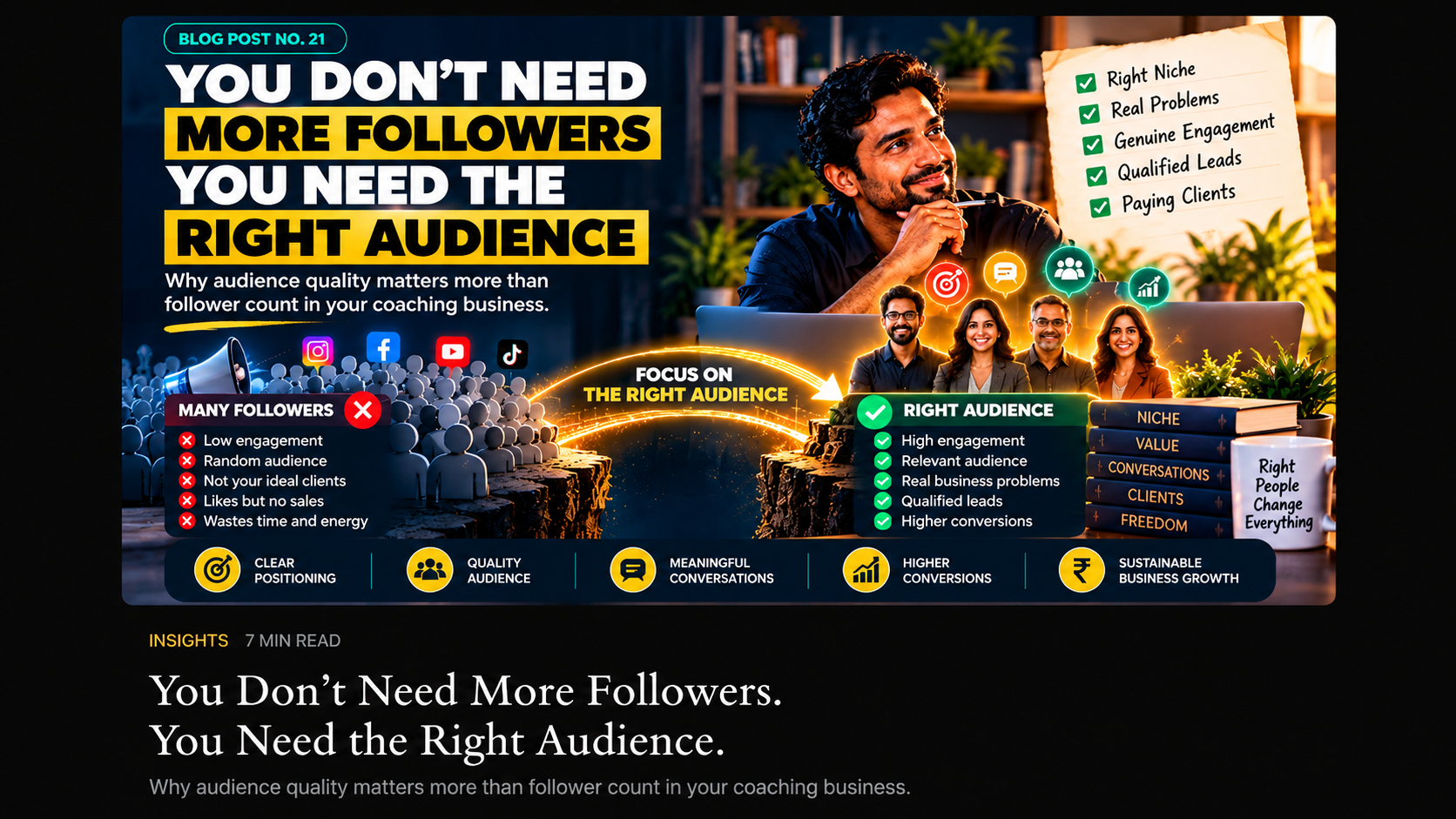
A large audience can look impressive and still produce few clients. Learn why relevance, genuine conversations, and buyer intent matter more than follower count.
What if your next client is not hiding behind your next thousand followers—but already watching your content?
It is easy to treat follower count as a scorecard.
You see someone with 50,000 followers and assume their business must be thriving. You look at your own numbers and wonder whether you are falling behind.
So you post more often. Try new hooks. Chase trending topics. Experiment with formats that attract attention.
Your audience grows a little.
But enquiries do not.
This can make social media feel like a treadmill: you keep moving, but you are not sure you are getting closer to the business you want.
Here is a more useful question:
Are you attracting the people who have a reason to need your expertise?
A smaller, relevant audience can be more commercially useful than a large audience that enjoys your content but has no need for your service.
Follower count can help measure reach. It cannot, by itself, tell you whether the right people are listening.
The hidden cost of attracting everyone
When you try to appeal to everyone, your message often becomes too broad to feel personal to anyone.
A coach may publish about productivity one day, motivation the next, AI tools after that, and general business success at the weekend.
Each topic may be useful. But a potential client may struggle to understand what the coach is specifically equipped to help them achieve.
Broad content can attract broad attention. Clear positioning helps the right people recognize themselves.
You do not need to talk about only one thing forever. You do need a clear center of gravity: the audience you serve, the problems you understand, and the progress your work supports.
Three signs your audience may be too broad
1. People engage, but the conversations are not relevant
You receive likes and comments, but few questions about the problem your service solves.
That does not mean the content is bad. It may simply be reaching people who enjoy the topic rather than people who need your offer.
2. You get attention for tips, not for your expertise
People ask for quick answers but do not understand the structured support you provide.
This may be a positioning issue. Make the connection between the tips you share and the larger problem you help clients solve.
3. You cannot describe your ideal audience clearly
If your answer is “anyone who wants to grow,” your content may be difficult to focus.
Try being more concrete. What kind of person are they? What situation are they in? What are they trying to change? What have they already tried?
The more clearly you understand the audience, the easier it becomes to create useful, relevant content.
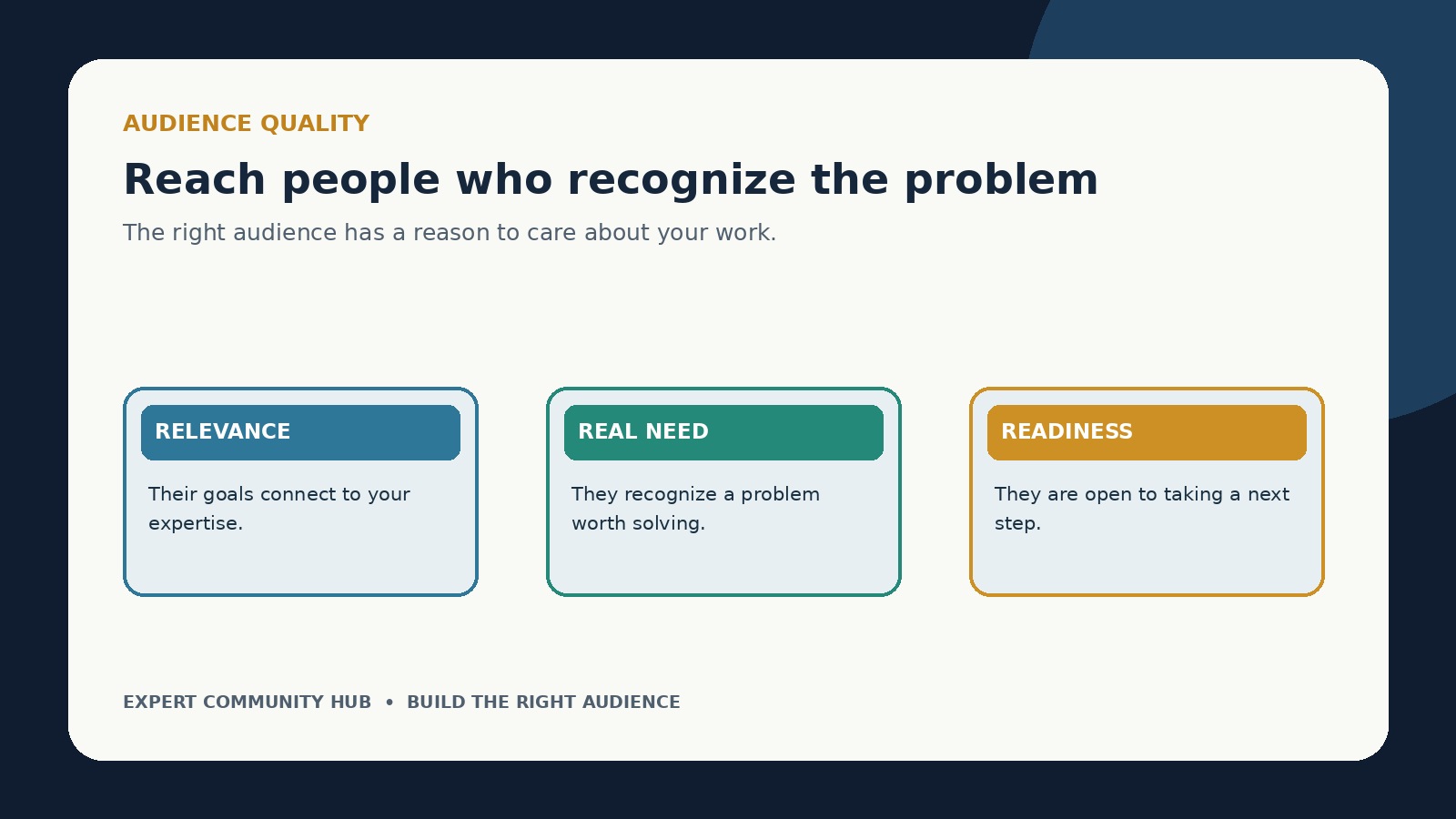
Build around a problem, not a popularity contest
Choose one audience segment you understand well.
For example, rather than targeting “everyone who wants business growth,” you might focus on independent coaches who struggle to turn social media attention into consistent client enquiries.
Now you have a clearer set of questions to explore:
- What have they already tried?
- Where do they get stuck?
- What are they worried about?
- What would meaningful progress look like?
- What kind of help would make the next step easier?
These questions give you a content direction. They also help you listen rather than guess.
Your goal is not to make your audience smaller for the sake of it. Your goal is to make your message more relevant to the people you can genuinely help.
Stop measuring every post by likes
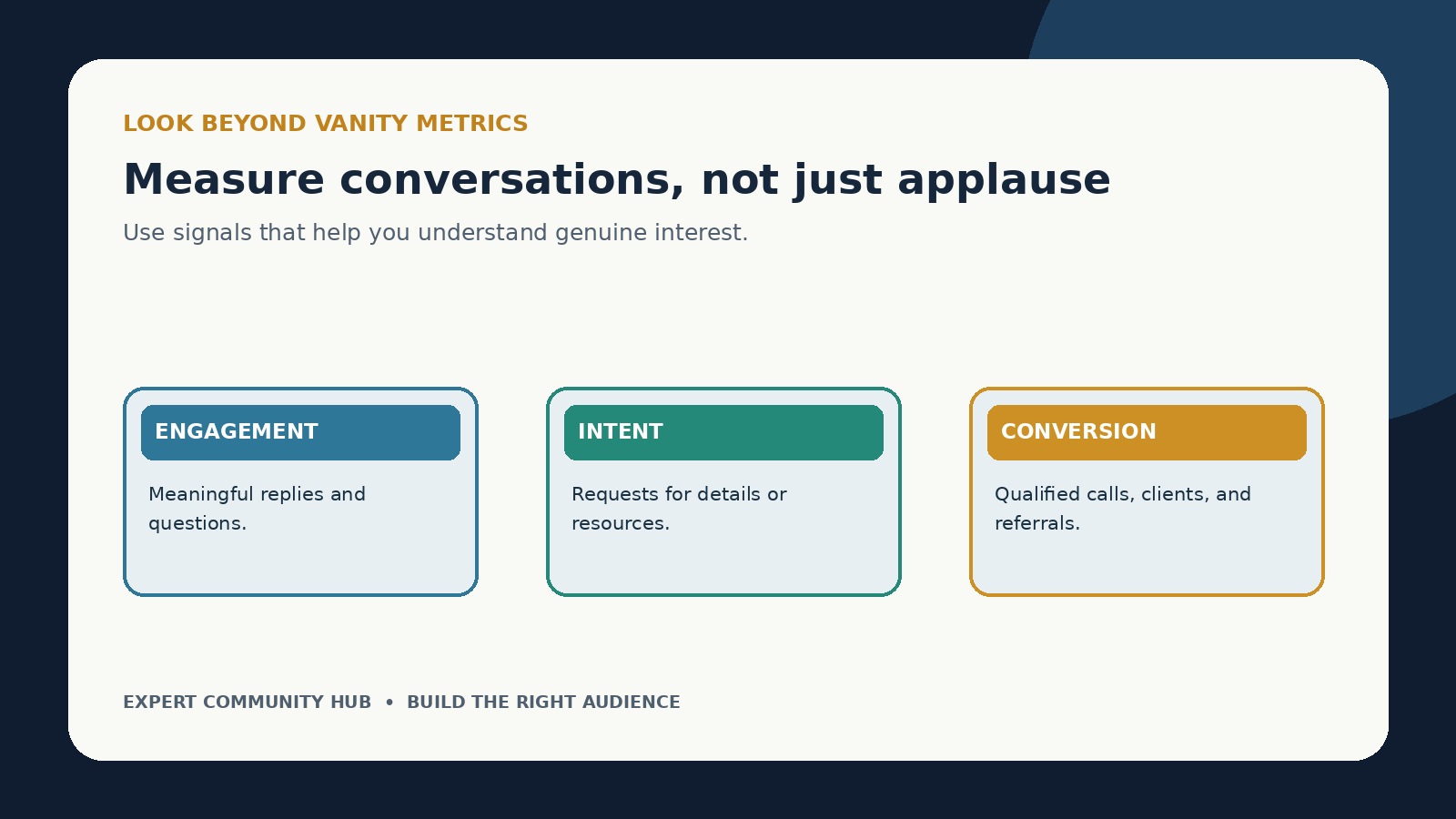
Likes are not useless. They can indicate that content resonates. But they are only one signal.
For a coaching or consulting business, pay attention to a wider set of indicators:
- Relevant replies: Are the right people describing their challenges?
- Questions: Are people asking how your approach works?
- Resource requests: Are they choosing to take a deeper step?
- Qualified conversations: Are suitable prospects asking about working with you?
- Conversions and referrals: Is your content contributing to actual business opportunities?
These measures help you learn which topics attract meaningful attention.
A post with modest reach that starts three useful conversations may be more valuable to your business than a viral post that attracts thousands of people who are not a fit.
Create content for the person you want to help
Try this simple structure for your next few posts.
Post 1: Name a specific problem. Describe a challenge your audience recognizes in their daily work.
Post 2: Explain why it happens. Offer a useful perspective that helps them understand the issue more clearly.
Post 3: Demonstrate your method. Walk through a practical step or show how you approach the problem.
Post 4: Invite a next step. Offer a relevant checklist, workshop, conversation, or service page for people who want more structured support.
This sequence gives people a way to move from recognition to understanding and action. It also helps you see which problems generate the most meaningful responses.
Do not assume you must sell in every post. Build a relationship between the value you share and the service you offer.
A simple weekly audience-building routine
You do not need to spend all day online.
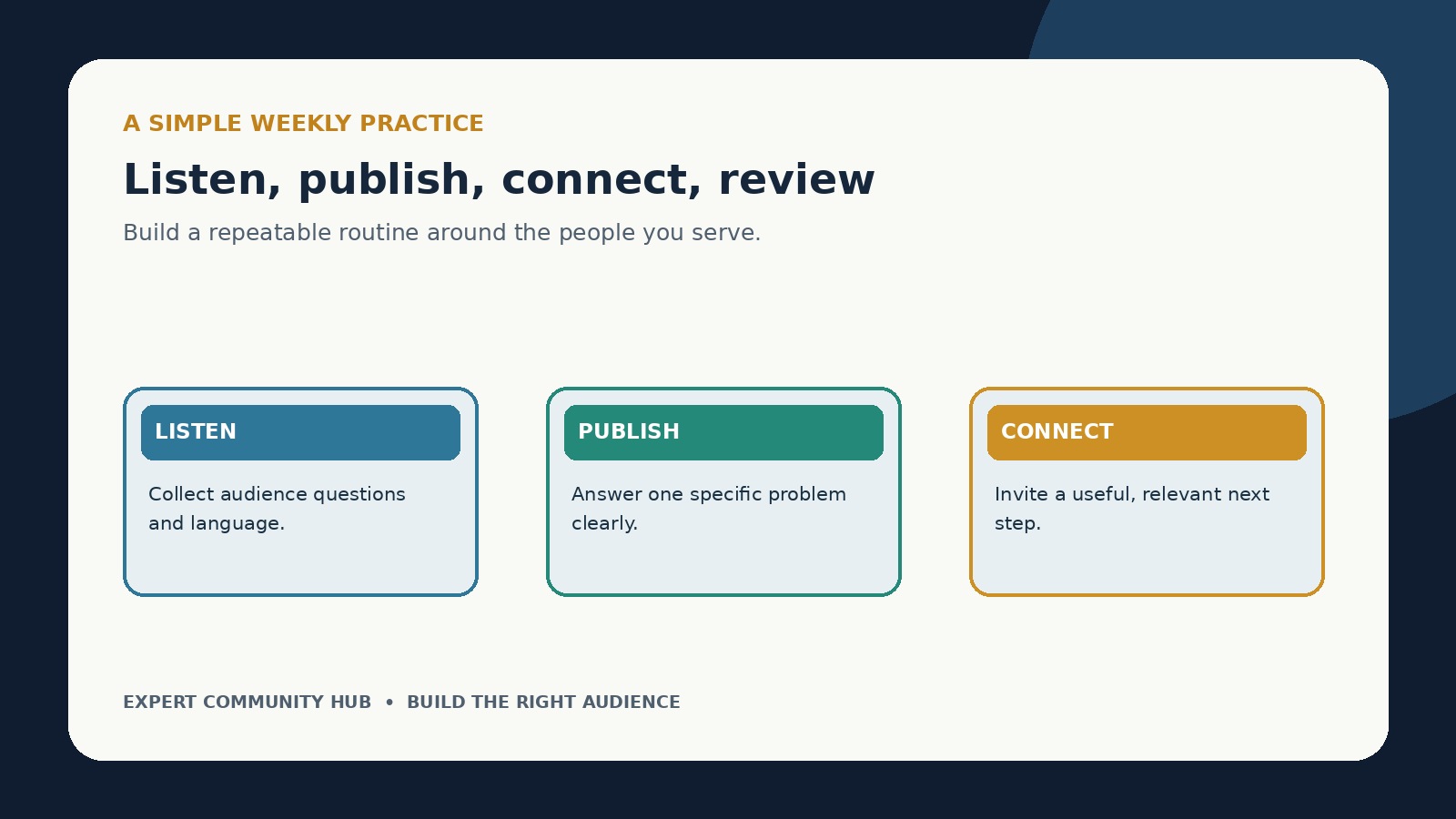
Try a repeatable routine:
- Listen: Review questions from clients, prospects, and your community.
- Publish: Create one useful piece of content around a specific problem.
- Connect: Respond thoughtfully and start relevant conversations without sending unsolicited sales pitches.
- Invite: Give interested people a clear, appropriate next step.
- Review: Look at the quality of responses and the opportunities created—not only the reach.
What if your audience is already large?
You do not need to start over.
Look at which topics attract the people you most want to serve. Make your positioning clearer. Create more content around the problems those people recognize. Update your profile and offer pages so visitors can quickly understand how you help.
Some followers may not be a fit. That is normal.
You can continue to serve the broader audience with useful ideas while making the path to your paid service clear for the people who need it.
And if your audience is small, you can begin the same way. You do not need permission from an algorithm to have a useful conversation with one relevant person.
Your 20-minute audience reset
Write down:
- The specific people you most want to help.
- The three problems they ask about most often.
- The outcome your service is designed to support.
- One useful post you can create around one of those problems.
- One natural next step for people who want more help.
Then review your last five posts. Ask whether they are attracting and helping that audience.
Choose one adjustment to make this week. Do not rebuild everything at once.
The goal is not to be followed by everyone
The goal is to be understood by the right people.
A relevant audience gives you better opportunities to listen, build trust, demonstrate your expertise, and start useful conversations. It does not guarantee sales, but it makes your marketing more focused.
You do not need to win a popularity contest to build a sustainable coaching business.
You need to know who you serve, communicate in language they recognize, and make the next step clear when they are ready.
Your turn: Are you currently creating content for the people most likely to need your service—or for anyone who might like the post?
Written for coaches, consultants, and knowledge-based entrepreneurs by Expert Community Hub.