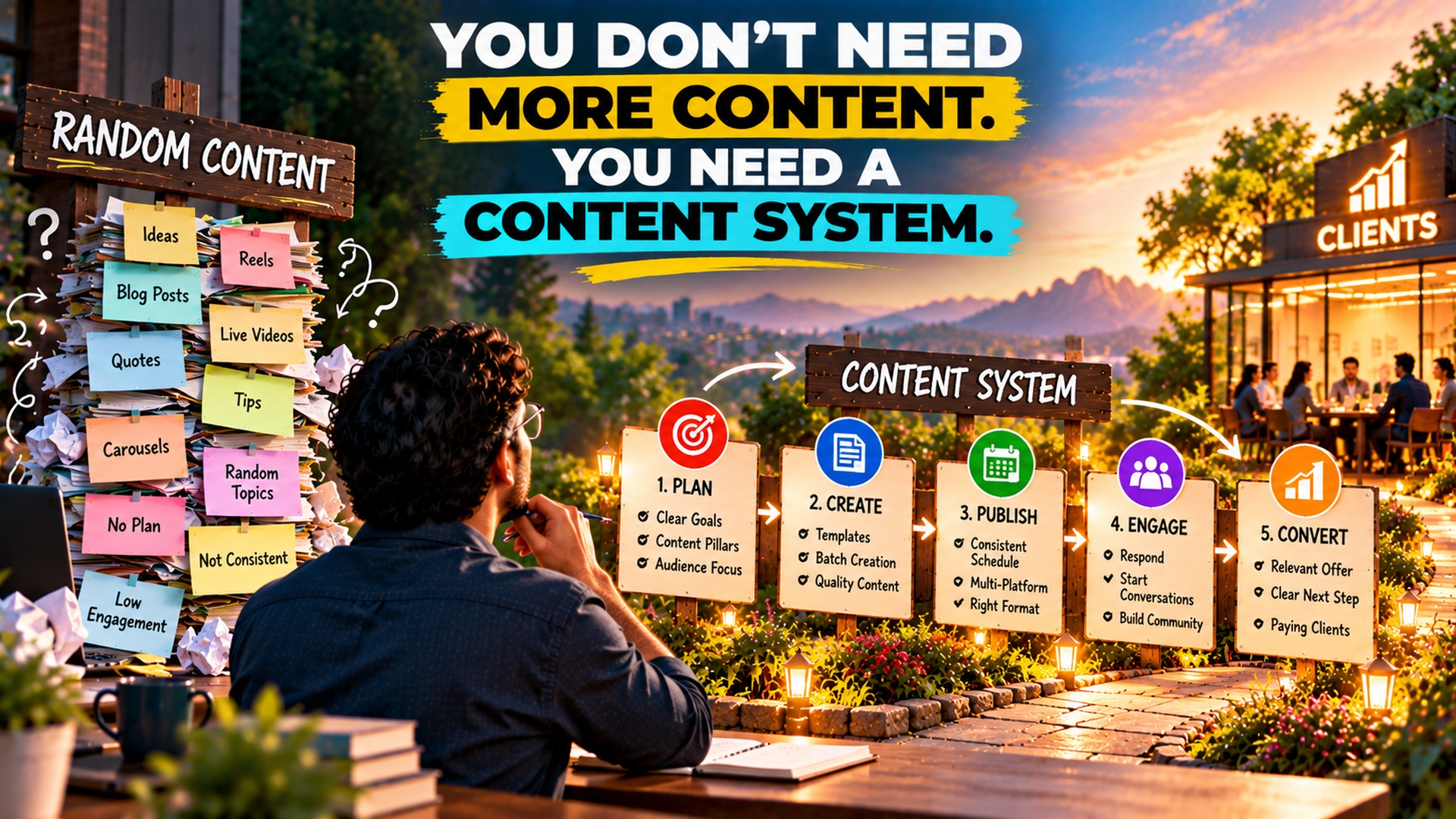
If content creation feels like a daily scramble, the answer may not be posting more. Build a repeatable system that connects audience problems, useful content, and clear business goals.
It's Sunday night. You know you should post tomorrow, but you have no idea what to say.
You open a blank document. You scroll through competitors' posts. You save a few trending ideas. You draft something, delete it, and start again.
Eventually, you publish.
Then the cycle repeats.
If content creation feels like a daily emergency, the problem may not be your creativity. It may be the absence of a repeatable process.
You don't need an endless supply of new ideas. You need a reliable way to turn useful ideas into purposeful content.
A simple content system can reduce decision fatigue, help you communicate your expertise consistently, and connect your publishing activity to real business goals.
The hidden cost of random posting
Random posting can keep you busy without building a recognizable message.
One day you share motivation. The next day you discuss a new AI tool. Then you post a personal story, a trend, and a sales message that seems unrelated to everything before it.
Each post may be useful on its own. But a new visitor may struggle to understand what you specialize in or why they should follow your work.
Random posting also makes planning harder. Every day begins with the same question: “What should I post today?”
That decision consumes energy you could spend serving clients, improving your offer, or having meaningful conversations.
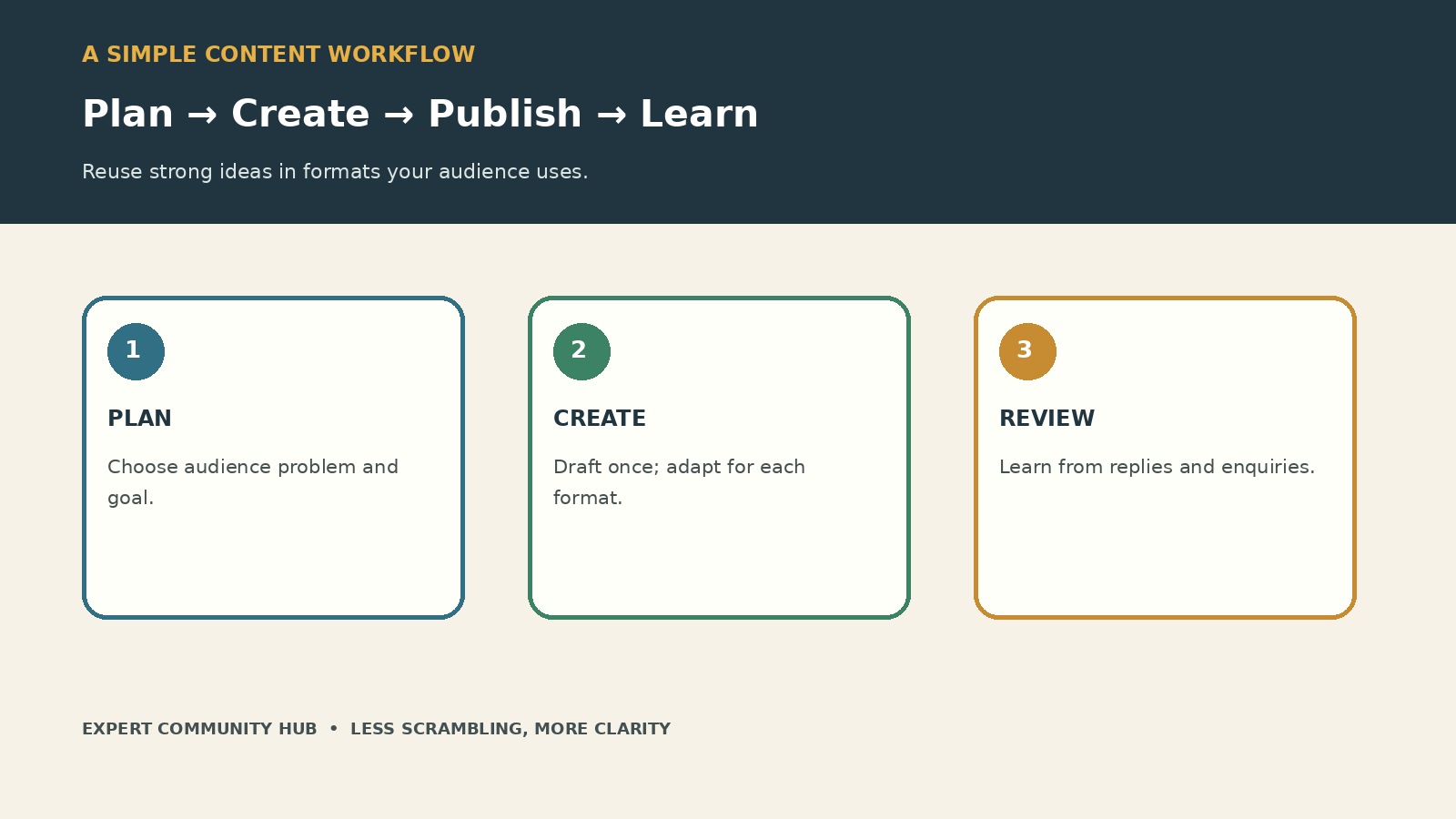
A content system does not mean every post must be identical. It means you have a clear method for choosing topics, creating content, publishing it, and learning from the response.
Why posting more is not always the answer
More content can create more opportunities to be discovered. But volume alone does not guarantee relevance, trust, enquiries, or revenue.
If your message is unclear, publishing more may simply repeat the confusion. If your audience is not the right fit, more reach may not help. If there is no clear next step, useful posts may not lead interested readers anywhere.
Before increasing your posting frequency, ask:
- Do I know which audience I want to reach?
- Am I addressing problems that matter to them?
- Can people understand what I help with?
- Does my content show how I think and work?
- Is there a relevant next step for people who want deeper help?
If these foundations are missing, start there.
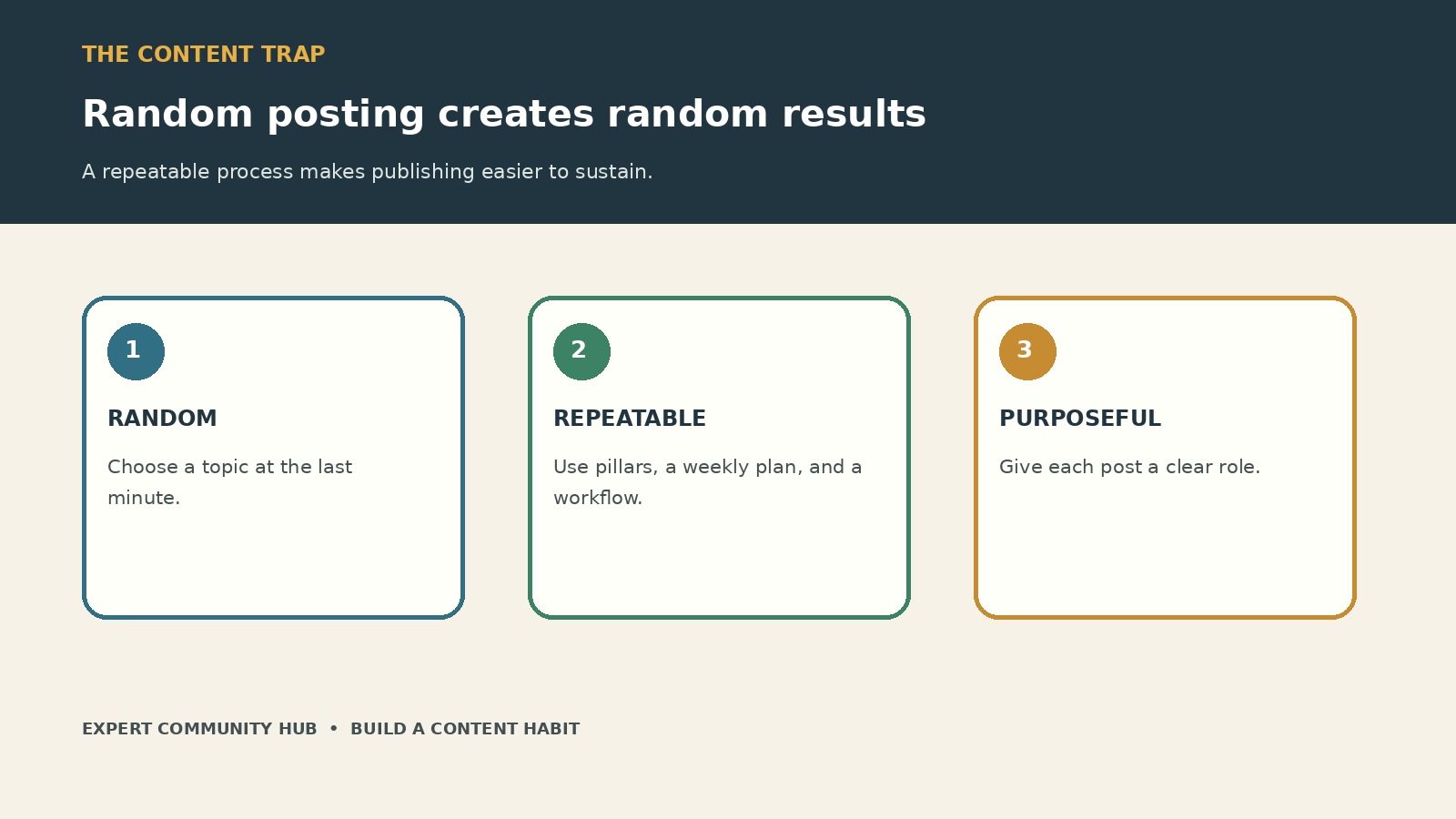
The PACE Content System
Use this four-part framework to create content with less daily scrambling.
P — Pick your content pillars
Choose three or four recurring themes connected to your expertise and your audience's needs.
For a coach or consultant focused on client acquisition, the pillars might be:
- Problem awareness: Why enquiries go cold, offers feel unclear, or marketing becomes inconsistent.
- Practical teaching: Follow-up methods, offer clarity exercises, and simple marketing workflows.
- Demonstration: Walkthroughs, examples, case studies with context, and behind-the-scenes explanations.
- Offer and invitation: Who your service helps, how it works, and how interested people can explore it.
Pillars give you boundaries without forcing you to repeat the same post. Each theme can generate many questions, examples, and formats.
A — Assign each post a purpose
Before drafting, decide what the post should do.
Is it helping new people discover you? Teaching a useful method? Demonstrating your approach? Answering a common concern? Inviting suitable people to a workshop or service?
One post can serve more than one purpose, but choose a primary goal. This makes it easier to decide what to include and how to end the post.
C — Create in batches
Instead of inventing a new idea every day, set aside a regular block of time to plan several pieces together.
For example, choose one audience problem and turn it into:
- A detailed blog post.
- A short video explaining one lesson.
- A carousel summarizing the framework.
- A discussion question.
- A relevant email or community post.
Adapt the format to the platform rather than copying the exact same content everywhere without context.
Batching does not require a full-day production marathon. Even a short weekly planning session can reduce the pressure of starting from zero each morning.
E — Evaluate and improve
After publishing, review what happened.
Did the intended audience engage? Did people ask meaningful questions? Did anyone visit the resource, register for a workshop, or enquire about your service?
Do not judge every post by direct sales. Some posts build awareness; others help people understand your approach. Review patterns across time and improve one part of the system at a time.
A simple weekly content rhythm
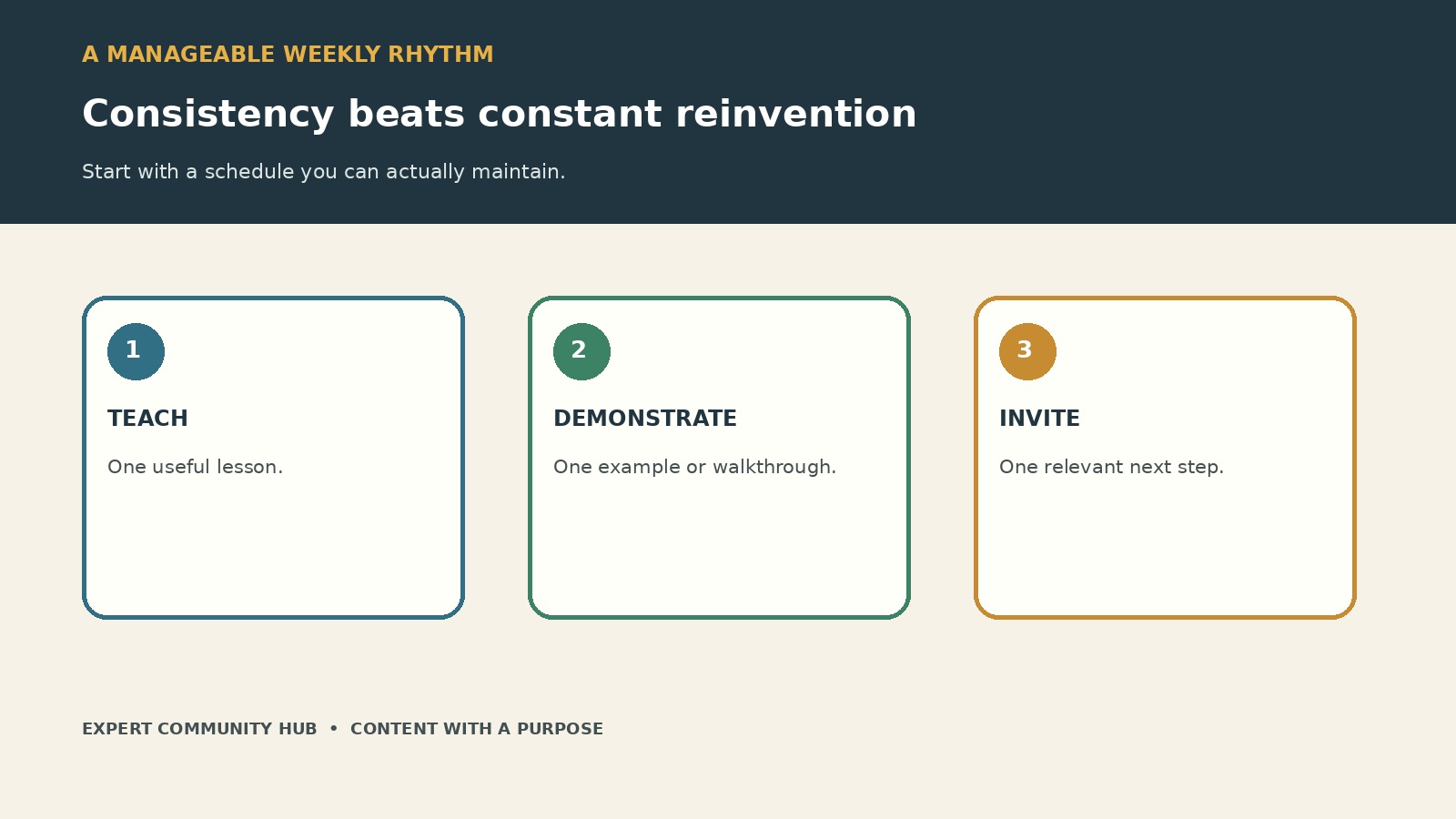
You do not need to publish several times every day. Start with a schedule you can maintain while delivering your actual service.
Here is one possible rhythm:
Post 1 — Teach: Answer one real question your ideal client asks.
Post 2 — Demonstrate: Show how you approach a problem, use a method, or apply a framework.
Post 3 — Invite conversation: Ask a thoughtful question, share a relevant resource, or explain a useful next step.
You can add more posts if you have the capacity and a clear reason. The point is to make the schedule sustainable.
A simple content calendar might include the topic, audience problem, format, primary goal, call to action, and publication date. Keep it lightweight enough that you will actually use it.
One idea can become several useful pieces
Suppose your core topic is: “Why potential clients stop replying after an enquiry.”
You could develop it into:
- A blog post explaining three common reasons.
- A short video demonstrating a respectful follow-up message.
- A carousel showing a simple follow-up checklist.
- A poll asking which part of follow-up feels most difficult.
- A workshop invitation for people who want to improve their client-acquisition process.
Each piece serves a different purpose, but they all reinforce the same area of expertise.
This is not about flooding every platform with repetitive posts. It is about helping different people engage with a useful idea in a format that suits them.
Your 30-minute content reset
You can start building your system today.
Minutes 1–5: Write down the three most common problems your ideal clients ask you about.
Minutes 6–10: Choose three content pillars that connect to those problems and your expertise.
Minutes 11–20: Brainstorm two post ideas under each pillar. Do not write the full posts yet.
Minutes 21–25: Assign each idea a purpose: teach, demonstrate, start a conversation, or invite a next step.
Minutes 26–30: Put the first three posts into your calendar and choose a realistic time to create them.
Your first system can be a simple spreadsheet or notebook. You do not need new software to begin.
What should you measure?
A content system should support a business objective, but not every post needs to produce a lead immediately.
Consider reviewing:
- Consistency: Did you publish what you planned?
- Relevance: Did the right audience respond?
- Learning: Which questions, objections, or themes appeared repeatedly?
- Intent: Did readers visit a relevant page, download a resource, or register?
- Business outcomes: Did suitable enquiries or client conversations result over time?
Use these signals to improve your choices. A post with fewer likes may still be useful if it reaches the right people and leads to a meaningful conversation. A high-reach post may be valuable for awareness even if it does not generate immediate sales.
Avoid turning metrics into a reason to chase every trend. Your goal is a content practice that serves your audience and your business—not an endless production treadmill.
Your turn
What is the hardest part of content creation for you: finding ideas, writing consistently, choosing the right format, or turning attention into enquiries?
Share your biggest challenge in the comments. Your answer may help another coach or consultant build a simpler process.
Your next step
If you are a coach, consultant, or knowledge-based professional, Expert Community Hub can help you explore how to communicate your expertise, clarify your offer, and create a more structured approach to client acquisition.
Start small. Choose your pillars, plan a manageable rhythm, and learn from the response. A simple system you can sustain is more useful than a perfect calendar you abandon after one week.
Written for coaches, consultants, and knowledge-based entrepreneurs by Expert Community Hub.