
When a prospect says your offer is too expensive, the real concern may be budget, trust, urgency, or unclear value. Learn how to respond without discounting immediately.
Why Your Prospects Say “It’s Too Expensive” — And What They Really Mean
You explain your offer. The prospect listens. Then comes the sentence every expert dreads: “It sounds good, but it’s too expensive.”
Your first instinct may be to reduce the price.
Maybe you offer a discount. Add a bonus. Extend the payment plan. Or start explaining why your service is worth every rupee.
Sometimes those things help. Often, they do not solve the real problem.
Because “too expensive” can mean several different things.
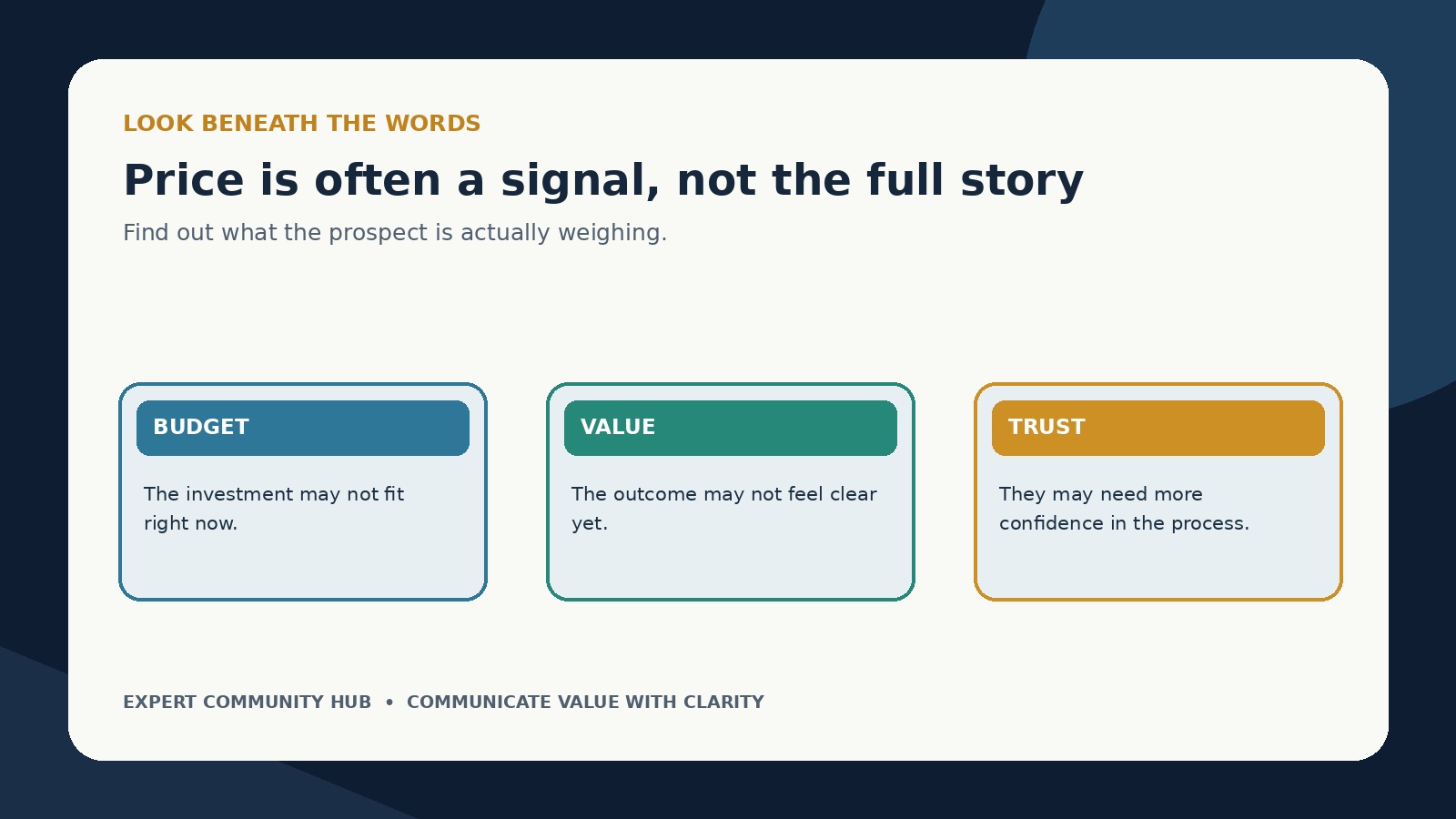
The prospect may not have the budget right now. They may not understand the value. They may be unsure that your approach will work for them. Or the problem may simply not be urgent enough to justify spending money today.
You cannot know which one it is by guessing.
And when you guess, you risk discounting a perfectly good offer—or pushing someone who is not ready.
The hidden meaning behind a price objection
A price objection is not always a request for a cheaper price. It is information about the decision the prospect is trying to make.
Here are three common possibilities.
1. “I cannot afford this right now”
The person may genuinely have limited funds. They might be managing other priorities or protecting their cash flow.
No clever sales line can change a real budget constraint.
Your job is not to make them feel guilty. You can explain available options if you genuinely have them, suggest a lower-commitment starting point, or leave the door open for later.
2. “I am not sure the value justifies the investment”
The prospect may understand the price but not see how your offer connects to the result they want.
Perhaps you describe the number of sessions, modules, calls, or resources. But they are thinking about a different question:
“How will this help me solve my problem?”
Features describe what is included. Value explains why it matters to this particular person.
3. “I am not confident enough to make this decision”
The person may worry that they will not follow through, that the approach will not fit their situation, or that they have wasted money on similar offers before.
This is not necessarily a pricing issue. It may be a trust or fit issue.
More persuasion may increase their resistance. A better response is to understand their concern and answer honestly.
The mistake that makes the objection worse
When someone says your offer is expensive, it is tempting to defend yourself immediately.
“You get ten modules, four calls, a community, templates, and lifetime access.”
But a longer feature list does not automatically make an offer feel more valuable.
If the prospect is unsure whether your method can help, another list of inclusions may not address the concern.
Pause first.
Try asking:
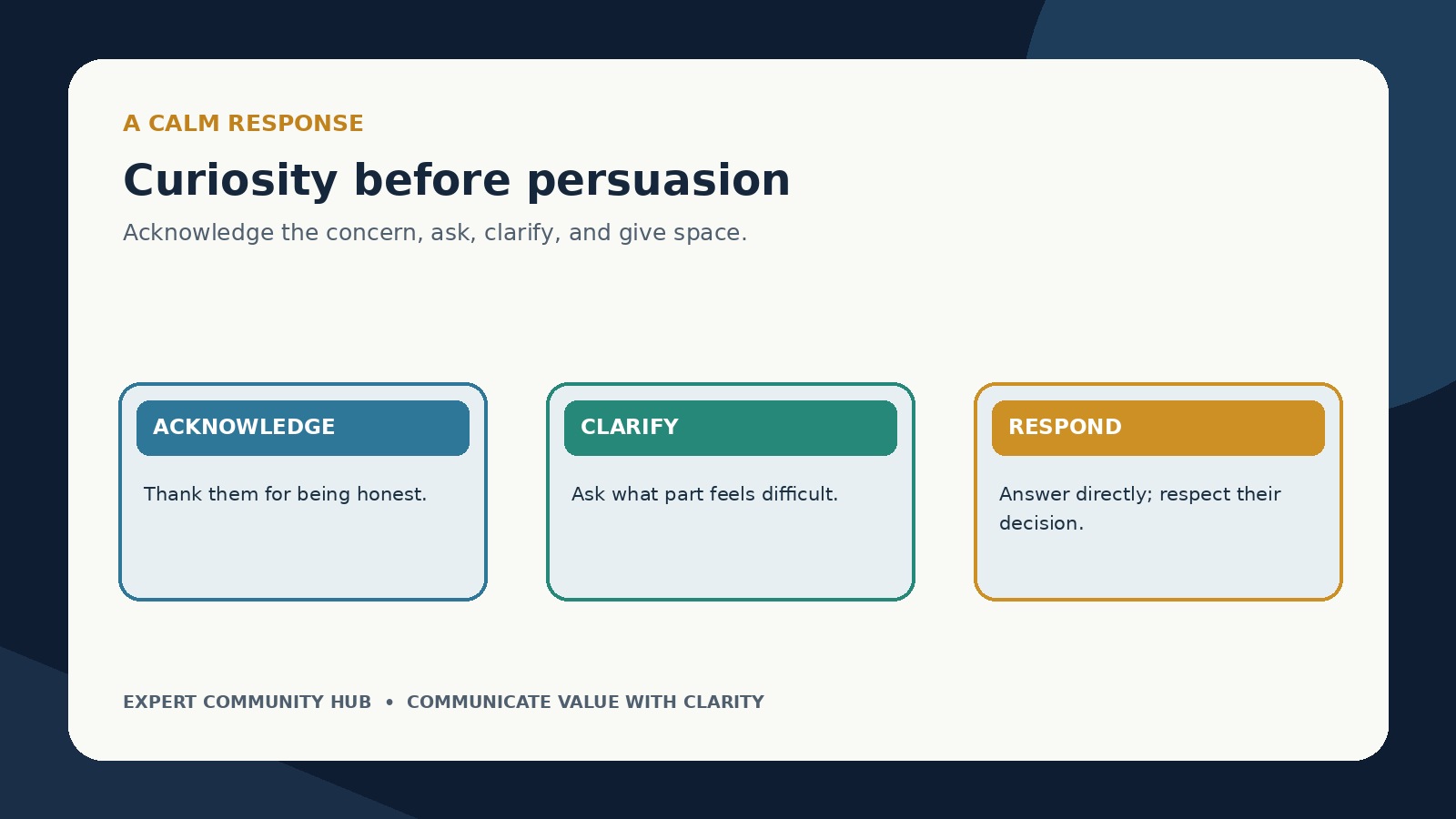
“That makes sense. When you say it feels expensive, is the main concern the budget itself, or are you still deciding whether the outcome will be worth the investment?”
Use this only when it feels natural in the conversation. Give the person room to answer. They may share a concern you had not considered.
How to communicate value without sounding defensive
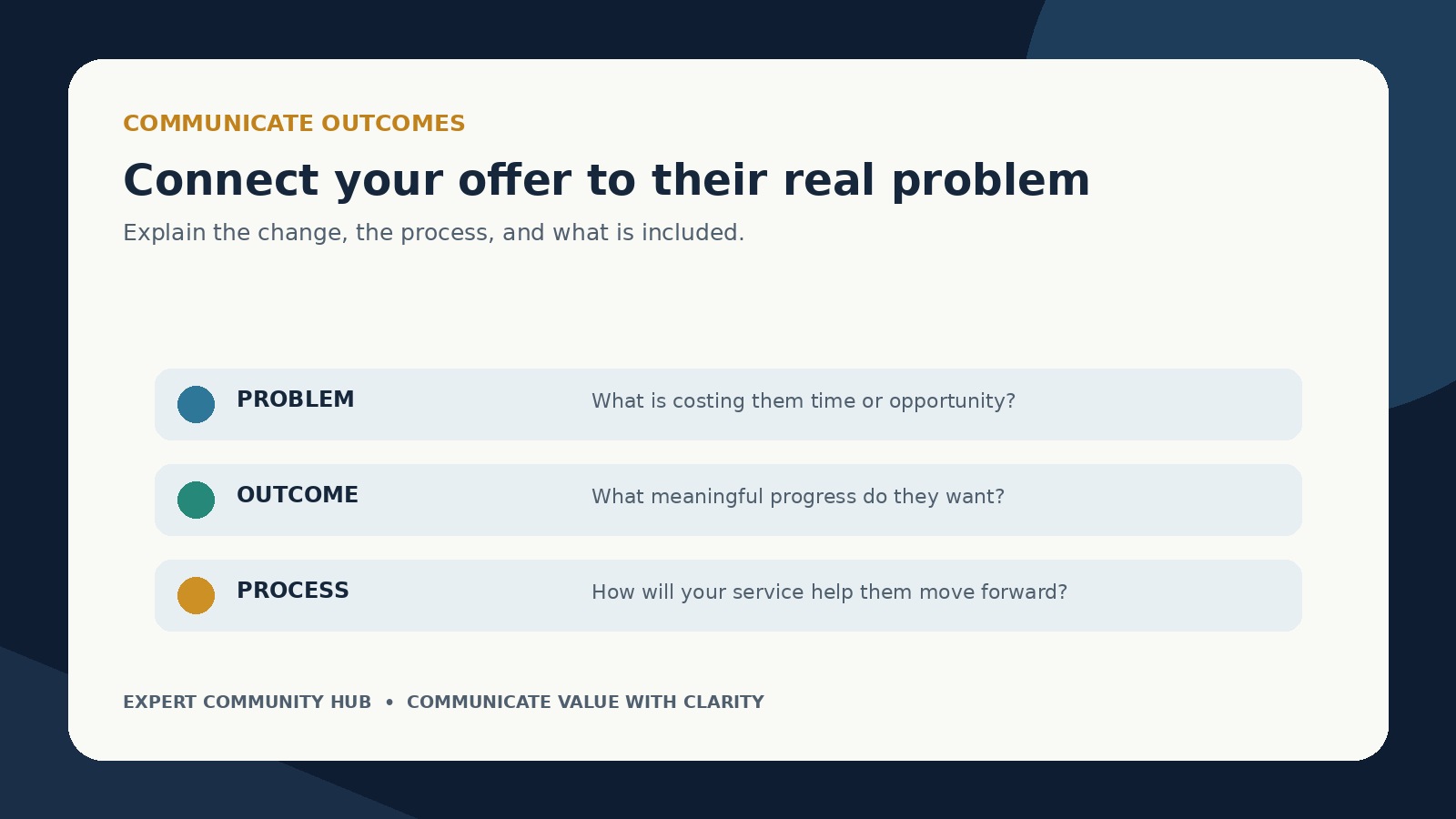
A strong value conversation connects three things:
- The problem: What is happening now, and why does it matter?
- The desired outcome: What meaningful change does the person want?
- Your process: How does your service help them move toward that change?
For example, instead of saying:
“My program includes eight live sessions and twenty lessons.”
You might explain:
“The program is designed to help you build a repeatable process for attracting and following up with potential clients. We work on your message, offer, and next steps so you can put the system into practice. The sessions and resources support that process.”
Notice the difference. The second version connects the format to the purpose.
Be specific about what your service does and does not include. Avoid guaranteeing revenue or results you cannot control.
Three respectful responses you can adapt
If the budget is the main concern
“I understand. It is important that the investment fits your current situation. Would it help to look at the available options, or would it be better to revisit this when the timing is more comfortable?”
Do not create artificial urgency or pressure someone to spend money they cannot afford.
If the value is not yet clear
“Thanks for being honest. Before we discuss price further, could you tell me which result matters most to you? I can explain how the program addresses that goal, and you can decide whether it makes sense for you.”
Then explain the relevant parts of your offer. Do not repeat every feature.
If they are unsure the offer is right for them
“That is a fair concern. What would you need to feel confident that this approach fits your situation? If I can answer that clearly, I will. If it is not the right fit, I would rather be honest about that too.”
This builds a more useful conversation than trying to overcome every hesitation at all costs.
Should you offer a discount?
Sometimes a lower-priced option or payment plan is appropriate. But do not make discounting your automatic response to discomfort.
Before changing the price, ask yourself:
- Is the offer clearly connected to the prospect's problem?
- Have I explained the outcome and the process honestly?
- Do I understand the actual concern?
- Can I offer a smaller scope that still delivers meaningful value?
- Would a discount undermine the sustainability of my business?
If you do offer a different option, make the difference clear. A smaller package should have a genuinely smaller scope—not simply the same service sold under pressure for less.
And remember: some prospects will not buy. That does not automatically mean your price is wrong.
Your 15-minute offer clarity audit
Choose one service or coaching program and write down:
- Who is it for? Name the type of person and situation it is designed to help.
- What problem does it address? Be more specific than “business growth” or “personal development.”
- What progress does it support? Describe a realistic outcome without promising what you cannot control.
- How does your process work? Explain the key steps in plain language.
- What evidence can you show? Use genuine examples, testimonials with permission, demonstrations, or a transparent explanation of your method.
- Who is it not for? Clear boundaries help people make a better decision.
If you struggle to answer these questions simply, improve the explanation before changing the price.
The goal is a good decision—not a forced sale
A prospect who understands your offer and chooses not to buy has still made a decision.
Your role is to help suitable people understand the value, ask questions, and decide whether your service fits their needs and circumstances.
Do not treat every objection as a battle to win.
Get curious. Clarify the concern. Communicate value. Respect the answer.
When the fit is right and the value is clear, the conversation becomes more honest—and your pricing decisions become more confident too.
Your turn: When a prospect says “It's too expensive,” what do you usually do first: explain more features, offer a discount, or ask what is behind the concern?
Written for coaches, consultants, and knowledge-based entrepreneurs by Expert Community Hub.