
People praise your content and ask for advice, but rarely hire you. Learn how to bridge the gap between being helpful and being the right expert to work with.
They thank you for your advice. They share your posts. They even tell you how much they have learned from you. But when it comes to hiring you, they disappear.
This is a confusing place to be.
You know your work can help people. Your audience seems to value your knowledge. People message you with questions and ask for your opinion.
Yet your expertise is not translating into enough paid clients.
It is tempting to conclude that people do not want to pay for knowledge anymore. Or that you need to publish more content, grow your following, or give away even more value.
But the deeper issue may be different.
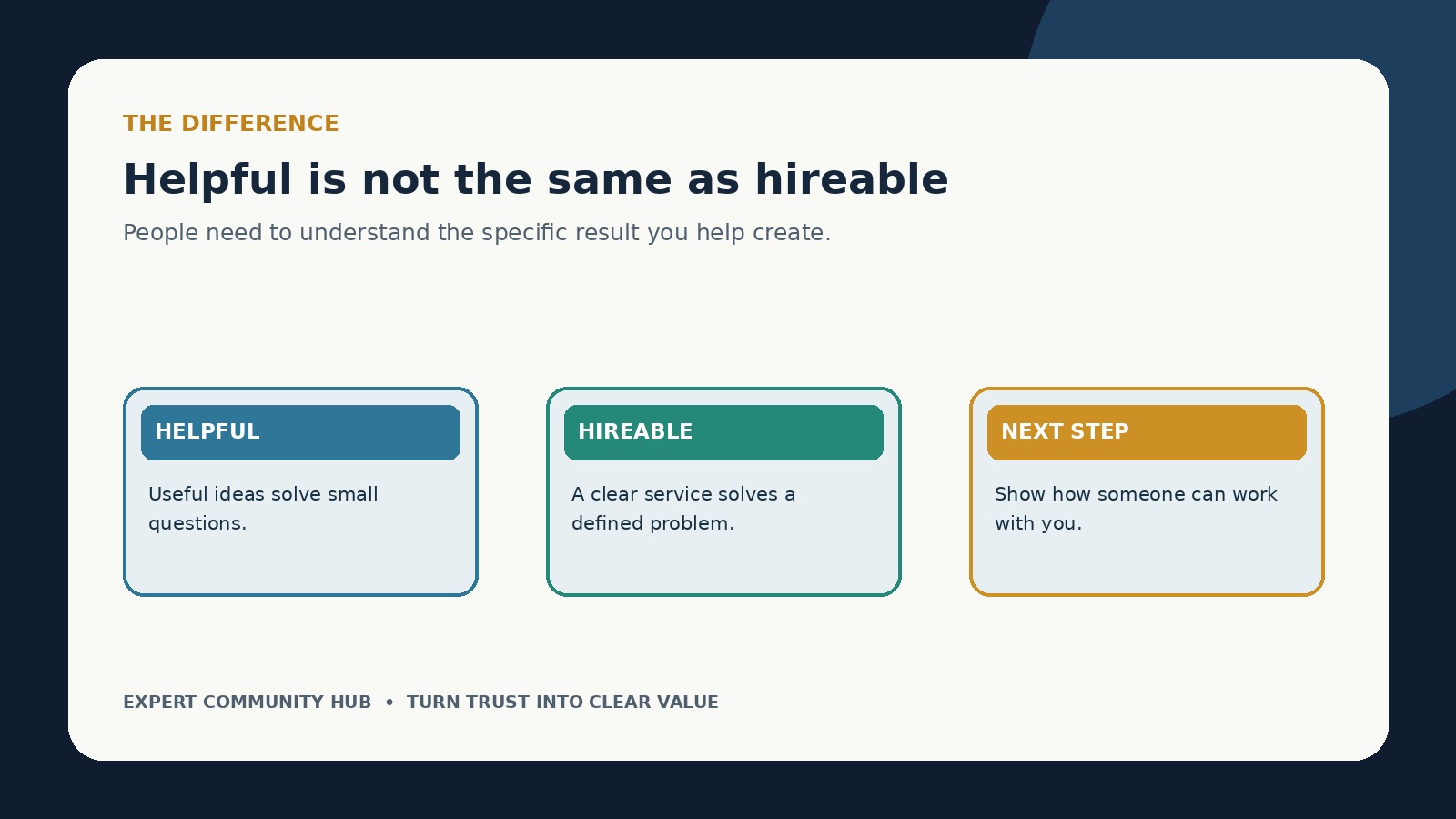
People can trust your advice without understanding why they should hire you.
Those are two different decisions.
The helpful-expert trap
When you are good at what you do, it is natural to help people wherever you can.
You answer questions in comments. You share frameworks. You explain mistakes to avoid. You may even spend an hour advising someone in a private message.
The person leaves feeling helped. You feel useful.
But the conversation may end there.
Why? Because they received advice, but they may never have understood the bigger problem your service solves, the process you use, or what it would be like to work with you.
Free content is valuable. It can build trust and help people make better decisions. The issue is not that you give too much away.
The issue is when your audience sees you only as a source of tips—not as a guide with a clear, structured way to help them make progress.
Five reasons trust may not become a sale
1. They see your knowledge, but not your specific solution
If you talk about marketing, mindset, productivity, AI, sales, and business growth in equally broad terms, people may admire your knowledge without knowing what to hire you for.
Expertise becomes easier to buy when the problem is clear.
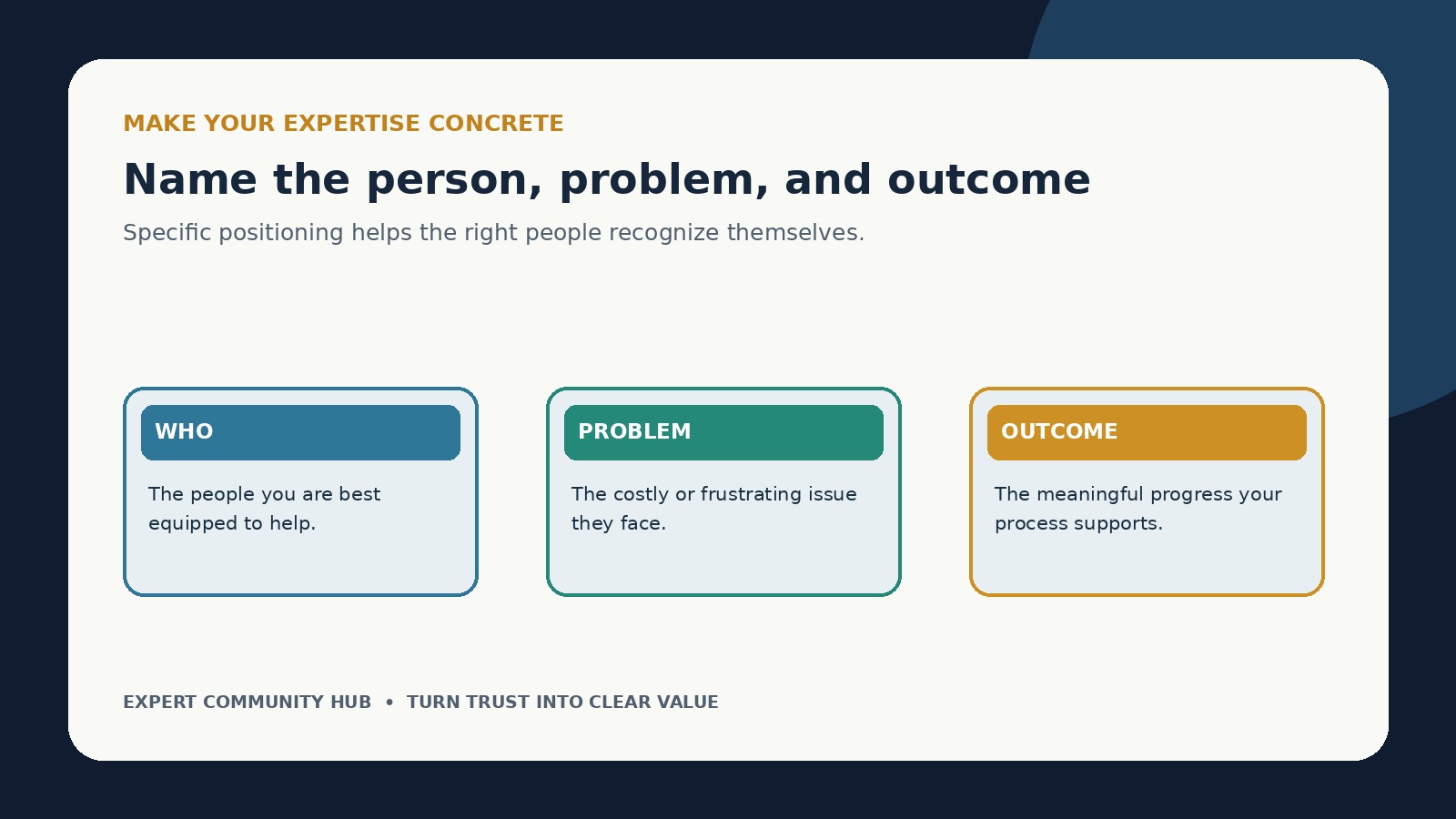
Instead of saying, “I help people grow their business,” explain who you help, what problem you focus on, and what kind of progress your process supports.
Specificity does not limit your intelligence. It helps people understand where you can be useful.
2. They do not recognize the cost of staying where they are
A person can enjoy your content without feeling a need to act.
They may know that their marketing could improve, but not understand how inconsistent follow-up is costing them opportunities. They may want more clients but have not connected that goal to a specific problem in their current process.
Your role is not to frighten people into buying. It is to help them understand the problem accurately, including why it matters and what may happen if it remains unresolved.
3. They do not know what makes your approach different
When several experts appear to offer similar advice, a prospect may struggle to choose.
A clear method can help. Explain how you diagnose the problem, the sequence you use, and why that process makes sense for the audience you serve.
You do not need to invent a complicated trademarked framework. A simple, repeatable process that you can explain and deliver consistently is enough to begin.
4. They cannot picture what happens after they pay
Buying a service involves uncertainty.
Will the sessions be practical? What will they need to do? How will support work? What if they get stuck? Is the program suitable for their situation?
A vague offer creates more questions than confidence.
Describe the experience clearly: the starting point, the main steps, the support included, the expected responsibilities, and the boundaries of what you can promise.
5. You have not made the next step clear
Some people may be interested but unsure how to move forward.
Do they message you? Book a call? Join a workshop? Review a program page? Download a guide?
A clear invitation removes guesswork. It should match the person's readiness and make it easy to learn more without feeling pressured.
The shift: from sharing information to guiding progress
Your content can do more than answer isolated questions. It can help a suitable prospect understand a problem and see a path forward.
Consider this sequence:
- Help them recognize: Describe a real problem they experience.
- Help them understand: Explain why it happens and what to examine.
- Show your method: Demonstrate the process you use to address it.
- Build confidence: Share genuine examples, useful demonstrations, or client experiences with permission.
- Offer a next step: Explain how they can work with you if they want more structured support.
This does not mean every post must sell. It means your content and offer should connect rather than live in separate worlds.
Make your expertise easier to buy
Try completing this sentence:
I help [specific audience] move from [current problem] to [desired progress] through [your process].
For example:
“I help independent coaches move from scattered marketing activity to a more consistent client-acquisition process through clearer positioning, a focused offer, and a repeatable follow-up system.”
This statement is not a guarantee of results. It is a starting point for communicating who you help and how your work is structured.
Then check your offer against three questions:
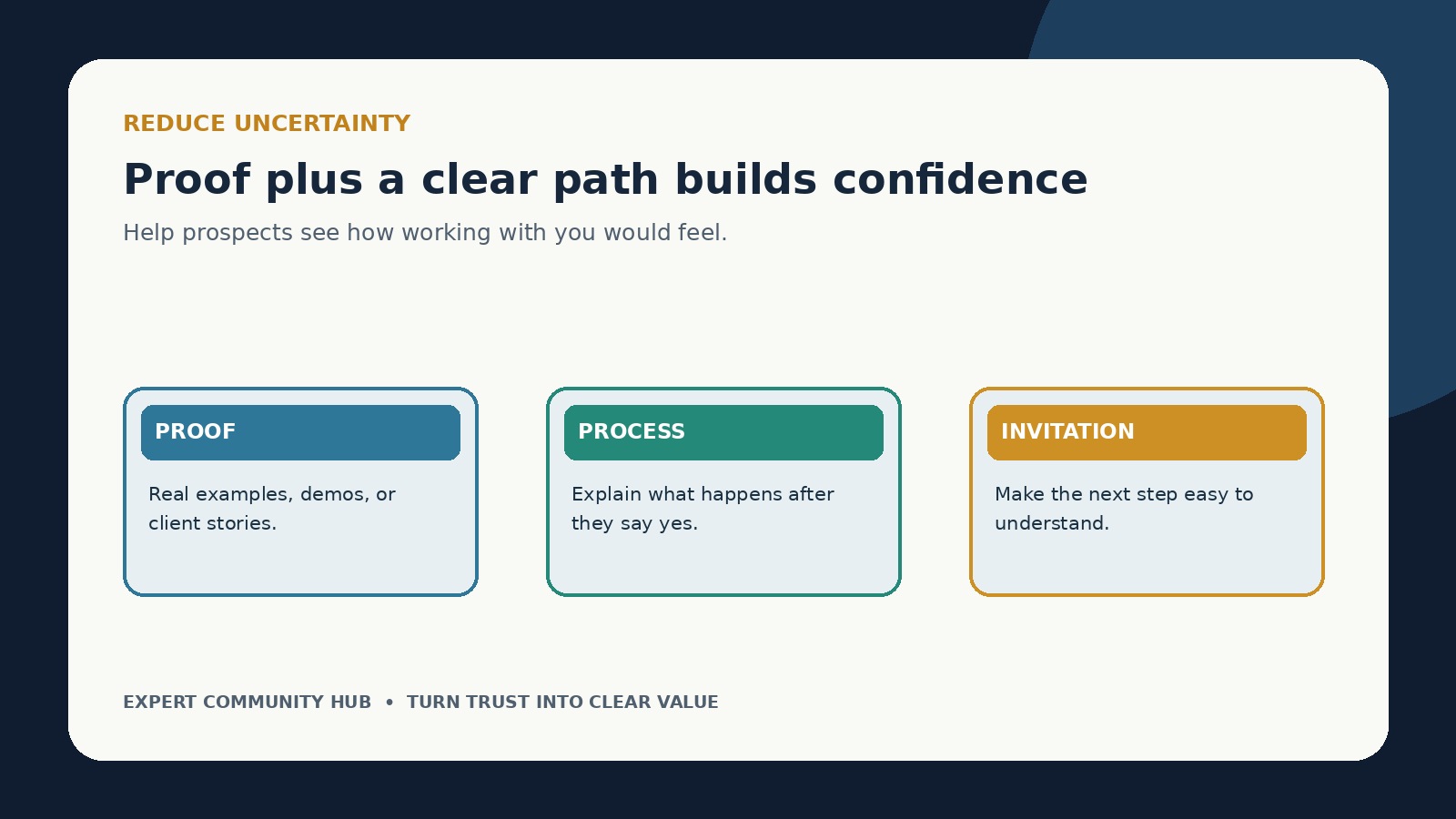
- Is the outcome clear? Can a suitable person understand what progress the service is designed to support?
- Is the process visible? Can they picture what working with you involves?
- Is the evidence credible? Do you have genuine examples, demonstrations, or a transparent explanation of your method?
You do not need to stop giving free advice
Helpful content is still one of the best ways to demonstrate how you think.
But you can create a boundary between a useful answer and a full consulting engagement.
A social post might explain the principle. A workshop might help people apply it. A paid service might diagnose their specific situation, adapt the method, provide feedback, and help them implement it.
The distinction is not simply “free information versus paid information.”
It is the difference between learning something useful and receiving structured help to apply it to a particular problem.
Be generous with insight. Be clear about the scope of your paid work.
A 20-minute trust-to-client audit
Look at your profile, website, or main offer page. Imagine someone who has never worked with you is seeing it for the first time.
Spend 20 minutes answering these questions:
- Can they tell who you help?
- Can they identify the problem you specialize in?
- Is the outcome of your service easy to understand?
- Do you explain your process in plain language?
- Is there genuine proof or a demonstration of your approach?
- Is the next step obvious?
- Can they tell whether your service is suitable for them?
Choose the weakest answer and improve that one thing first.
You may not need more content. You may need a clearer bridge between the value people already see and the service you want them to buy.
Trust is the beginning, not the whole sales process
You do not need to become less helpful to earn money from your expertise.
You need to make your expertise easier to understand, evaluate, and engage.
People should be able to see not only that you know your subject, but also who you help, how you work, and what the next step looks like.
Some people will still choose not to buy. That is normal. The goal is not to convert every follower.
It is to help the right people recognize when your structured support is a good fit.
Your turn: Do people mostly come to you for free advice, or do they clearly understand the paid service they can hire you for?
Written for coaches, consultants, and knowledge-based entrepreneurs by Expert Community Hub.