You can help people in many ways. But when your message tries to say everything, potential clients may struggle to see why they should choose you. Learn how to focus your message without shrinking your expertise.
You can solve ten different problems. So why does it feel so hard to explain what you do?
You have experience. You have skills. You can help people in several ways.
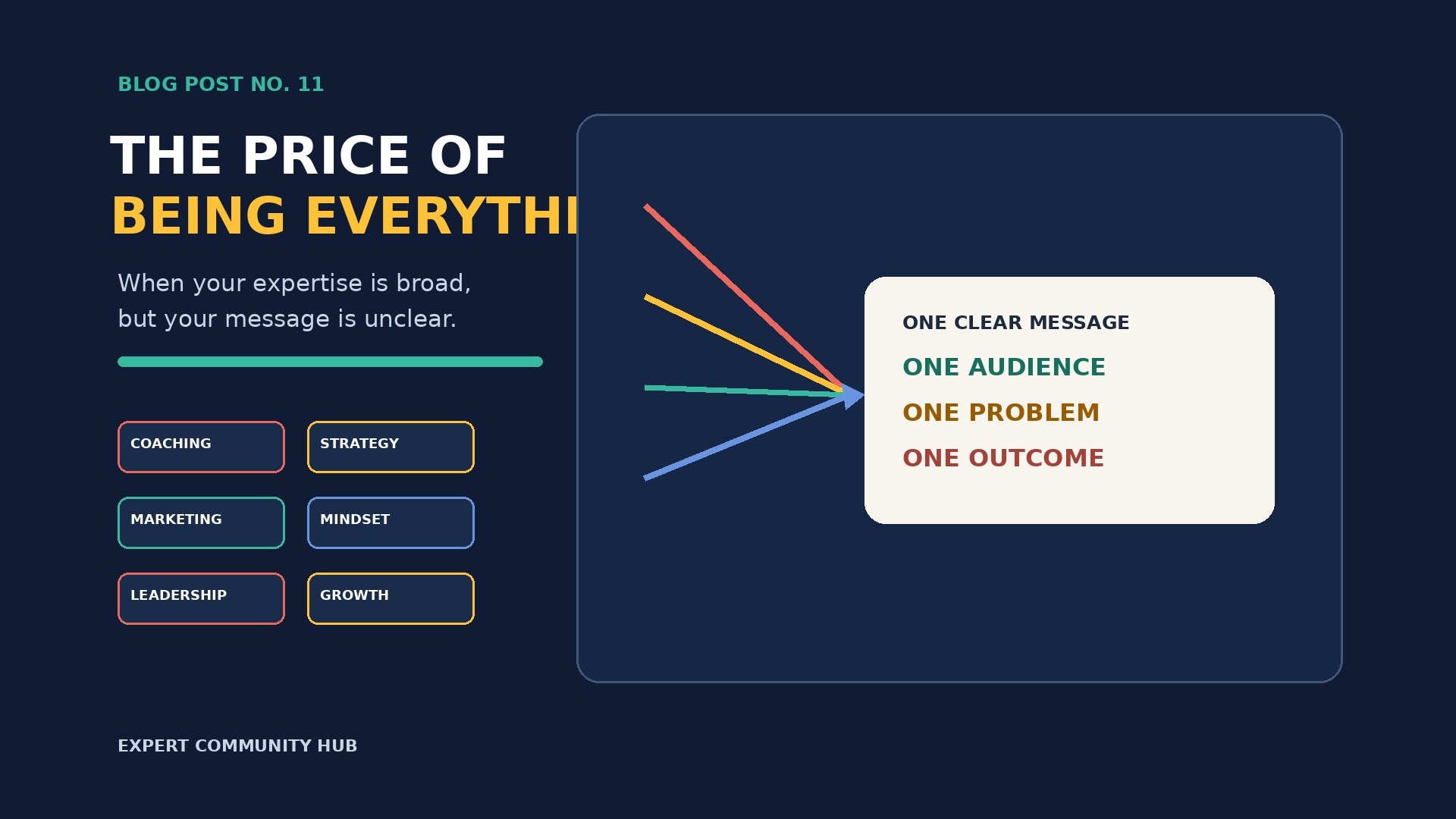
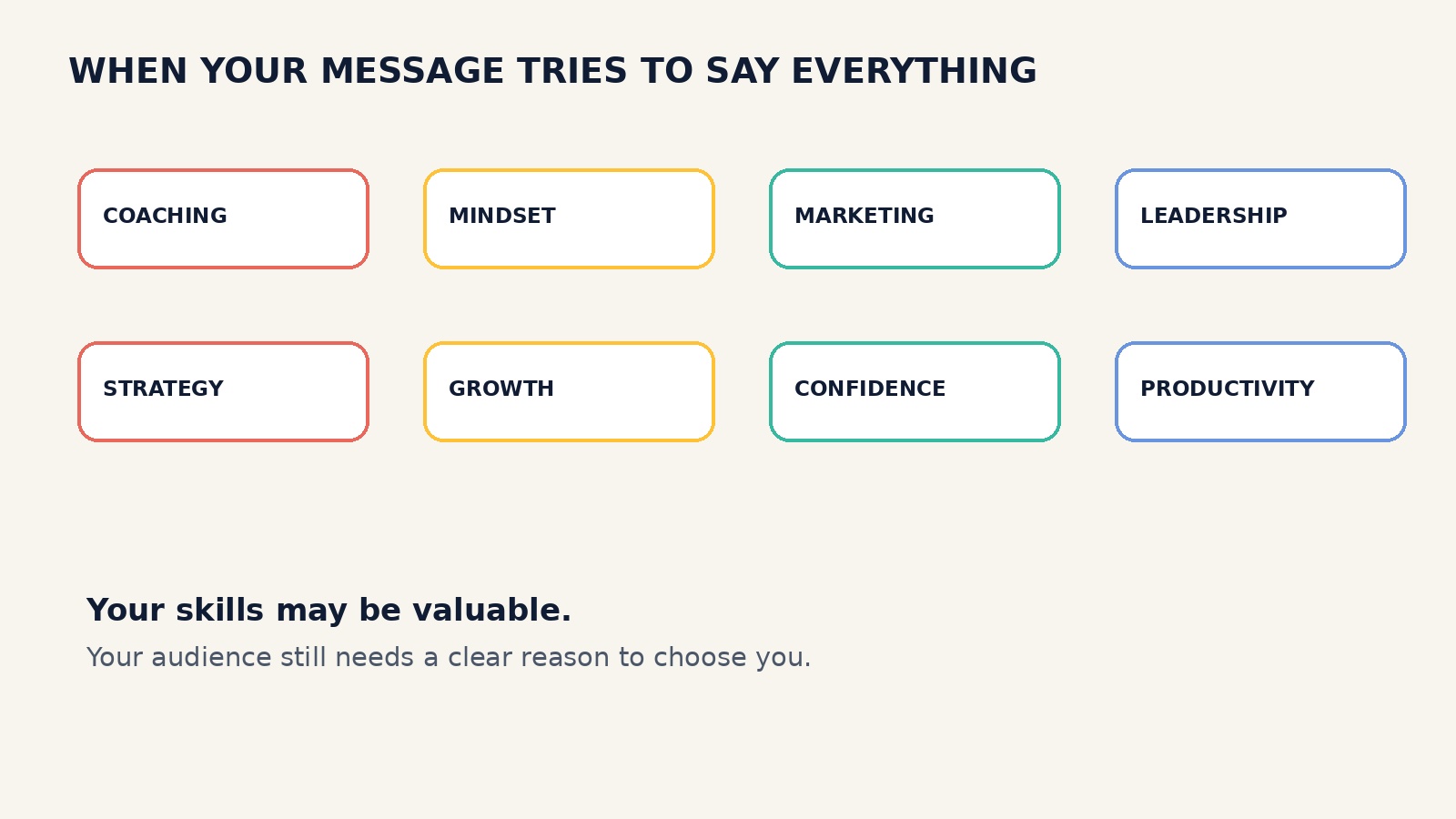
You can coach. You can consult. You can teach. You can help with strategy, mindset, marketing, leadership, or personal growth.
You want people to see the full range of your abilities.
So you mention everything.
But your audience may leave with one question:
"What exactly should I come to you for?"
Being good at many things is an advantage. Trying to communicate all of them at once can become a disadvantage.
By Dharmendra Singh | Expert Community Hub
The hidden cost of a broad message
You may have spent years building your expertise.
You have taken courses. You have gained experience. You have helped people solve different challenges.
It feels wrong to focus on one area. You worry that you will miss opportunities.
So your message becomes broad.
"I help people transform their lives."
"I help businesses grow."
"I help experts reach their full potential."
These statements sound positive. But they are difficult to connect to a specific need.
A potential client may not know whether you understand their situation. They may not know what working with you looks like. They may not know where to begin.
And when people are unsure, they often delay the decision.
The pain behind the pain
The deeper problem is often not a lack of skills.
It is the fear of choosing.
You may worry that focusing on one audience will close other doors. You may fear that your other skills will go to waste. You may want your brand to reflect every part of who you are.
That is understandable.
But your marketing message does not have to describe your entire identity.
It needs to help the right person understand why your work is relevant to them.
You can have broad abilities and still lead with a focused offer.
You can serve different clients over time and still start with one clear audience.
Focus is not denying your potential. It is making your value easier to recognise.
Why a clear niche helps people choose
Imagine two messages.
Message A: "I help people improve their business, mindset, marketing, productivity, and success."
Message B: "I help new coaches turn their expertise into a clear starter offer and a simple process for attracting potential clients."
The second message gives a particular person a reason to pay attention.
They can recognise their situation. They can understand the type of help being offered. They can decide whether it fits.
Clear positioning does not guarantee a sale. But it makes the conversation easier to start.
Choose a starting point—not a lifelong label
You do not need to predict the rest of your career before choosing a niche.
Treat it as a business decision you can test.
Start with three questions.
1. Who can you help well?
Think about the people you understand. Consider your experience, strengths, interests, and the problems you can help solve responsibly.
Do not choose an audience only because it appears profitable. You need to understand its needs.
2. What problem matters to them now?
Look for a problem people already want to solve.
Listen to their questions. Read their comments. Have real conversations. Notice the words they use to describe their frustration.
A niche becomes clearer when you learn from the people in it.
3. What outcome can you help them work toward?
Describe the result of your service in plain language.
Be specific, but stay honest. Avoid promising outcomes you cannot control.
Choose an outcome that fits your skills and the service you can deliver.
Use this simple positioning statement
Complete the sentence:
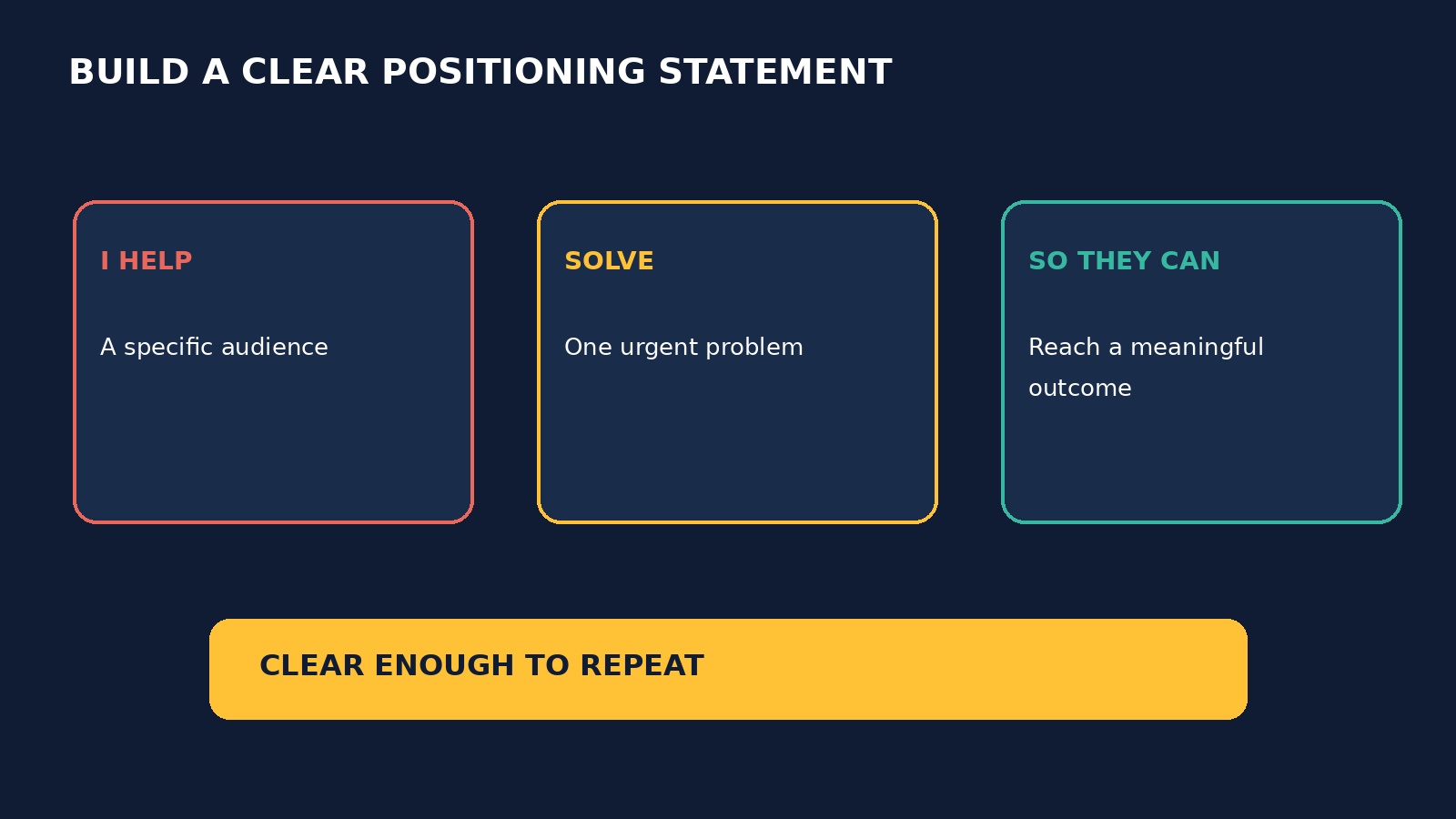
"I help [specific audience] solve [specific problem] so they can [meaningful outcome]."
For example:
"I help independent coaches clarify their offer so potential clients can understand the value of working with them."
Or:
"I help small business owners build a simple follow-up process so fewer enquiries are forgotten."
These statements are not final forever. They are useful starting points.
Read your statement to someone who fits your target audience. Ask them what they think you do.
If they understand it quickly, you are moving in the right direction.
If they look confused, simplify it.
You do not have to abandon your other skills
This is where many experts hesitate.
They think a niche means doing only one thing for the rest of their lives.
It does not.
Your wider expertise can strengthen your main offer. Your knowledge of communication may improve your coaching. Your marketing experience may help your consulting clients. Your teaching skills may make your program more effective.
The key is to give your audience a clear entry point.
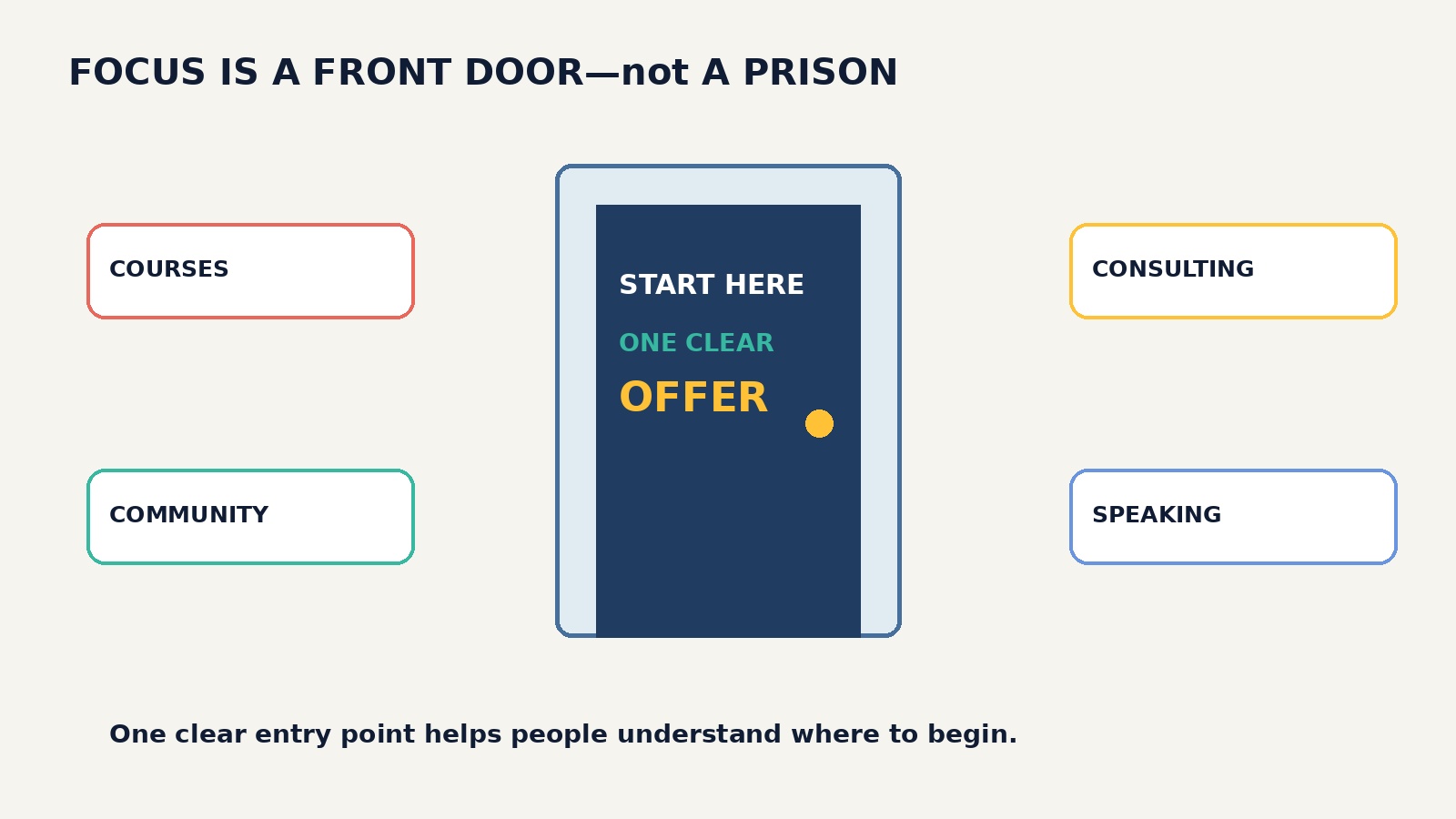
Think of your niche as the front door, not the entire house.
People first need to understand where to begin. Once they trust you, they may discover other ways you can help.
A 30-minute niche clarity exercise
Set aside half an hour.
Minutes 1–10: List your strengths.
Write down the problems you can help solve. Include relevant experience and skills.
Minutes 11–20: Look for patterns.
Which audience do you understand best? Which problems come up repeatedly? Which problems are you equipped to help solve?
Minutes 21–25: Choose one starting offer.
Select one audience and one problem to focus on first.
Minutes 26–30: Write and test your message.
Use the positioning statement. Share it with two or three people who resemble your target audience. Ask what they understand and what remains unclear.
Do not treat their feedback as a final verdict. Look for patterns and improve your message.
Key takeaways
1. Broad expertise is valuable. But your first message needs a clear focus.
2. Clarity helps people recognise themselves. A specific audience and problem make your offer easier to understand.
3. Choosing a niche is a testable decision. You can learn and adjust as you gain experience.
4. Focus does not mean abandoning your other skills. Your wider knowledge can support your main offer.
5. Test your message with real people. Their understanding matters more than how impressive your words sound.
Final thought: make it easy for the right people to choose you
You do not need to hide your experience.
You do not need to reduce yourself to one skill.
You need to communicate one clear reason for the right person to start a conversation with you.
Lead with the problem you understand. Explain the outcome you help people pursue. Deliver real value. Expand your offers as you learn what your audience needs.
At Expert Community Hub, we help coaches, consultants, and experts turn their knowledge into clear offers and practical client acquisition systems.
Your expertise can be broad.
Let your message be clear.
Your turn
Complete this sentence:
"I help ______ solve ______ so they can ______."
If you have been trying to communicate too many things at once, use this exercise to choose one starting point.
Share your draft in the comments. It may be the first step toward a clearer offer.