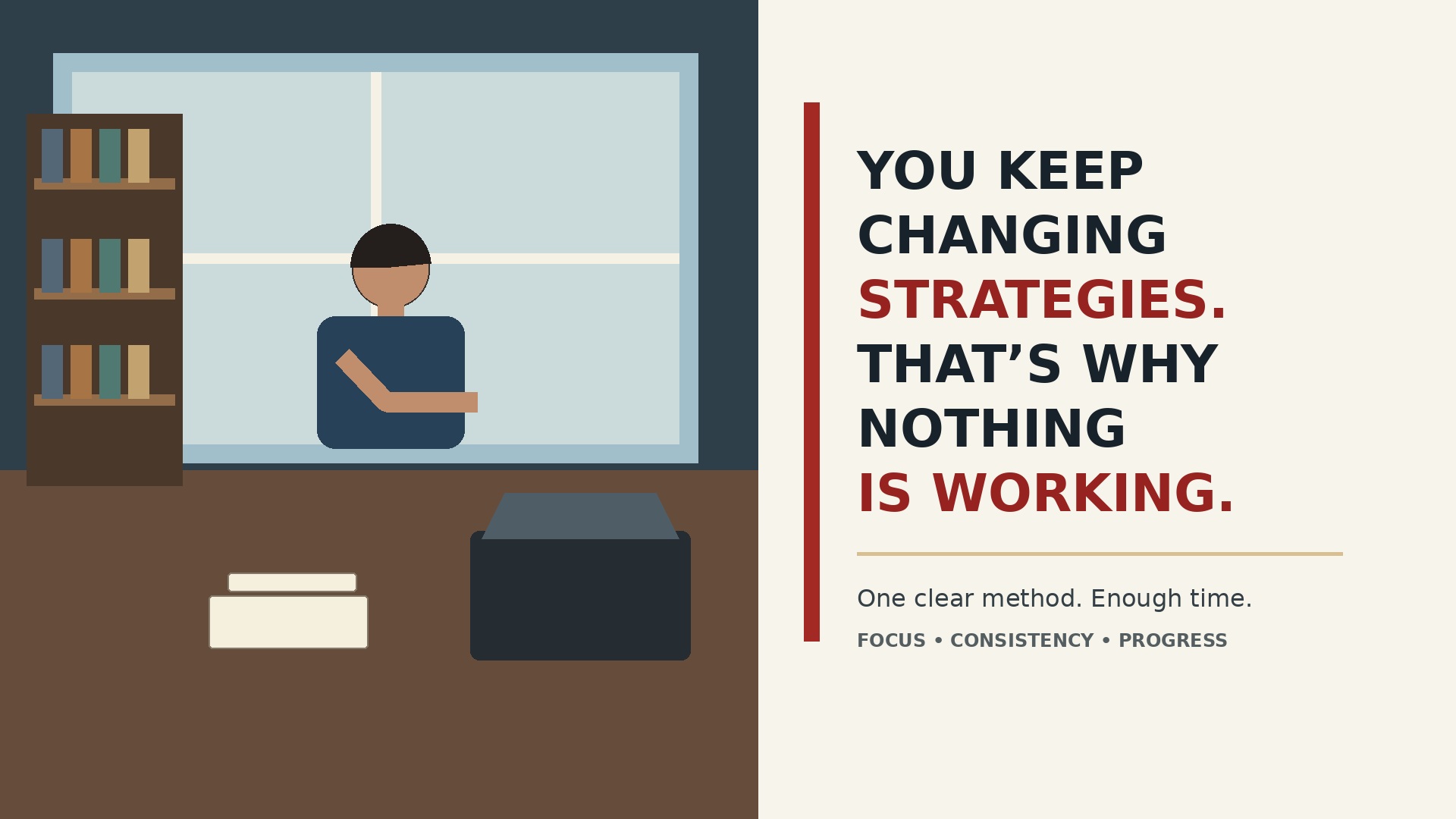

Coaching, courses, memberships, consulting, affiliate marketing—every new model sounds like an opportunity. But spreading your attention too thin can stop any one model from working.
Your next breakthrough may come from improving one model—not adding another.
One week, you decide to launch a coaching program.
Then someone tells you digital courses scale better. Another expert recommends a paid membership. A video introduces affiliate marketing. A podcast explains why consulting is the fastest way to generate cash.
Every option sounds promising.
So you try to build several at once.
You create a course outline, research membership platforms, design a consulting offer, explore affiliate tools, and start planning a community. Your browser fills with tabs. Your notes fill with ideas.
But your business still struggles to generate consistent clients.
The problem may not be that you chose the wrong model.
It may be that you have not given one model enough focused attention to learn whether it works.
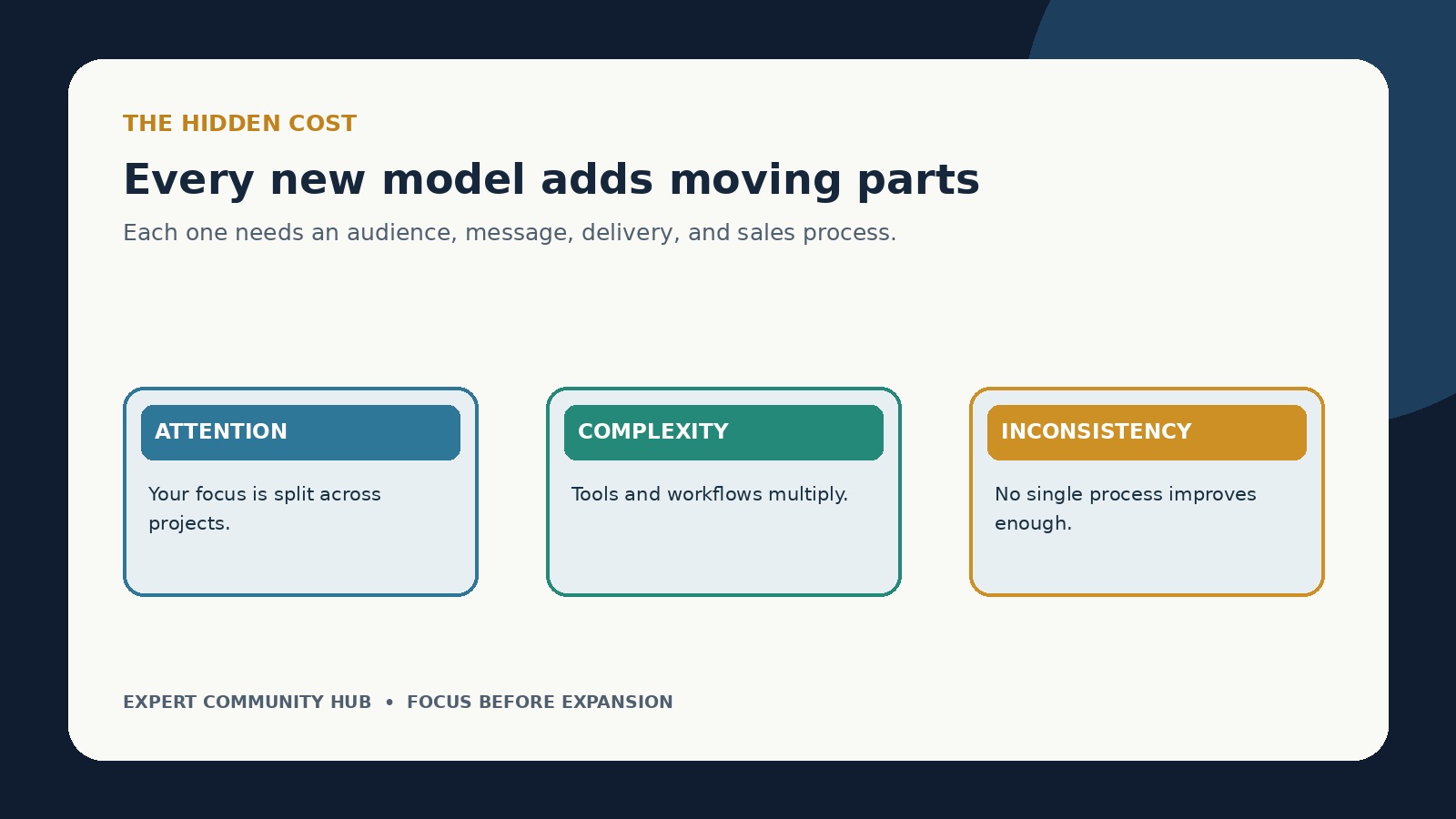
The hidden cost of too many opportunities
Each business model has its own requirements.
A coaching service needs a clear offer, client conversations, and reliable delivery. A course needs a defined learning outcome and a way to reach buyers. A membership needs a continuing reason for members to stay. Affiliate marketing requires relevant recommendations and an audience that trusts them.
These models can work together eventually. But building them all at once creates a lot of moving parts.
You may find yourself switching between different audiences, messages, platforms, and priorities every day.
The costs are easy to miss:
- Attention gets fragmented. Every new project competes with the one you already started.
- Progress becomes difficult to measure. You change several things before learning what caused a result.
- Your message becomes confusing. Prospects may struggle to understand what you are best placed to help them with.
- Systems remain unfinished. You have several partial funnels but no dependable path from interest to sale.
- You lose confidence too early. Instead of giving one approach a fair test, you move to the next one when progress feels slow.
More options do not automatically create more income. Sometimes they create more unfinished work.
Why new ideas feel so attractive
A new business model offers a fresh start.
It lets you imagine the outcome without facing all the difficult details yet. You can picture recurring revenue from a membership, passive sales from a course, or rapid growth from a new platform.
The current project, by contrast, contains the uncomfortable work: following up with prospects, refining the offer, asking for feedback, improving delivery, and reviewing results.
This does not mean you should never change direction. Sometimes evidence shows that an idea is not viable. Sometimes your circumstances or market change.
The important difference is between changing direction because you learned something and changing direction because the next idea feels more exciting.
A good business decision comes from evidence, not novelty alone.
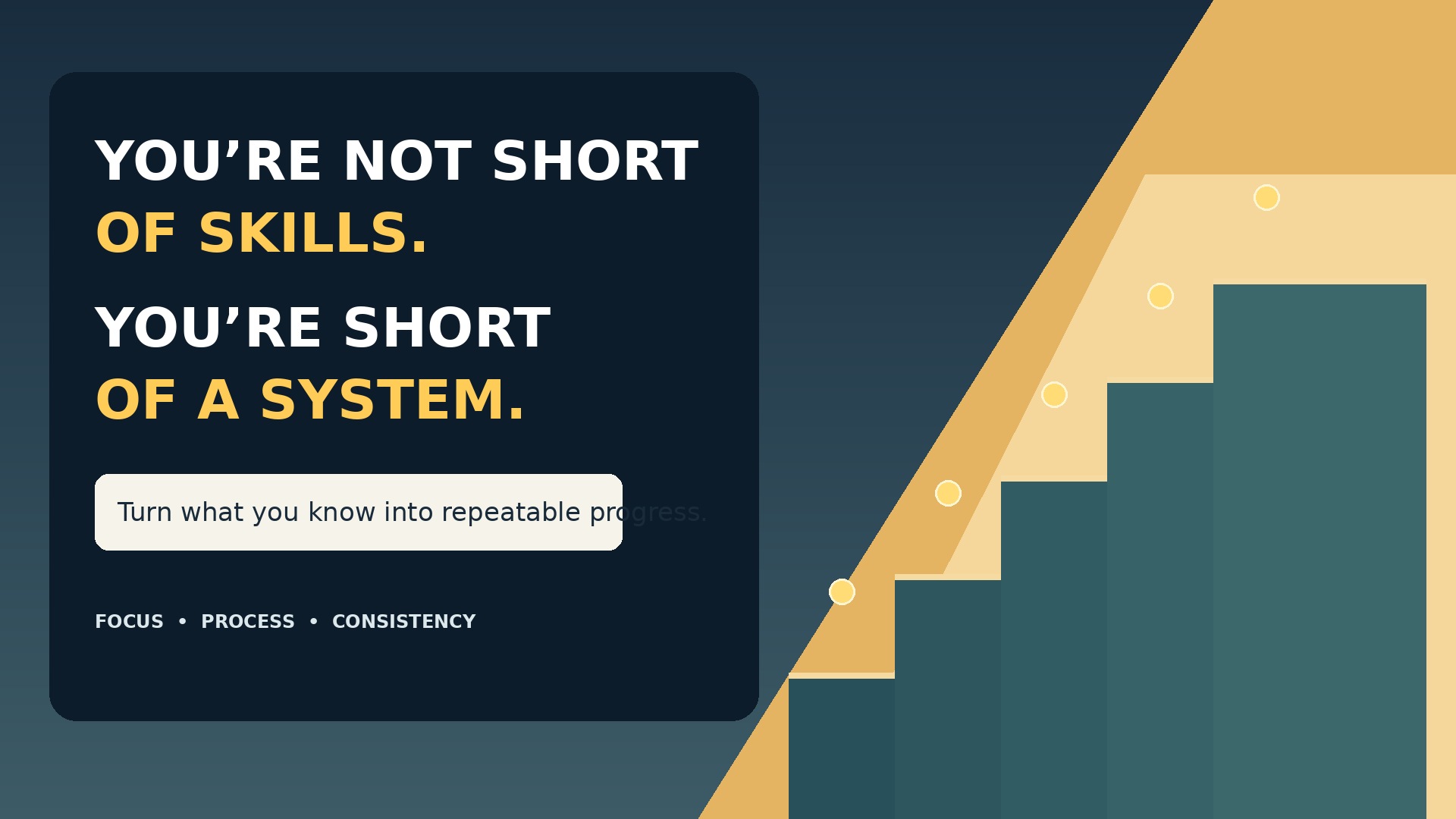
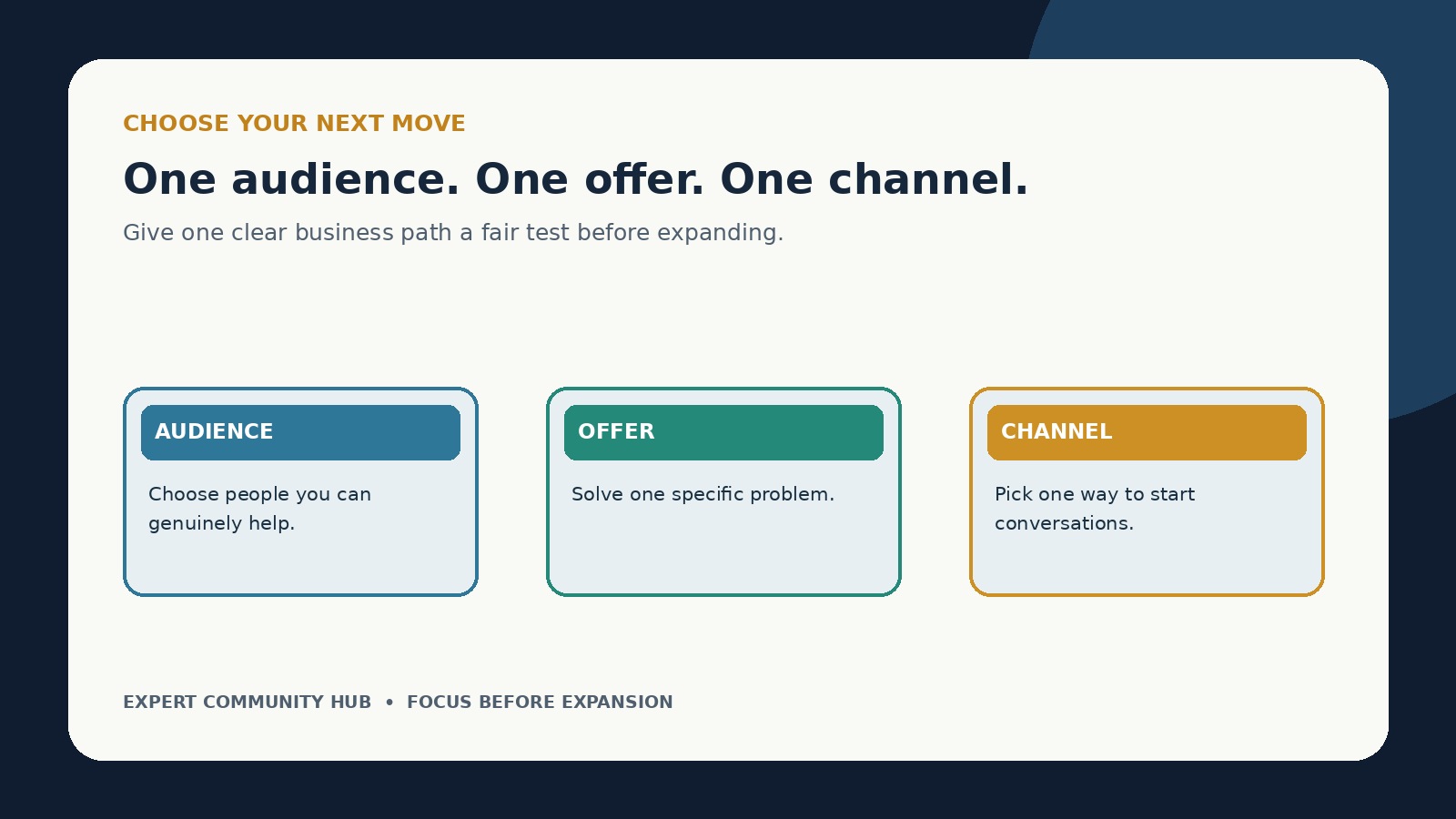
The Focus Framework: One Audience, One Offer, One Channel
If your business feels scattered, simplify the next stage. You are not choosing what you must do forever. You are choosing what to test first.
1. Choose one audience
Start with a group whose challenges you understand and whose needs you can realistically serve.
For example, you might focus on independent coaches who struggle to generate qualified enquiries. That gives you a clearer starting point than trying to serve every professional and every small business at once.
2. Choose one offer
Pick one service or product that addresses a specific problem for that audience.
It might be a consulting package, a focused coaching program, or a practical workshop. Explain what it includes, who it is for, and what it is designed to help the client do.
Do not build a large product library before you have evidence that the core problem and offer matter to your audience.
3. Choose one primary acquisition channel
Select a practical way to reach suitable people. This might be professional networking, useful content on one platform, referrals, workshops, or a small advertising test.
You can use other channels when opportunities arise. The point is to choose one primary channel to improve and measure rather than spreading your effort evenly across every platform.
4. Set a fair test period
Decide in advance what you will do and what evidence you will review. For example, over the next four weeks, publish useful content consistently, speak with relevant prospects, make clear invitations, and record the responses.
Four weeks is an experiment—not a guarantee that every business will produce sales in that time. Your sales cycle, audience, and offer may require a different period.
5. Review before expanding
Ask what the evidence tells you. Are the right people responding? Do they understand the offer? What questions or objections keep appearing? Are you delivering the promised value?
Improve the weakest part of the process before adding another business model.
What if you have several ideas you genuinely want to pursue?
You do not have to discard them.
Create an idea parking lot. Write down each idea, the audience it serves, the resources it would require, and why it interests you. Then return to your current priority.
Review the list at a scheduled time—perhaps once a month—instead of allowing every new idea to interrupt your work.
You can also look for sensible connections between models. A consulting service may reveal a recurring problem that later becomes a workshop. A workshop may help you learn whether a structured course is useful. A community may support people who need ongoing implementation after a program.
The sequence matters.
Let one activity provide evidence for the next. Do not build the entire ecosystem before you understand what your audience needs and what you can deliver well.
Your 20-minute business focus reset
Open a blank page and answer these questions.
Minutes 1–5: List your active models. Include coaching, consulting, courses, memberships, affiliate projects, and any other business initiatives taking your time.
Minutes 6–10: Choose the strongest current opportunity. Consider audience access, the problem you can solve, your ability to deliver, and any evidence of demand you already have.
Minutes 11–15: Define the test. Write down one audience, one offer, one primary channel, and the actions you will take over a defined period.
Minutes 16–20: Pause one distraction. Choose one nonessential project you will temporarily stop expanding so you can give your primary model more attention.
You are not making a permanent commitment. You are creating enough focus to learn something useful.
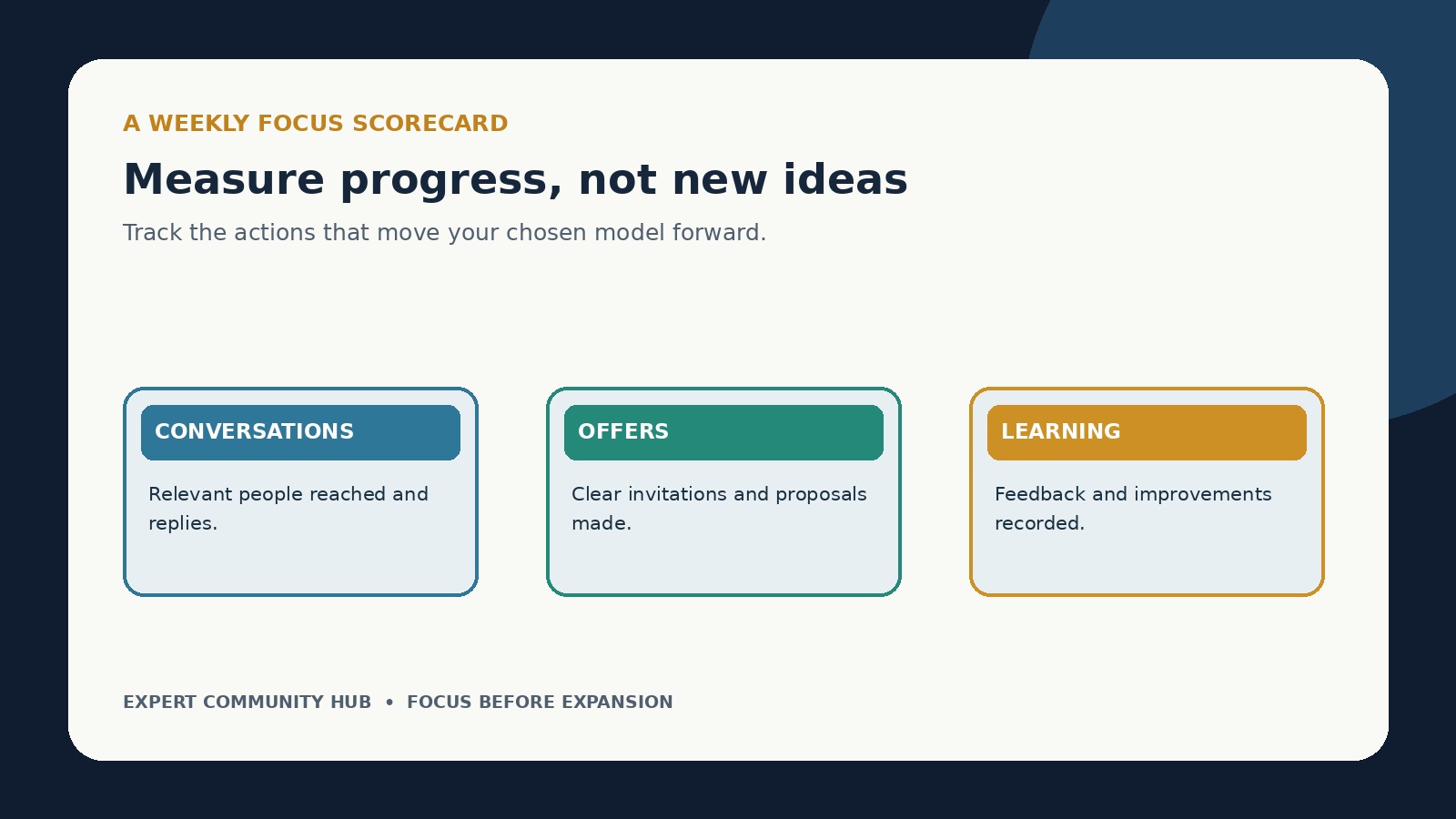
What should you measure?
Do not measure progress only by how many projects you launch or how many tools you connect.
Choose a few indicators that fit your current model:
- Relevant conversations started.
- Responses from people in your intended audience.
- Offers or proposals shared.
- Sales and revenue, where appropriate.
- Client feedback and delivery quality.
- The most important bottleneck you identified and improved.
These measures help you understand what is happening. They are not a reason to chase activity for its own sake.
If people are interested but do not understand the offer, clarify the message. If the offer is clear but few suitable people see it, work on distribution. If clients buy but delivery is difficult, improve the service before increasing volume.
Focus makes the next decision easier because you can see where the process needs attention.
Growth often begins with subtraction
Entrepreneurs are encouraged to think bigger, add new revenue streams, and explore every opportunity.
There is a time for expansion. But early progress often depends on removing distractions and improving the basics.
One clear audience gives you a better understanding of customer problems. One offer gives you a chance to improve the promise and delivery. One primary acquisition channel gives you a process you can observe and refine.
Once the model shows useful evidence, you can make a more informed decision about what to add.
You do not need to reject ambition. You need to give your ambition a workable sequence.
Your turn
Which business model or project is taking most of your attention right now—and what could improve if you focused on it for the next 30 days?
Share your thoughts in the comments. Your answer may help another expert simplify their own business plans.
Your next step
If you are a coach, consultant, or knowledge-based professional, Expert Community Hub offers a place to explore how to turn your expertise into a clearer offer and a more structured business.
Start with one audience, one problem, and one focused experiment. Let evidence guide your next move.
Written for coaches, consultants, and knowledge-based entrepreneurs by Expert Community Hub.