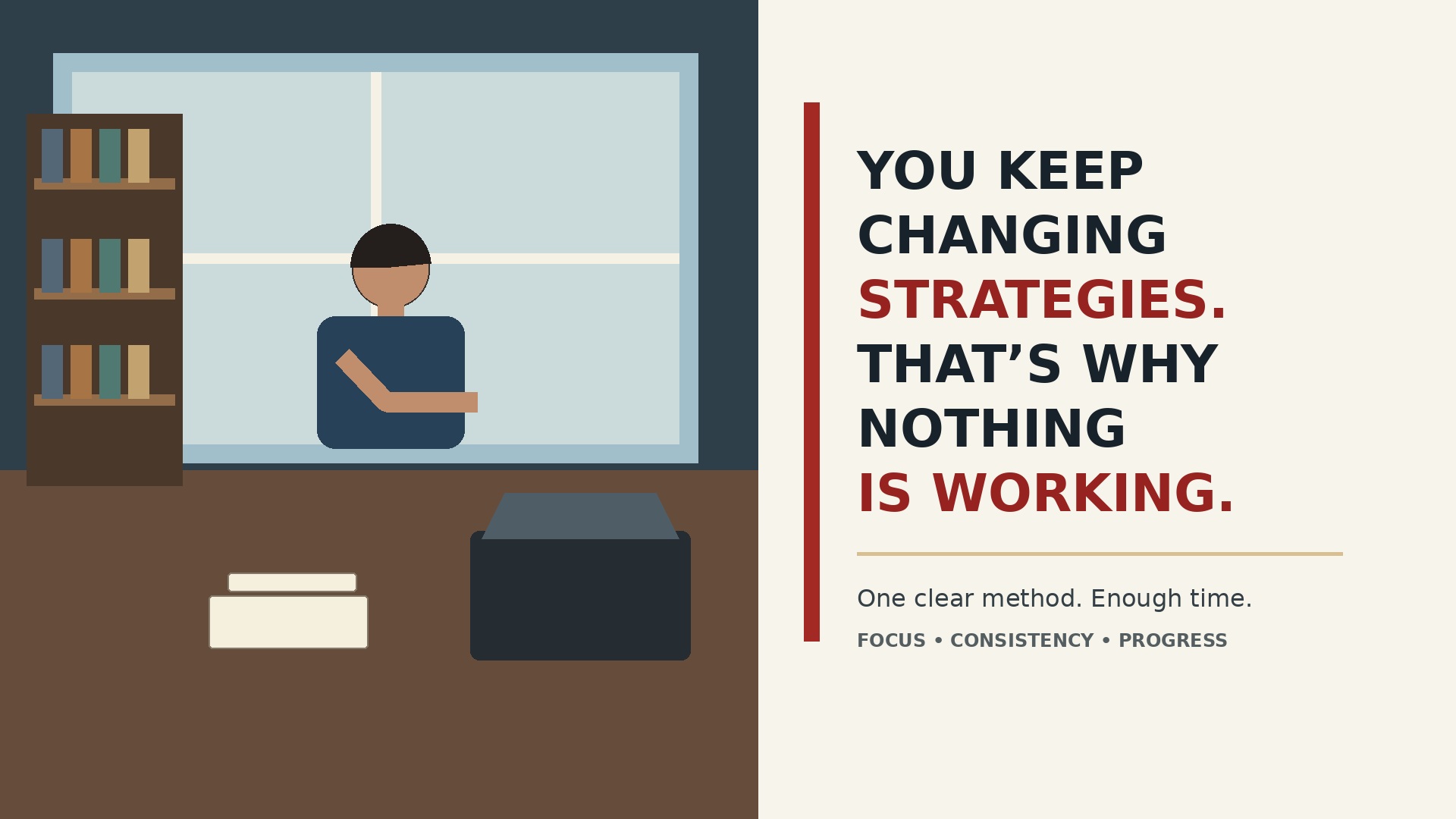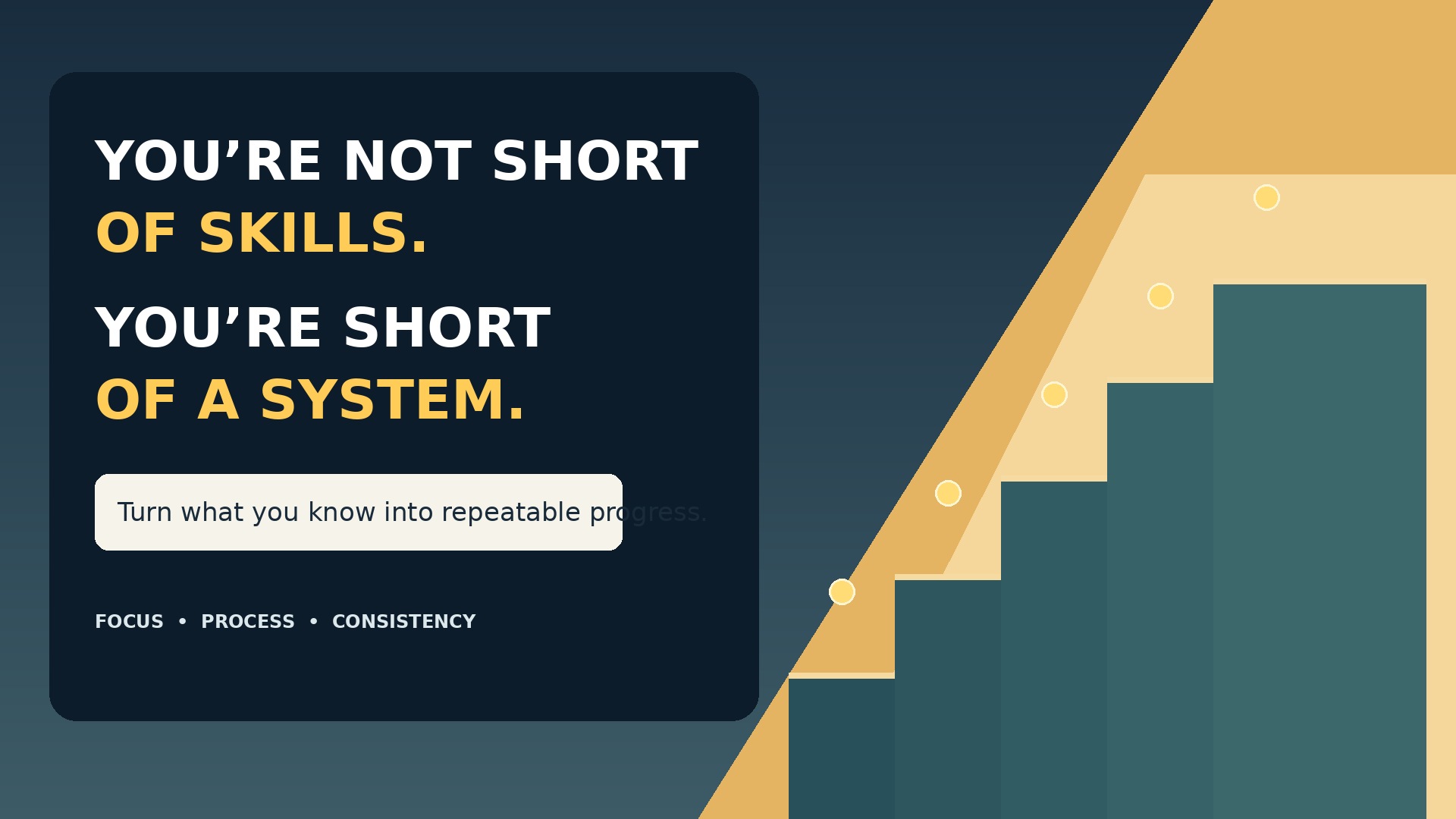
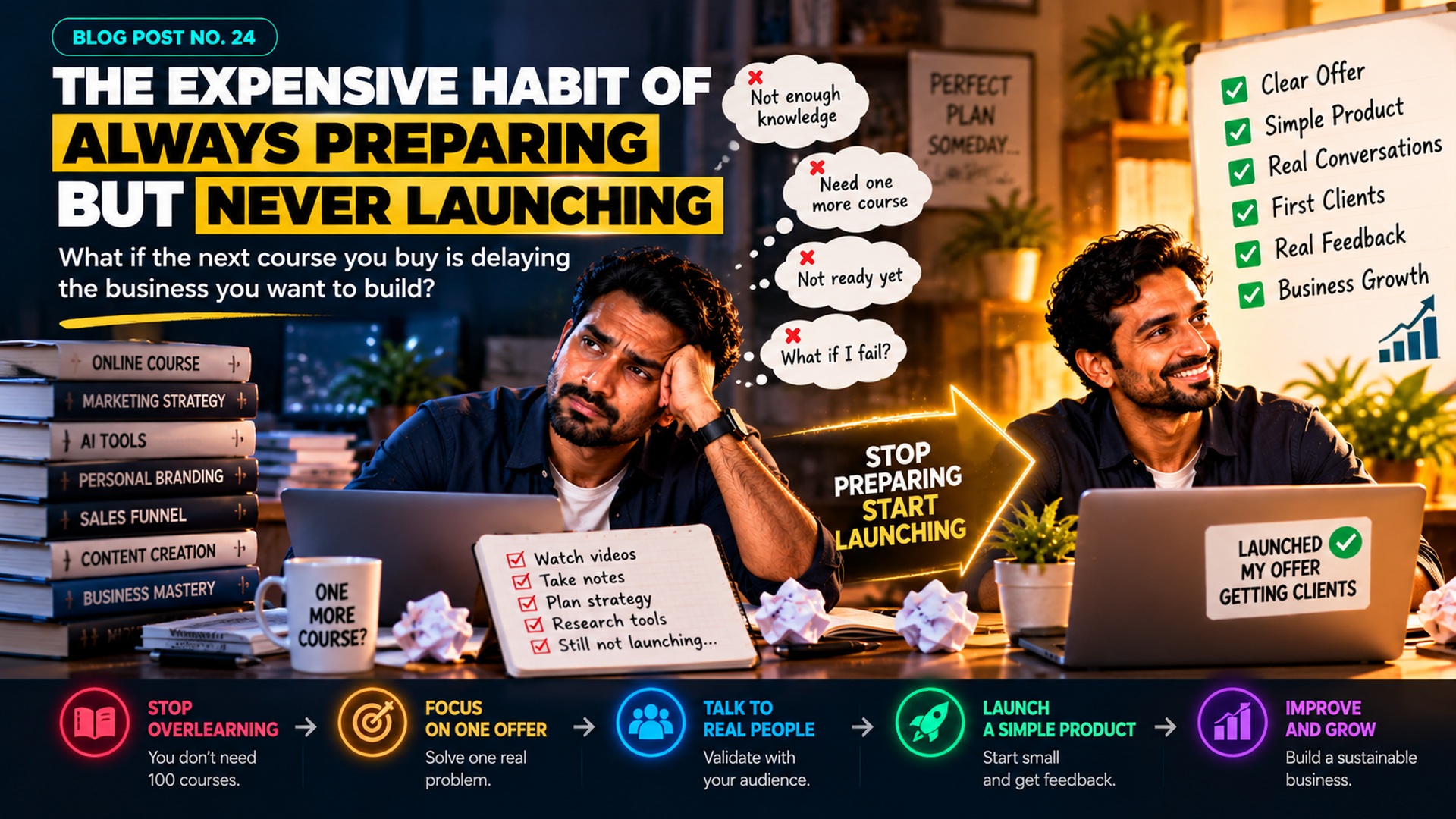
Another course, another notebook, another plan—and still no launch. Discover why preparation can become a hiding place and how to turn what you know into a small, real-world test.
What if the next course you buy is delaying the business you want to build?
You buy a course because you want to improve your marketing.
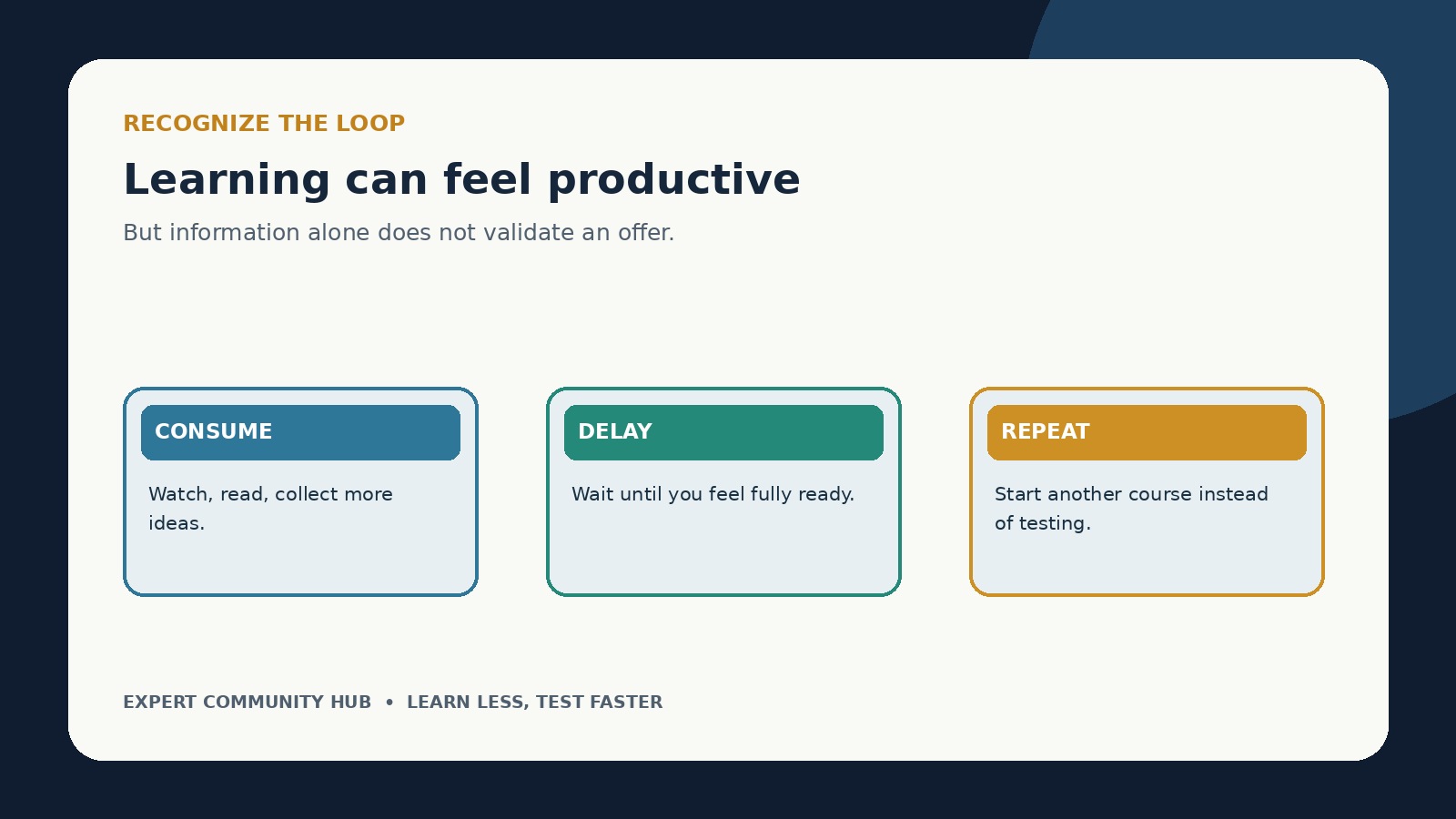
Then you discover a better tool. You save a webinar about sales. You download a guide about finding your niche. You start a notebook full of ideas.
You feel productive.
You are learning. You are planning. You are preparing to do things properly.
But weeks pass. Then months.
Your offer is still not in front of real customers. Your content is still sitting in drafts. Your business idea is still waiting for the perfect moment.
And a quiet question starts to appear:
“Why do I know so much about building a business, but still haven't built one?”
If this feels familiar, you are not alone. Learning is valuable. The problem begins when preparation replaces action.
The pain of being permanently almost ready
You may have invested money in training, time in research, and energy in planning. You might know more about marketing, AI, sales, and product creation than you did a year ago.
Yet the evidence that matters most is still missing: conversations with potential customers, feedback on your offer, and experience delivering a real solution.
This gap can become expensive in several ways.
- Financially: You keep buying information before using what you already have.
- Emotionally: Each unfinished plan can make you question your ability to follow through.
- Practically: You delay learning what your audience actually needs.
- Commercially: You cannot improve an offer that has never been tested with real people.
The frustration is not that you learned too much. It is that your learning has not yet had enough opportunity to become useful action.
The hidden reason preparation feels safer than launching
Preparing gives you a sense of progress without exposing your idea to a real decision.
When you watch another lesson, you do not have to risk hearing “no.” When you rewrite your website, you do not have to discover whether anyone wants the offer. When you compare tools, you can postpone the uncomfortable work of asking someone to buy.
This does not mean every learner is afraid or every course is unnecessary. Sometimes you genuinely need a skill before you can proceed.
But sometimes “I need to learn more” becomes a respectable explanation for avoiding uncertainty.
A real-world test changes that. Someone may not respond. They may ask a difficult question. They may say the offer is unclear.
That feedback can sting. It can also teach you more about your actual business than another dozen hours of general information.
The shift: learn just enough to take the next step
You do not need to stop learning. You need to connect learning to implementation.
Try this rule:
Before starting a new course or buying another tool, identify one action you will take using what you already know.
For example:
- After learning about positioning, write one clear offer statement.
- After studying content marketing, publish one useful post.
- After learning about lead generation, create one simple signup page.
- After studying sales, invite a suitable prospect to a conversation.
- After learning about product creation, test a small workshop before building a large course.
This creates a practical loop:
Learn → Apply → Get feedback → Improve → Learn what you need next.
The market does not need your first version to be perfect. It needs a clear, honest solution that you can deliver responsibly and learn from.
The Minimum Useful Offer framework
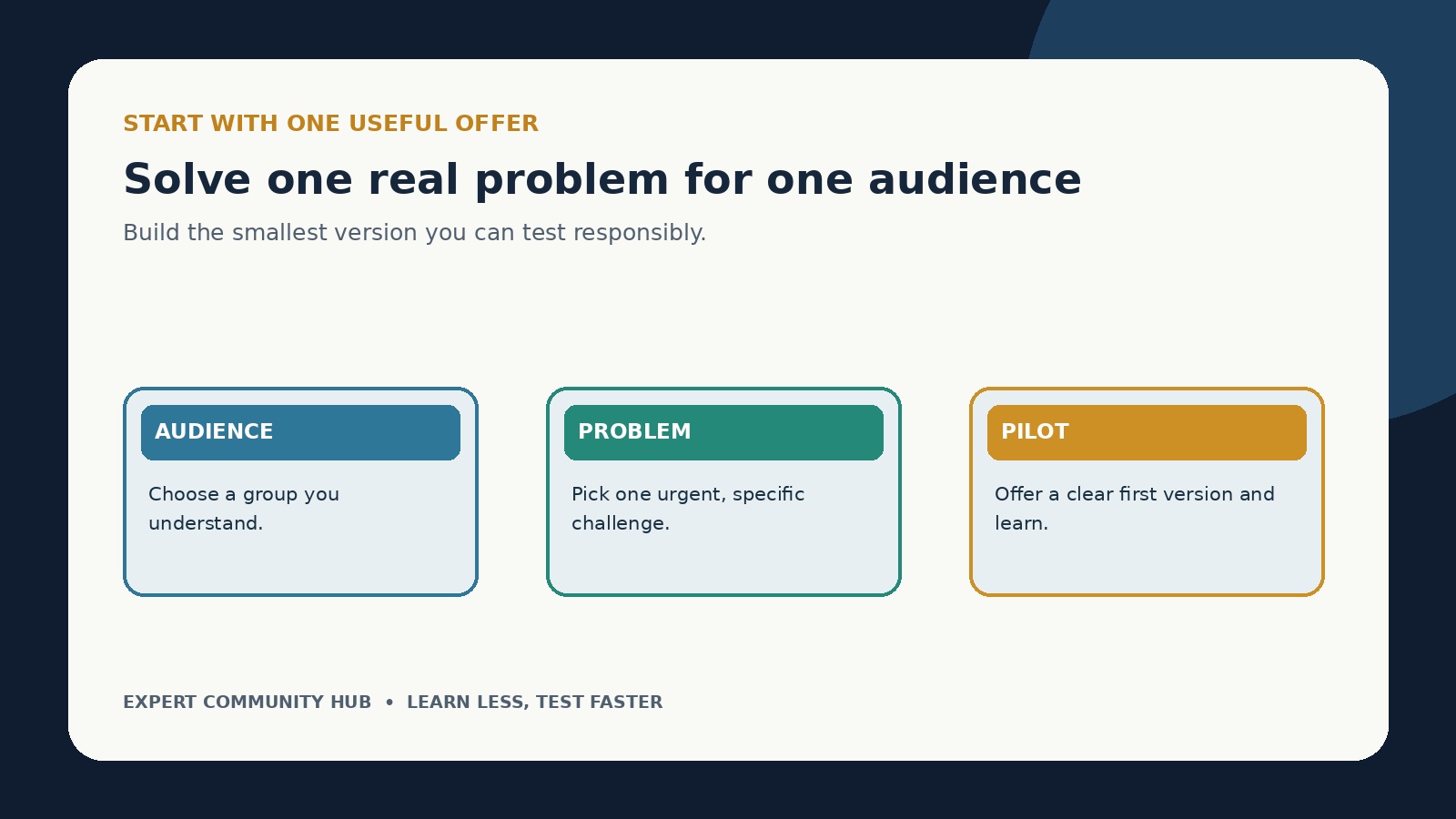
If you are building a coaching, consulting, or digital-product business, begin with a small offer that solves one specific problem.
1. Choose one audience
Avoid starting with “everyone who wants success.”
Choose a group whose situation you understand. For example, independent coaches who struggle to follow up with leads, or consultants who depend entirely on referrals.
2. Choose one real problem
Find a problem people recognize and care about solving. Do not assume it is urgent just because it interests you. Talk to potential customers and listen to their words.
3. Define a realistic outcome
Explain what your service is designed to help people do. Be specific, but do not guarantee results you cannot control.
4. Deliver the smallest useful version
You might start with a paid consultation, a focused workshop, a short pilot, or a simple implementation package. Choose a format that allows you to help responsibly without building an entire course library first.
5. Ask for honest feedback
After delivery, ask what was useful, what was unclear, and what would make the experience better. Use genuine feedback to improve the offer.
Your seven-day launch plan
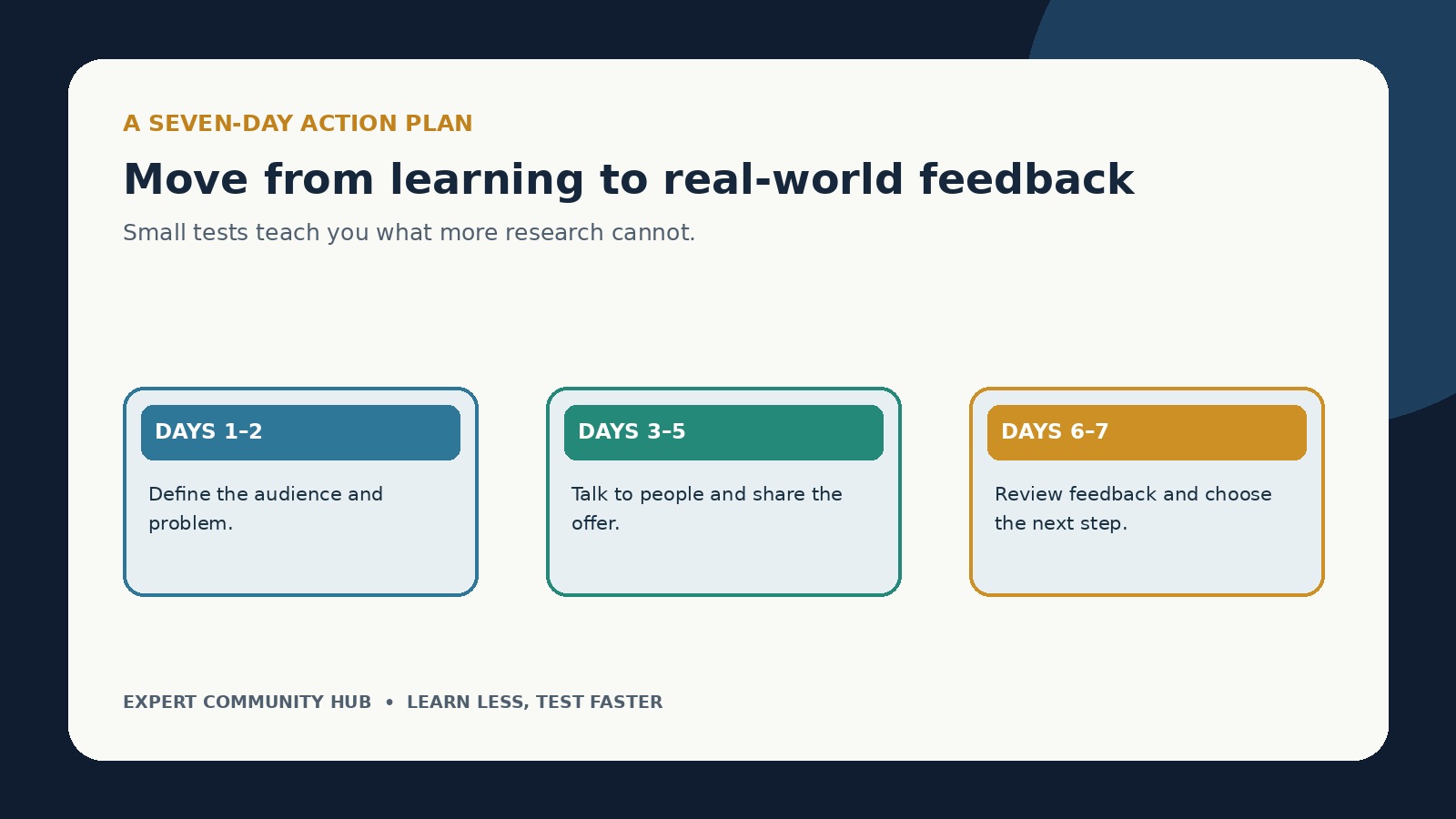
You do not need to build an entire business in one week. Your goal is to move one idea into contact with the real world.
Day 1 — Choose. Write down the audience you want to help and the one problem you want to address.
Day 2 — Clarify. Write a one-sentence offer: “I help [audience] work on [problem] through [service or process].”
Day 3 — Listen. Speak with two or three people who fit the audience. Ask about their current challenge and what they have already tried. Do not turn every conversation into a sales pitch.
Day 4 — Improve. Use what you heard to make the offer clearer. Remove unnecessary features.
Day 5 — Invite. Share the offer with a small, relevant group or publish a clear invitation. Explain who it is for, what is included, and what it costs if it is paid.
Day 6 — Respond. Answer questions honestly. Notice where people hesitate or misunderstand.
Day 7 — Review. Record what happened. Did people recognize the problem? What questions did they ask? What should you change before the next test?
A launch is not successful only when someone buys. A well-designed test can also reveal that the audience, problem, message, or offer needs adjustment.
What if your first attempt does not work?
A quiet launch does not prove you are not capable.
It provides information.
Maybe the audience was too broad. Maybe the problem was not urgent enough. Maybe the offer was difficult to understand. Maybe the invitation reached too few suitable people. Maybe you need more conversations before deciding.
Look at the evidence before drawing conclusions.
Change one important variable at a time where possible. Keep what works. Improve what does not. If the test reveals a genuine skills gap, then choose targeted learning to address it.
This is a better use of education: learn because a real challenge requires it, not because buying another course feels like progress.
Your 20-minute action
Open a blank document and answer these four questions:
- What business idea or offer have I been preparing for?
- What is the smallest useful version I could test?
- Who are three suitable people I could speak with this week?
- What action can I complete in the next 20 minutes?
Then do that action before opening another course.
It might be writing your offer sentence, sending a thoughtful message to a potential interview participant, or outlining a simple workshop. Keep it small enough to finish.
Stop trying to feel completely ready
Confidence often grows through experience. Clarity often grows through feedback. A strong offer often emerges through several rounds of improvement.
You cannot learn everything about a business before you begin, because some of the most important lessons come from doing the work.
You do not need to abandon preparation. You need to give preparation a finish line.
Learn what you need. Build the smallest useful version. Test it honestly. Improve from what you discover.
Your next breakthrough may not be hidden inside another course.
It may be waiting on the other side of one real conversation.
Your turn
What have you been preparing to launch—and what is the smallest action you could take this week to move it forward?
Share your answer in the comments. Your next step might also encourage another expert to stop waiting for the perfect moment.
Your next step
If you are a coach, consultant, or knowledge-based professional, explore the learning resources from Expert Community Hub to help you turn your expertise into a clearer offer and a more structured business.
Start small. Learn from real people. Build from evidence rather than endless preparation.
Written for coaches, consultants, and knowledge-based entrepreneurs by Expert Community Hub.