You keep preparing, learning, and planning—but the important step never happens. Learn why confidence often grows through action, and how to take small steps without waiting to feel completely ready.
You have the idea. You have taken the course. You have made the plan.
But you still have not launched.
You tell yourself you need more confidence. More practice. One more certification. A better website. A perfect presentation.
What if you have the order backwards?
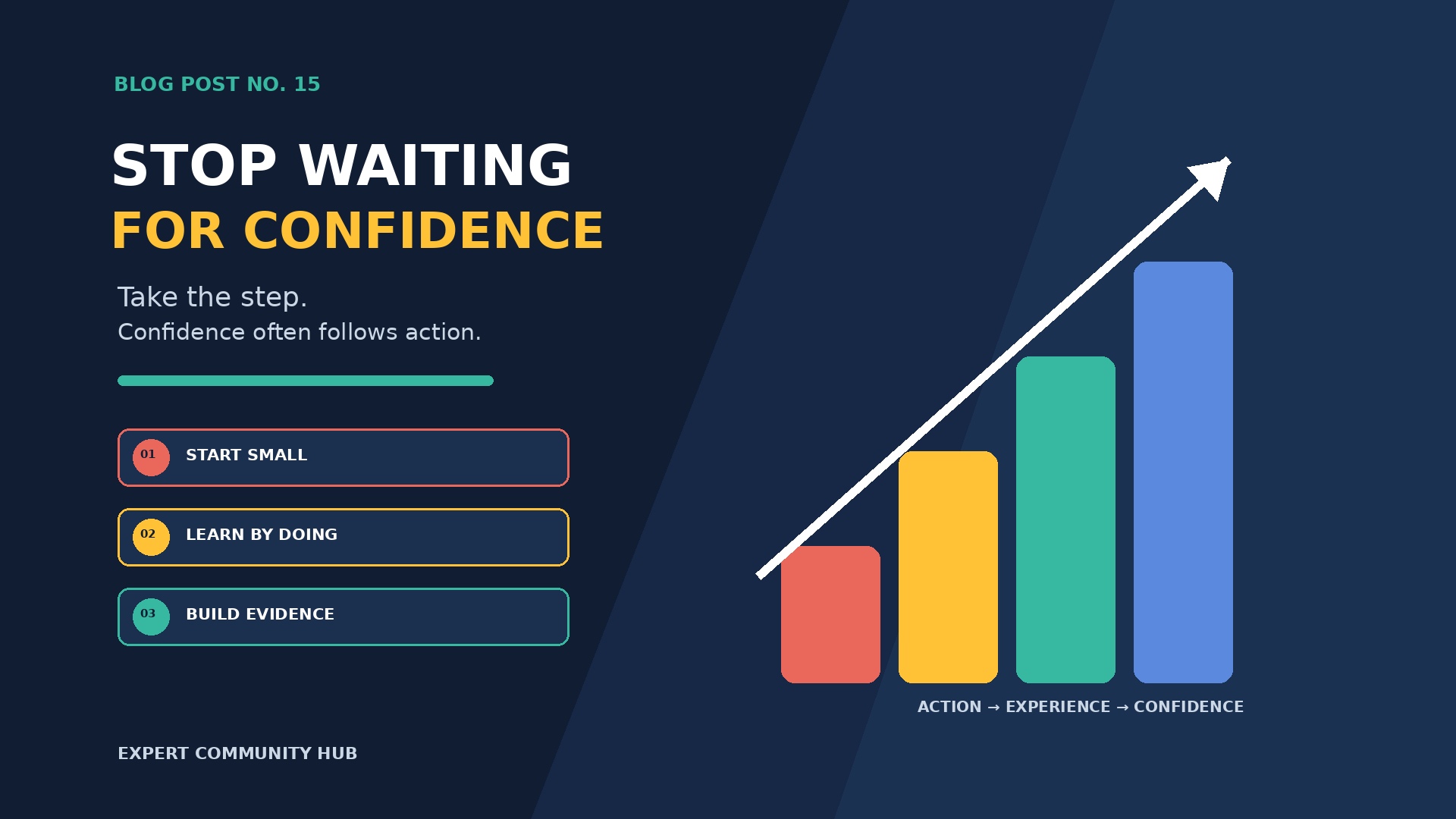
You may not need confidence before you act. You may need a small action to begin building confidence.
By Dharmendra Singh | Expert Community Hub
The hidden pain of waiting to feel ready
You know you want to grow your coaching or consulting business.
You want to share your knowledge. You want to help people. You want your expertise to create income and impact.
But the next step feels uncomfortable.
What if nobody responds? What if someone criticises your work? What if you make a mistake in public?
So you prepare a little more.
You watch another video. You rewrite the offer. You change the design. You wait for the moment when the fear disappears.
That moment may never arrive in the way you expect.
The cost is not only delayed progress. It is the frustration of watching your plans stay plans.
Why confidence can follow action
Confidence is not always a feeling that appears before you begin.
Often, it grows from experience.
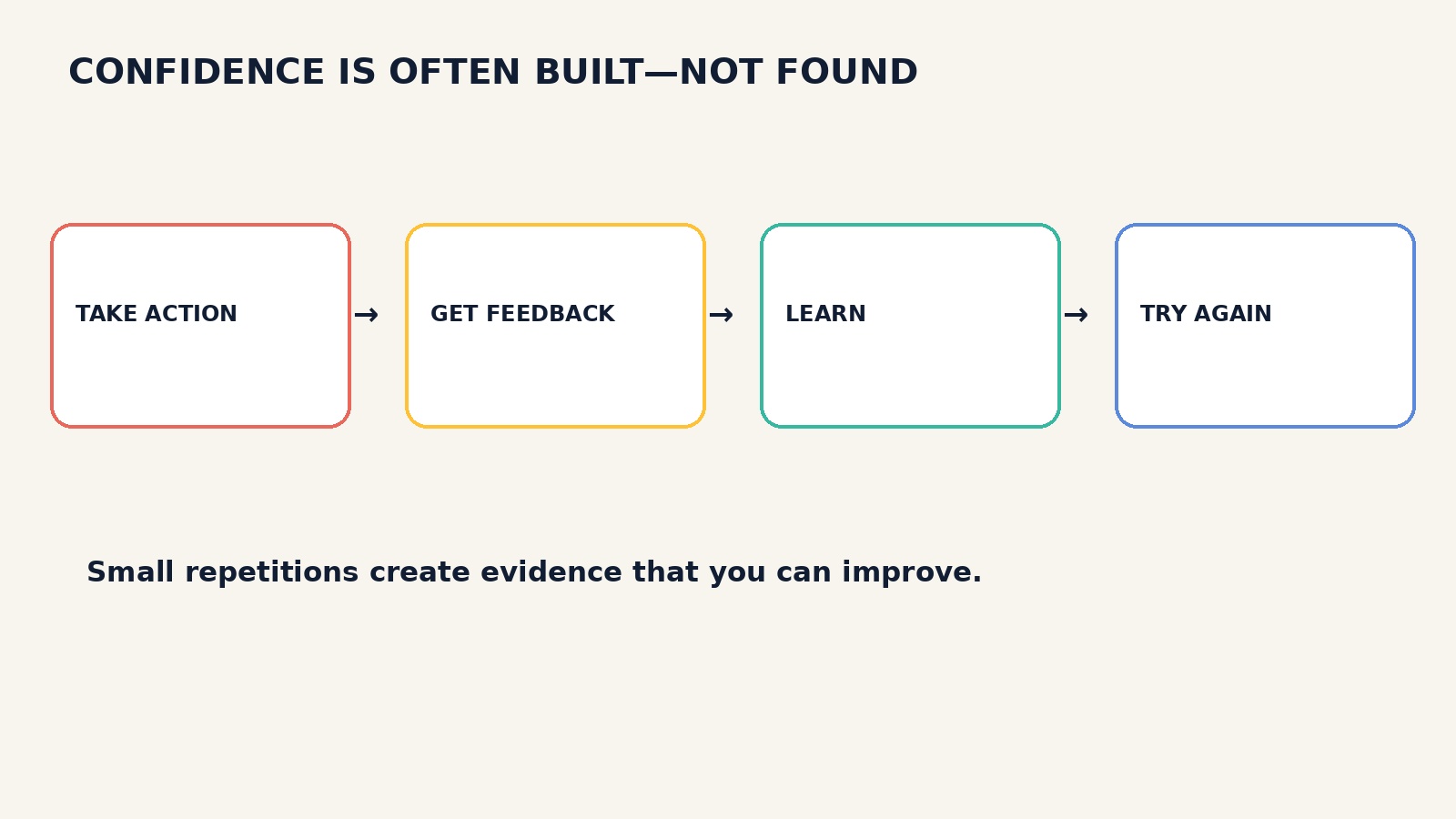
You try something. You see what happens. You learn. You adjust. You try again.
Over time, you collect evidence that you can handle the task—even when it feels uncomfortable.
You do not need to feel fearless. You need a way to begin safely and learn from the result.
Three ways waiting keeps you stuck
1. Preparation becomes a hiding place
Learning is valuable. But it can become a way to avoid the uncertainty of real-world action.
You may keep studying because studying feels safer than showing your work to a potential client.
Ask yourself:
"What will I do differently with this next piece of information?"
If you have no clear answer, you may not need another lesson yet. You may need to apply what you already know.
2. You treat every result as a judgement of your ability
You publish a post and receive little engagement. You assume you are bad at content.
You invite people to a session and nobody books. You decide you are not good at sales.
But one result is information. It is not a final verdict on your potential.
The topic may be wrong. The timing may be poor. The message may need work. The audience may not be a fit.
Review what happened before judging yourself.
3. You make the first step too big
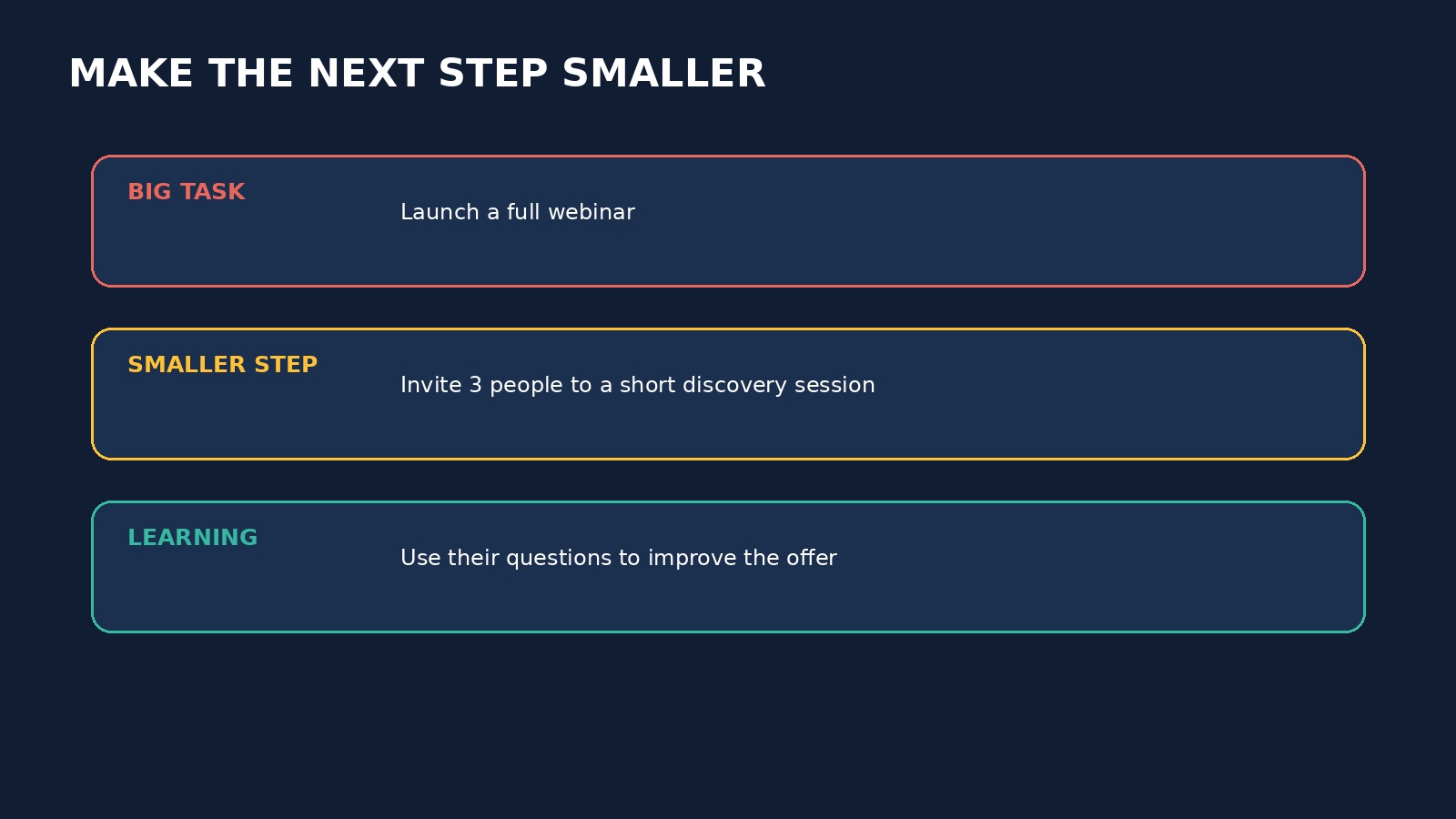
You decide to launch a complete course, build a large website, or run a major webinar.
The task feels so large that you postpone it.
Reduce the size of the first step.
You do not have to build the entire business this week. You can test one offer statement, speak to three potential clients, or publish one useful post.
Use the smallest useful action
When a task feels intimidating, ask:
"What is the smallest action that would teach me something useful?"
If you want to launch a webinar, you could first explain the topic to three people from your target audience.
If you want to sell a coaching package, you could speak with potential clients about the problem before building every module.
If you want to publish videos, you could record a short practice video and review it privately before sharing it.
Small steps are not a way to avoid the goal. They are a way to approach it with less risk and more feedback.
Choose an action that is small enough to do soon and meaningful enough to teach you something.
Stop demanding perfection from your first attempt
Your first version is allowed to be a first version.
Your first sales conversation may feel awkward. Your first video may need improvement. Your first landing page may reveal questions you had not considered.
That is normal.
The purpose of a first attempt is not to prove that you are perfect. It is to create a starting point for learning.
Set a clear limit on preparation. Decide what "ready enough" means. Then test your work with an appropriate audience.
A 20-minute action reset
Try this today.
Minutes 1–5: Name the task you are avoiding.
Be specific. Do not write "grow my business." Write "send a message to three potential clients" or "record a two-minute video."
Minutes 6–10: Identify the fear.
What are you worried might happen? Be honest. You do not need to eliminate the fear before continuing.
Minutes 11–15: Make the task smaller.
Choose a safe, manageable version. Decide what you can learn from it.
Minutes 16–20: Take the first step.
Do the action if practical. If it requires more time, schedule a specific time to complete it.
Then review what happened without attacking yourself.
Build confidence with evidence
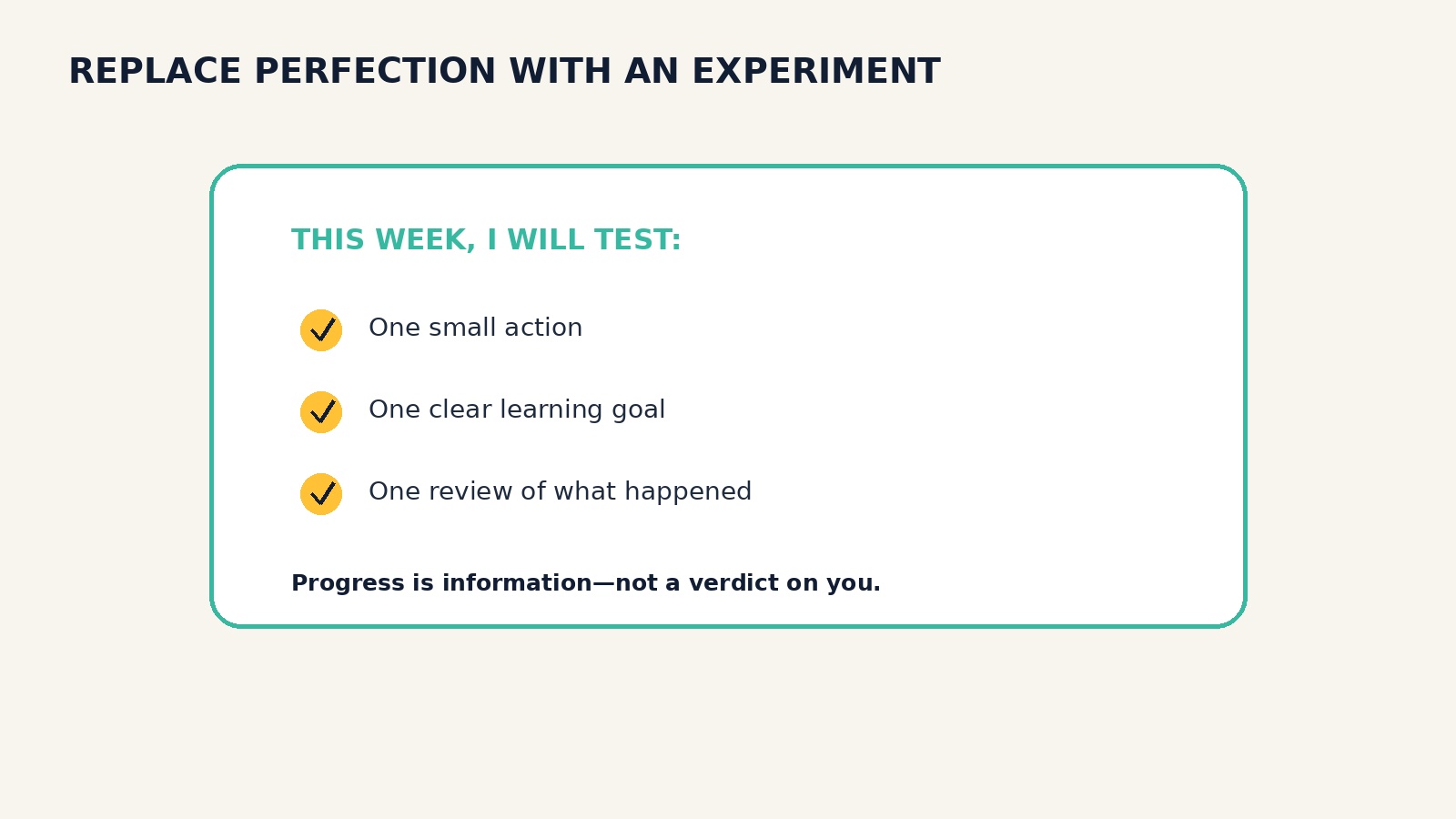
At the end of each week, record three things:
- What action did I take despite feeling uncertain?
- What did I learn from the result?
- What will I adjust next time?
This shifts your focus from "Do I feel confident?" to "What evidence am I building?"
You may still feel nervous. But you can become more experienced, more prepared, and more capable of handling uncertainty.
Key takeaways
1. You may not feel ready before you begin. Readiness often develops through experience.
2. Preparation needs an application step. Use what you learn before collecting more information.
3. Make the first step smaller. A manageable experiment is easier to start and easier to learn from.
4. Treat results as feedback. One weak response does not define your ability.
5. Track actions and learning. Confidence can grow as you collect evidence of progress.
Final thought: you do not need to become fearless
You can be nervous and still take a useful step.
You can be uncertain and still ask a question.
You can be inexperienced and still begin with an honest, manageable experiment.
The goal is not to remove every doubt. It is to stop letting doubt make every decision.
At Expert Community Hub, we help coaches, consultants, and experts turn their knowledge into clear offers and practical client acquisition systems. The work begins with action, feedback, and improvement—not with waiting for perfection.
Your turn
What is one action you have been postponing because you do not feel ready?
Make it smaller. Choose one step you can take this week. Then learn from what happens.