

A viral post can bring a sudden wave of attention, but lasting recognition comes from a clear point of view, useful proof, and consistent themes. Learn how to build a reputation that grows beyond one post.
A post gets 100,000 views.
For a few days, your notifications explode. New people follow you. Your friends send screenshots. You wonder whether this is the breakthrough you have been waiting for.
Then the numbers settle.
The next post gets a fraction of the reach. Your enquiries look much the same. And suddenly, you are trying to recreate the magic.
That cycle can become exhausting.
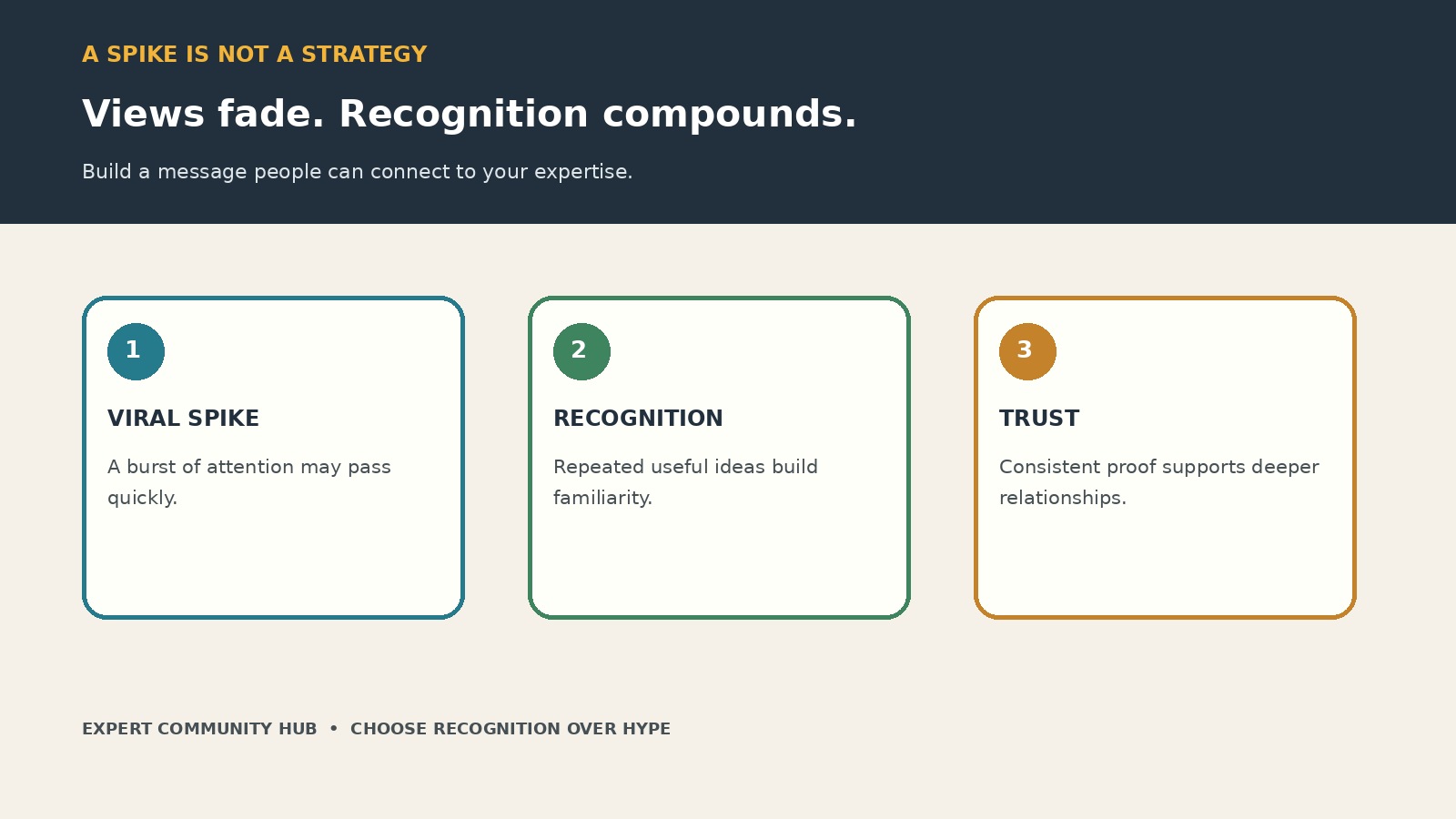
Virality can be useful. It can introduce your work to people who would never have found you otherwise. But a spike in attention is not the same as a reputation.
The more useful goal is not simply to be seen by many people once. It is to be remembered by the right people when they need the kind of help you provide.
The viral post that leads nowhere
Imagine a coach publishes a funny reel about the chaos of running a business. It spreads quickly because thousands of people relate to it.
The coach gains followers. But many came for the joke, not for the coach's expertise. The next post explains a detailed client-acquisition method, and the response is much quieter.
Was the viral post a failure? Not necessarily. It created awareness and may have helped the coach develop a larger audience.
The problem appears when the creator expects every new follower to become an interested prospect without building a connection between the entertaining content and the work they actually do.
Attention can open a door. Your message, examples, and consistency help people understand why they should stay.
What makes people remember an expert?
Think about someone whose work you recognize immediately.
Perhaps they explain complicated ideas simply. Perhaps they challenge a common assumption. Perhaps they use a practical framework that helps you solve a problem.
You may not remember every post they publish. But you know what kind of insight to expect from them.
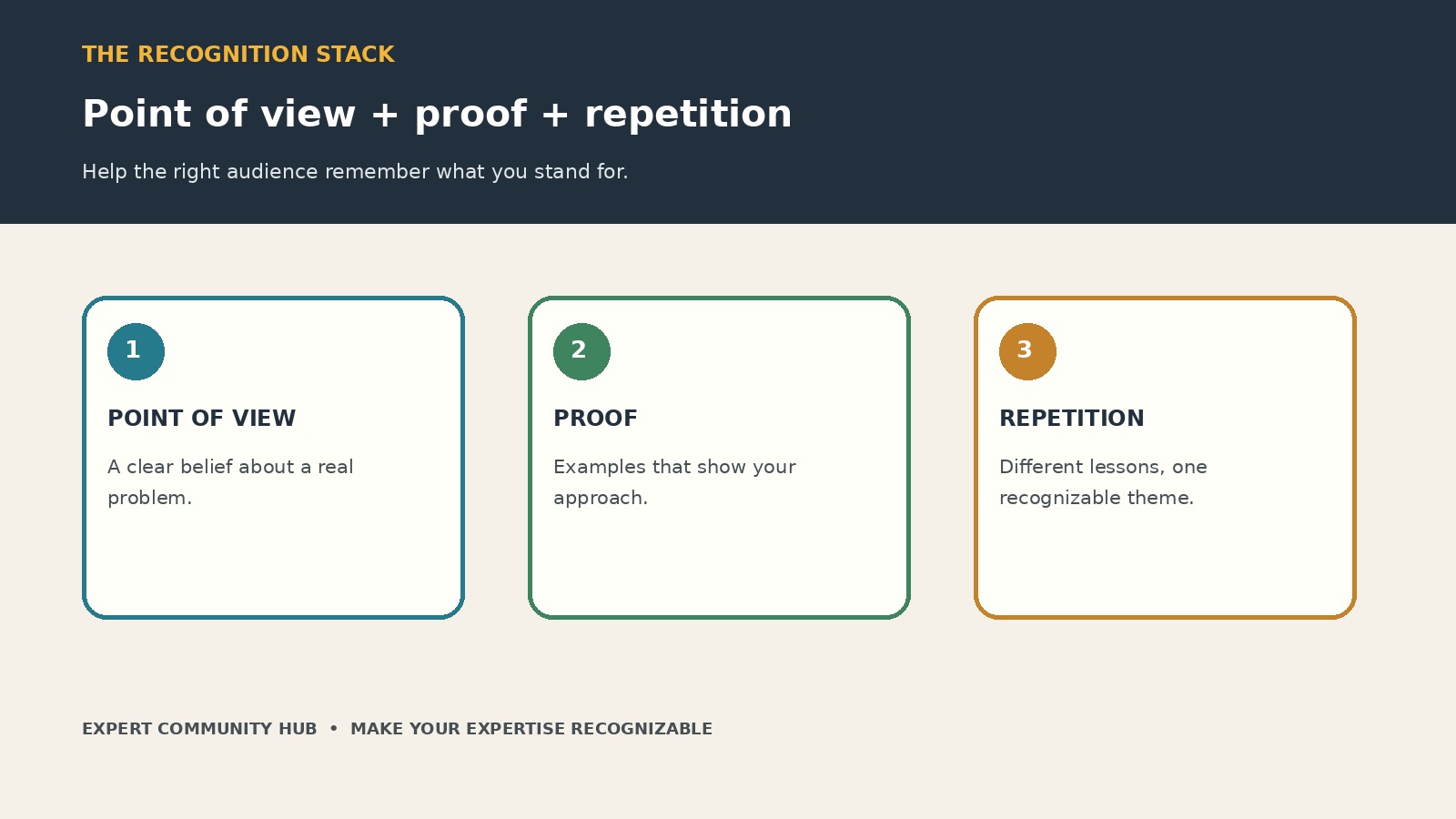
That recognition often comes from three things:
- A clear point of view: They have a recognizable way of understanding a problem.
- Useful proof: They demonstrate their thinking through examples, explanations, and honest evidence.
- Consistent themes: Their content explores related ideas instead of chasing every trend.
You do not need to be the loudest person in your industry. You need to make your expertise recognizable.
The RECALL Framework
Use RECALL to build a brand people can remember for the right reasons.
R — Recognize one audience
Choose the group you want your work to be useful to.
A clear audience helps you decide which problems to discuss, which examples to use, and what language will make sense to readers. You can serve more than one group over time, but your message should not feel random from one post to the next.
E — Establish a point of view
What do you believe about a problem your audience faces?
For example, a consultant might believe that many small businesses do not need more marketing activity first; they need a clearer path from enquiry to customer.
That belief can lead to content about offer clarity, follow-up, customer experience, and conversion. It provides direction without requiring every post to make the same argument.
Choose a view you can explain honestly and support with reasoning or experience.
C — Create recognizable themes
Pick three recurring themes that reflect your expertise.
A coach focused on client acquisition might explore:
- Clear offers and positioning.
- Content that builds trust.
- Follow-up and conversion.
These themes act as familiar landmarks. Your audience can encounter different lessons while still understanding what your work is about.
A — Add evidence and examples
Do more than state opinions. Show how an idea works.
Use demonstrations, walkthroughs, anonymized patterns, lessons from your own work, or clearly labeled hypothetical examples. Explain the context and limits of what the example proves.
You do not need to claim dramatic results. Specific, honest explanations often make expertise easier to evaluate than big promises.
L — Let repetition build recognition
Repeat your important ideas in fresh ways.
One post can explain the principle. Another can show a mistake. A video can demonstrate the process. A story can explain why the lesson matters. Repetition is useful when it deepens understanding rather than merely duplicating the same content.
L — Learn what people associate with you
Ask readers, clients, or community members what comes to mind when they think of your work.
Do they mention the problem you want to be known for? Can they describe your approach? Do they remember a framework or principle you teach?
Their answers can reveal whether your intended positioning is clear—or whether your content is attracting attention without building recognition.
You do not need to be original about everything
A common trap is believing every post must contain a never-before-seen idea.
That pressure can lead to endless trend-chasing, exaggerated opinions, and content that does not fit your expertise.
You can teach a familiar concept in a memorable way. You can explain an old problem using a better example. You can combine known ideas into a practical process for a particular audience.
Originality is not always about inventing something nobody has ever said. Sometimes it is about bringing your experience, language, and judgment to a problem people genuinely need help with.
A practical example: from viral creator to recognized expert
Suppose you help independent coaches build a more consistent client-acquisition process.
A viral post about business frustration may bring new followers. Instead of immediately chasing another viral topic, use the opportunity to clarify what you do.
- Publish a practical explanation of why enquiries often go cold.
- Demonstrate a respectful follow-up process.
- Share a checklist that helps readers review their own workflow.
- Explain the limits of the method and when additional support may help.
- Invite interested people to a relevant workshop or service page.
The content has variety, but the underlying theme remains clear. Someone who discovers you through one post can gradually understand the expertise behind your work.
Not every follower will become a client. The goal is to help the right people recognize the connection between your ideas and the problem you can help them address.
Your 30-day recognition plan
You do not need to publish three times a day. Try this simple month-long experiment.
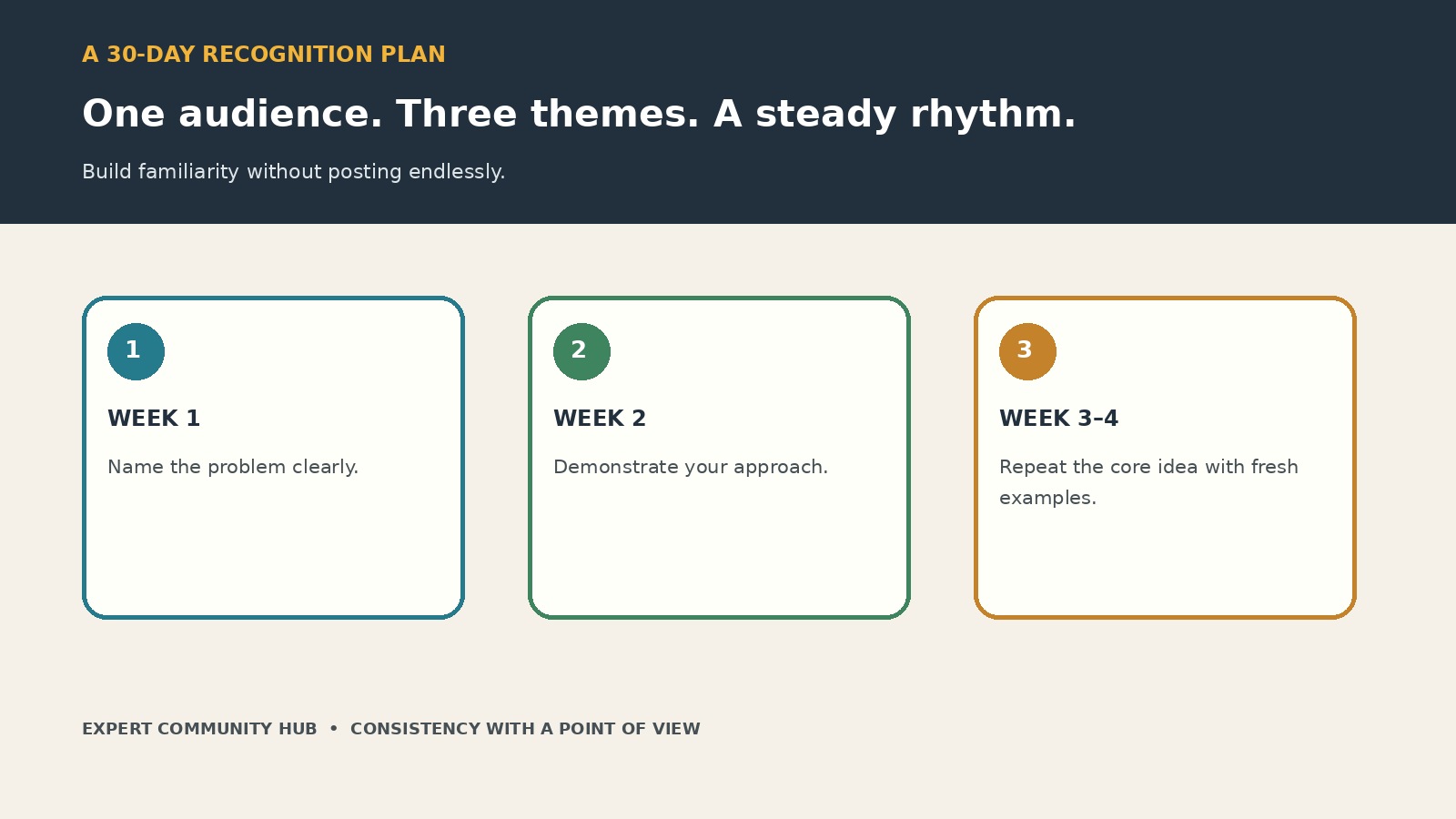
Week 1 — Name the problem. Publish content that explains the audience's challenge in different ways: a story, a checklist, and a common mistake.
Week 2 — Show your approach. Demonstrate a framework, walk through an example, or explain how you make a decision.
Week 3 — Build trust with evidence. Answer objections, show your process, and explain what your method can and cannot do.
Week 4 — Connect the ideas. Revisit your strongest theme with a fresh example, invite audience questions, and provide a relevant next step for those who want more support.
At the end of the month, review not only reach but also the quality of questions, relevant profile visits, resource requests, enquiries, and the language people use to describe your work.
These signals will not prove everything, but together they can help you see whether your content is building a clearer reputation.
Keep virality in its proper place
There is nothing wrong with wanting a post to travel widely. Reach can introduce valuable ideas to new audiences.
Just do not let the possibility of going viral dictate your entire strategy.
A useful post that reaches a smaller, relevant audience may support your goals better than a viral post that attracts people who have no connection to your work. Sometimes a broad post is valuable for awareness; sometimes a focused post is more useful for trust or enquiries.
Measure the post against the job it was meant to do.
Your turn
Would you rather have one post seen by a million people—or become the expert that a smaller, relevant audience remembers when they need help? Why?
There is no universal answer. Share your perspective in the comments.
Your next step
If you are a coach, consultant, or knowledge-based professional, Expert Community Hub can help you explore how to clarify your positioning, communicate your expertise, and build a more structured approach to client acquisition.
Create useful work. Develop a point of view. Show your thinking. Repeat what matters in fresh ways.
You cannot control whether a post goes viral. You can build a reputation people have a reason to remember.
Written for coaches, consultants, and knowledge-based entrepreneurs by Expert Community Hub.