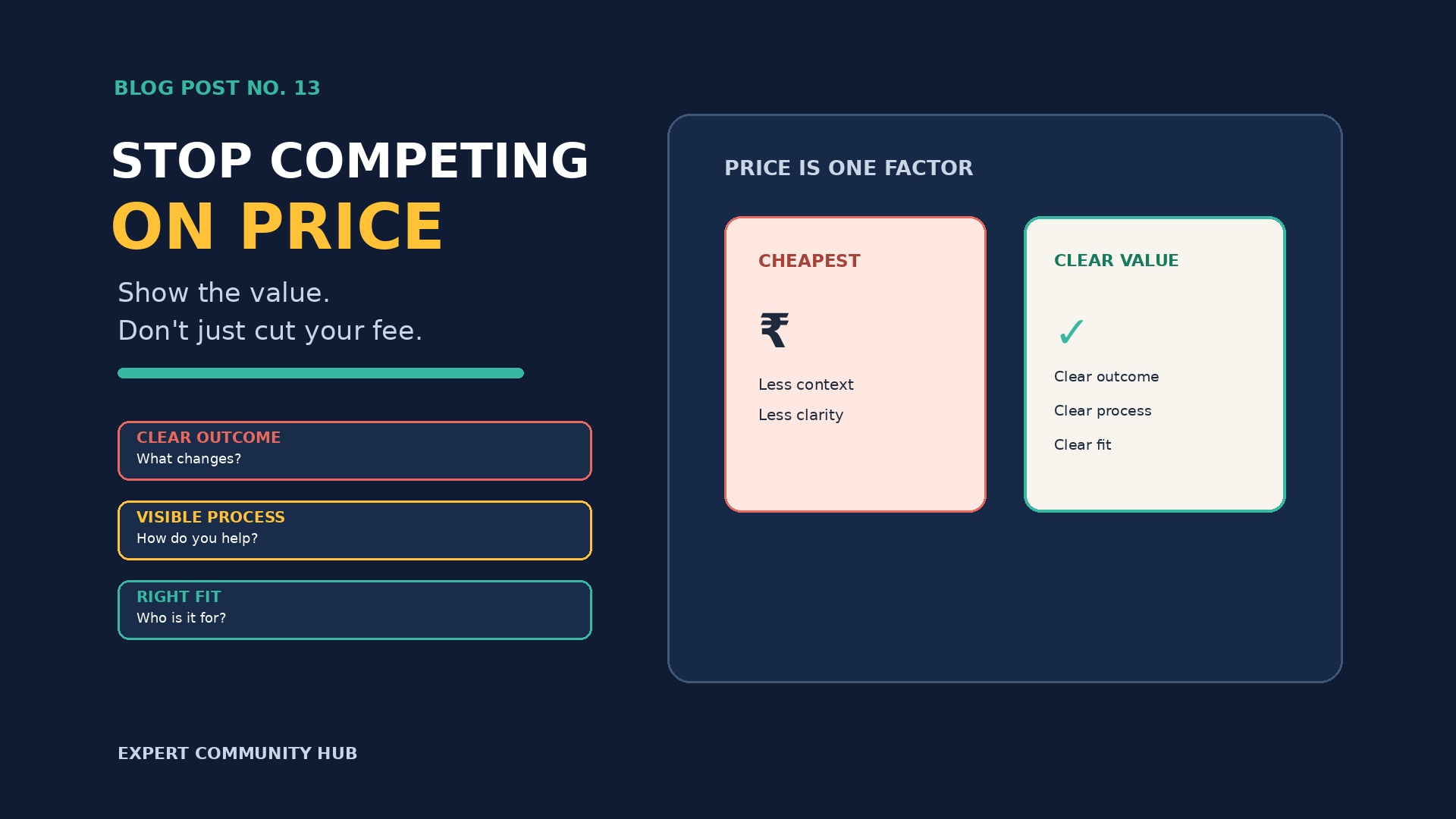
When prospects say your fee is too high, cutting the price may feel like the fastest fix. But the real issue may be unclear value. Learn how to explain your offer, process, and fit with confidence.
You explain your service. The prospect listens. Then they say, “Your fee is too high.”
Your stomach drops.
You start wondering whether you should lower the price. Maybe add another bonus. Maybe offer a special discount.
You want the client. You also want your work to be valued.
Here is the question worth asking first:
Do they understand the value of your offer—or have they only heard the price?
By Dharmendra Singh | Expert Community Hub
The hidden pain behind price objections
For coaches and consultants, a price objection can feel like a judgement of their worth.
You have invested years in learning. You have developed skills. You may have spent money on training and tools.
So when someone questions your fee, it can feel as if they are questioning all that effort.
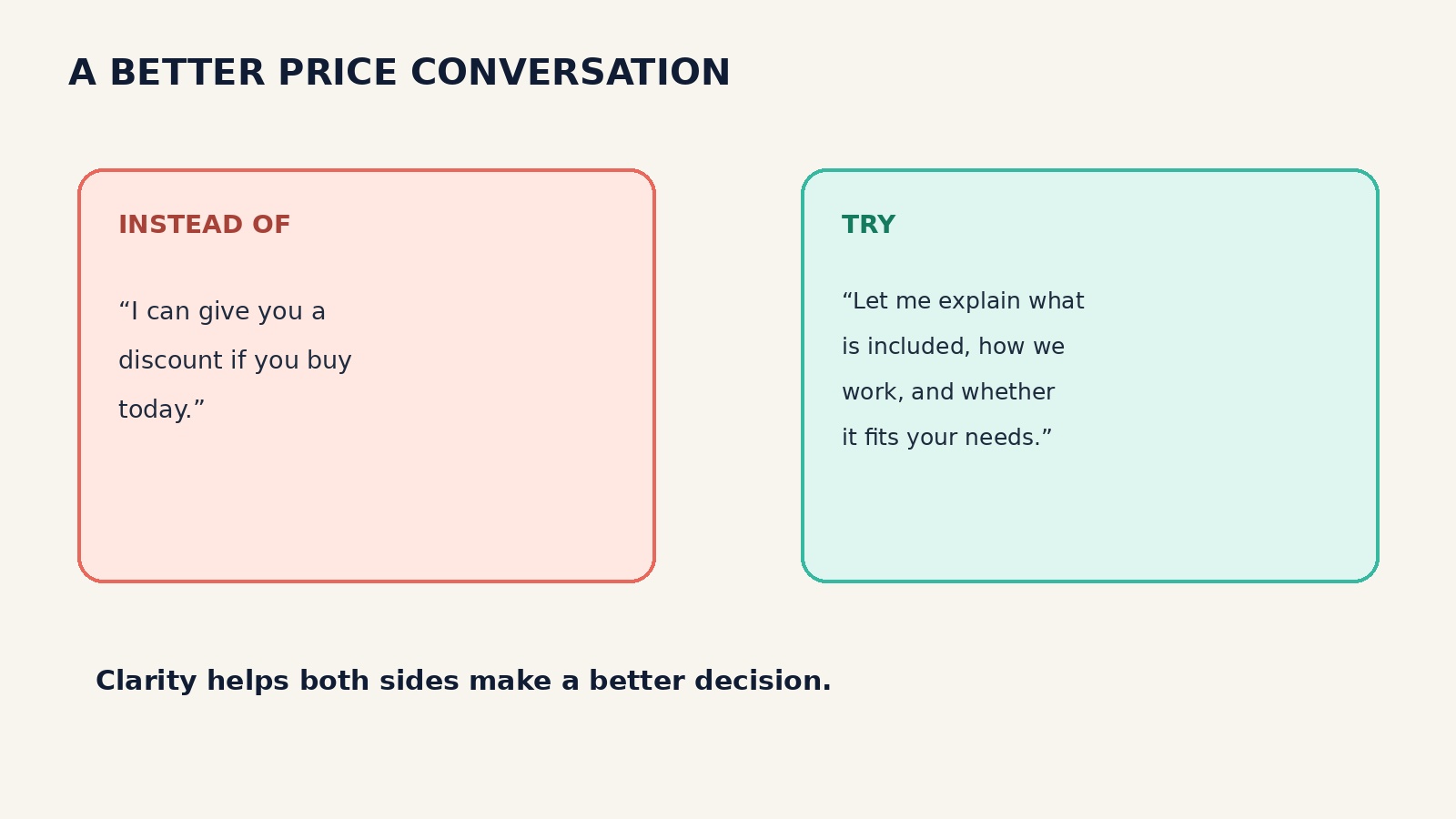
It is tempting to respond with a discount.
Sometimes price really is the barrier. The prospect may not have the budget. Your offer may not fit their current priorities.
But sometimes the value is unclear.
They may not understand what is included. They may not see how your process relates to their problem. They may not know why your service is different from a cheaper alternative.
Before changing your price, find out which problem you are actually solving.
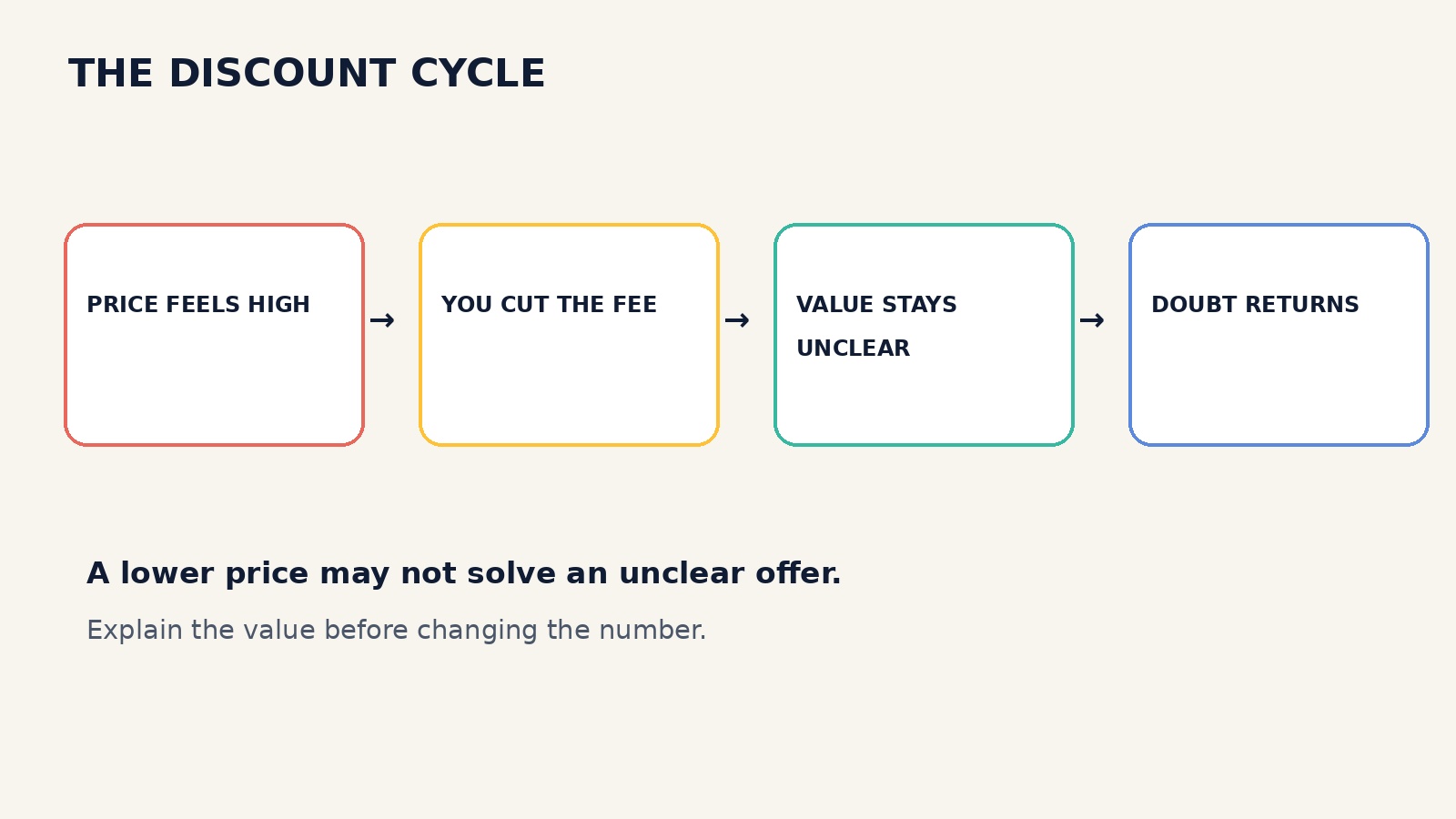
The discount cycle
Imagine this sequence.
A prospect says the price is high. You reduce your fee. The prospect still feels uncertain because the offer is unclear. You add bonuses or reduce the price again.
Soon, you are doing more work for less money. And the prospect may still not be convinced.
This is the discount cycle.
A lower price can help when affordability is the genuine issue. But it cannot automatically fix confusion, poor fit, or a lack of trust.
Four reasons people may question your fee
1. The outcome is vague
"I help you grow" does not tell a prospect what the engagement is designed to help them do.
Describe the problem you work on and the outcome you help them pursue.
Be specific. Avoid guaranteeing results that depend on many factors.
2. The process is invisible
People may not know what happens after they pay.
Explain the steps. Describe the sessions, deliverables, support, and responsibilities involved.
Make the experience easier to picture.
3. The offer looks like a list of features
More calls, videos, worksheets, and bonuses do not always make an offer more valuable.
Explain why the components matter. Connect them to the client's needs.
A smaller, well-designed offer may be more useful than a huge bundle of unrelated resources.
4. The fit is unclear
Your service may be excellent for one type of client and unsuitable for another.
Explain who benefits most. Be clear about prerequisites and limitations.
The right prospect should be able to assess whether the offer fits their situation.
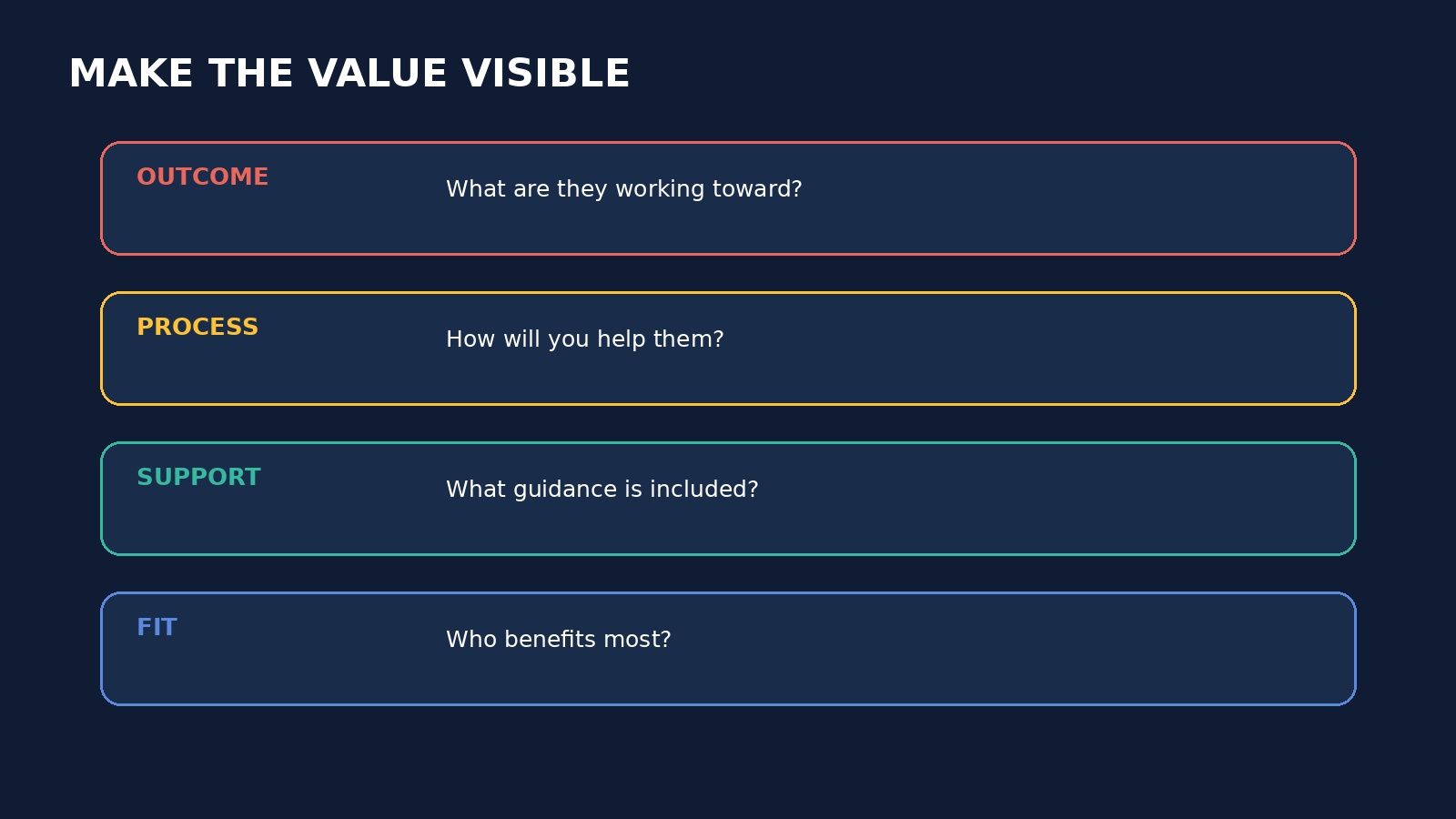
Make the value visible
Before discussing a discount, review four areas.
Outcome
What problem are you helping the client address? What meaningful change are you working toward?
Process
How will you help? What are the steps? What will the client need to do?
Support
What guidance, feedback, tools, or resources are included?
Fit
Who is this offer for? Who might need a different solution?
These details help prospects make a more informed decision. They also help you avoid selling an offer that is not right for them.
How to respond when someone says, “It's too expensive”
Do not rush to defend your price.
Stay curious.
You could say:
"Thanks for being honest. When you say it feels expensive, is it mainly a budget concern, or would it help to understand more about what's included and how the process works?"
Then listen.
If they need clarity, explain the offer in plain language.
If the budget is the barrier, explore whether a smaller scope or a later start is genuinely workable. Do not offer a discount that makes delivery unsustainable.
If the offer is not a fit, respect that.
You do not need to persuade everyone.
Your goal is to help both sides make a good decision.
A simple offer value audit
Take 15 minutes to review your sales page or proposal.
Ask these questions:
- Is the audience clearly defined?
- Is the problem specific?
- Is the intended outcome realistic and understandable?
- Are the steps and deliverables explained?
- Is the support clearly described?
- Is the price easy to find?
- Can the prospect tell whether the offer is right for them?
Choose the weakest part and improve it.
You may discover that the price is fair but the explanation is weak. Or you may discover that the offer needs a better structure.
Let evidence guide your decision.
When should you actually change your price?
Price should not be treated as untouchable.
Review it when you have evidence that it does not fit your market, scope, delivery costs, positioning, or business goals.
Consider whether the offer creates enough value for the intended client. Check whether you can deliver it sustainably. Learn how your target audience evaluates alternatives.
If you change the price, make the decision deliberately.
Do not lower it automatically every time someone hesitates.
Key takeaways
1. A price objection is information, not a personal verdict.
2. Find the real concern before offering a discount.
3. Explain outcomes, process, support, and fit.
4. More bonuses do not automatically mean more value.
5. Protect both client value and your ability to deliver sustainably.
Final thought: let your price reflect a clear offer
You do not need to be the cheapest coach or consultant.
You need an offer that solves a relevant problem, communicates its value honestly, and fits the people you serve.
Explain what you do. Show how you work. Set realistic expectations. Listen when prospects raise concerns.
Then make a decision that respects both your client and your business.
At Expert Community Hub, we help coaches, consultants, and experts create clearer offers and practical client acquisition systems. The aim is to make it easier for the right people to understand your work and decide whether it fits their needs.
Your turn
When a prospect says your price is too high, what do you usually do first: explain the value, ask a question, or offer a discount?
Use your answer to identify one improvement for your next sales conversation.