
Another course can teach you something new. But will it bring clients? Discover why endless learning can keep coaches and consultants stuck—and how to turn what you already know into action.
One more course. One more certificate. But will anything change?
By Dharmendra Singh | Expert Community Hub
You finish another course. Then what?
You have just completed another course.
You learned a new framework. You saved the slides. You downloaded the templates. Perhaps you even added a certificate to your LinkedIn profile.
For a moment, you feel excited.
Now you have a new strategy to try. Maybe this one will help you get more clients. Maybe this is the missing piece.
But a few weeks later, your business looks almost the same.
The enquiries are still inconsistent. Your offer still needs work. You are still unsure what to post. And the system you planned to build is still sitting on your to-do list.
So you search for another course.
Does this sound familiar?
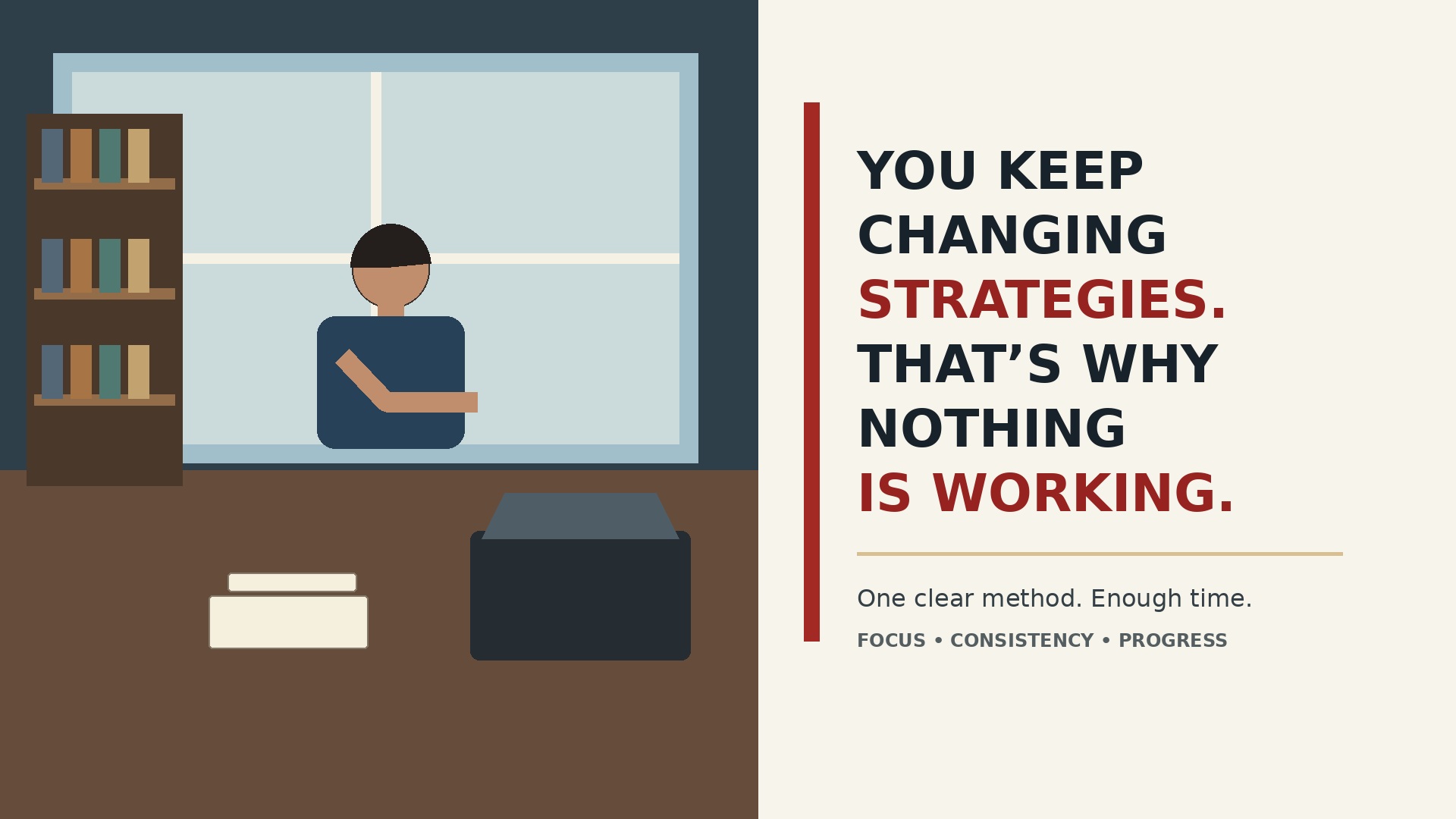
If it does, this article is not telling you to stop learning. Learning is valuable. The problem begins when learning becomes a substitute for implementation.
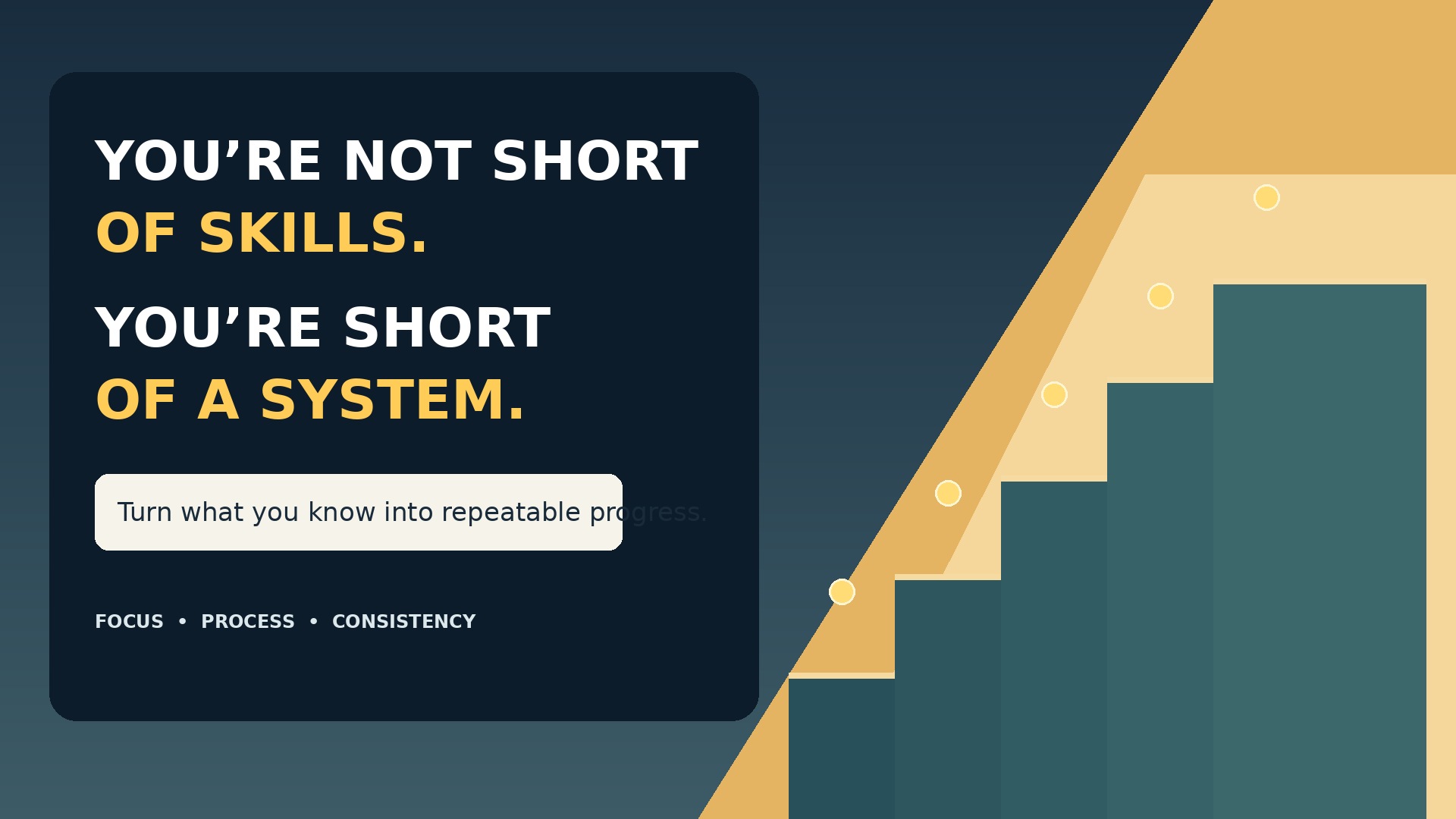
Your next breakthrough may not come from knowing more. It may come from using what you already know.

The hidden pain behind collecting certificates
Most people don't buy courses because they are lazy or incapable.
They buy them because they want to improve. They want to serve clients better, build a stronger business, and feel confident about the future.
But learning can also feel safer than action.
When you watch a lesson, you don't have to face rejection. When you take notes, nobody can tell you that your offer isn't clear. When you plan a new strategy, you don't have to discover whether the market will respond.
Implementation is different.
You have to publish the post. Contact the prospect. Make the offer. Ask for feedback. Review the numbers. And sometimes, accept that the first attempt didn't work.
That uncertainty can feel uncomfortable.
So the mind offers a reasonable-sounding excuse: "I just need to learn a little more before I start."
Sometimes that is true. You may genuinely need a missing skill. But often, you already know enough to take the next small step.
The deeper cost is not the money spent on courses alone. It is the time between learning something useful and putting it into practice.
Why more knowledge doesn't automatically create more clients
A course can teach you how to write content. It cannot make you publish consistently.
A sales training can explain how to conduct a discovery call. It cannot have the conversation for you.
A marketing course can show you how a funnel works. It cannot guarantee that your audience wants your offer.
Business results depend on several things working together: a clear audience, a relevant offer, useful communication, consistent activity, follow-up, and learning from feedback.
Knowledge supports these activities. It does not replace them.
Imagine two coaches.
Coach A completes four marketing courses in three months. They have dozens of ideas but no consistent publishing schedule. They keep redesigning their offer and rarely speak to potential buyers.
Coach B completes one relevant course. They choose one audience, create a simple offer, publish helpful content each week, talk to prospects, and review what works.
Coach B is not guaranteed to succeed. But they are collecting real-world feedback. They can see where people lose interest, which questions keep coming up, and what needs to change.
That feedback is also a form of learning.
The difference is not that one coach knows more. It is that one coach is testing what they know.

Four signs that learning has become a hiding place
1. You keep changing your strategy
You learn about personal branding on Monday, paid ads on Tuesday, webinars on Wednesday, and automation on Thursday.
Each idea sounds promising. But you never give one approach enough time to test.
Try this instead: Choose one business priority for the next 30 days. Keep the other ideas in a parking-lot document. Review them later.
2. You collect templates but don't use them
Your folders are full of lead magnets, email scripts, content calendars, and funnel maps.
But the templates are still untouched.
Try this instead: Pick one template and complete a usable version within 48 hours. It does not need to be perfect. It needs to be tested.
3. You feel productive without moving a business metric
You spend hours watching lessons and taking notes. Yet the number of relevant conversations, enquiries, proposals, or customers stays unchanged.
Try this instead: For every learning session, define one action that will produce something observable. Then track whether you completed it.
4. You keep waiting to feel ready
You tell yourself that you will start once your website is perfect, your niche is final, your content is polished, or you have completed one more training.
But readiness often grows through action.
Try this instead: Take the smallest useful step you can take today. Publish one post. Ask one prospect a thoughtful question. Improve one section of your offer.
The 1:3 learning-to-action rule
Here is a simple experiment you can try.
For every one hour you spend learning, aim to spend three hours applying, testing, or improving what you learned.
This is a practical guideline, not a universal law. Some complex skills need more study. But the ratio can help you notice when consumption is crowding out execution.
For example, after learning about lead magnets:
- Draft one resource for a specific audience.
- Share it with a few relevant people.
- Ask whether it solves a real problem.
- Improve the resource using their feedback.
- Create a clear next step for interested readers.
You now have something more valuable than notes alone: an asset, feedback, and a clearer understanding of your audience.
Turn your existing knowledge into business progress
Before buying another course, use this four-step process.
Step 1: Identify the real bottleneck
Ask yourself what is actually stopping progress.
Is it unclear positioning? Too few relevant enquiries? A weak offer? Poor follow-up? Or a lack of time to deliver your service?
Be specific. "My business isn't growing" is too broad to solve.
Step 2: Find the knowledge you already have
Review your notes, saved resources, and past training. Look for one framework that directly addresses your bottleneck.
You may already have the information you need.
Step 3: Turn the framework into one small action
If your problem is positioning, rewrite your one-sentence offer.
If it is visibility, publish one useful article for your chosen audience.
If it is follow-up, create a simple process for responding to enquiries.
If it is conversion, review recent sales conversations and identify the questions or objections you need to address.
Step 4: Measure, learn, and adjust
Set a small target you can control.
Track actions and outcomes separately. For example, you can control whether you contact ten relevant prospects. You cannot control how many will buy.
Review the response. Keep what works. Improve what doesn't. Then decide whether additional training is genuinely needed.
When should you actually buy another course?
There is nothing wrong with investing in your skills.
A new course may be useful when it teaches a skill you genuinely lack, gives you access to relevant feedback, or helps you solve a clearly identified problem faster.
Before enrolling, ask yourself three questions:
- What exact problem will this help me solve? Avoid buying a course just because the promise sounds exciting.
- What will I implement in the next seven days? Identify a specific output before you begin.
- Do I have time to apply it? If your current learning is unfinished, another purchase may create more backlog rather than more progress.
Buy learning with a purpose. Then give that learning a chance to produce value.
A seven-day challenge: stop collecting, start applying
Try this for the next week.
Day 1: List the three biggest business challenges you face.
Day 2: Choose the one that most directly affects your progress.
Day 3: Find a framework or lesson you already own that could help.
Day 4: Create a simple first version of the solution.
Day 5: Put it into the real world. Publish it, share it, or test it with suitable prospects.
Day 6: Ask for feedback and review what happened.
Day 7: Decide what to keep, what to change, and what you need to learn next.
You don't need to abandon learning. You need to close the gap between learning and doing.
Key takeaways
1. Learning is an asset. Unused learning is unrealised potential. Knowledge creates value when you put it to work.
2. Courses can feel safer than implementation. Notice when you are using preparation to delay an uncomfortable but necessary action.
3. Focus beats constant strategy switching. Give one clear priority enough time to test and improve.
4. Measure actions as well as outcomes. Track what you can control, learn from results, and avoid judging progress only by short-term sales.
5. Buy courses to solve identified problems. Know what you need to learn and how you will apply it before investing.
Final thought: your next certificate isn't the finish line
You don't have to know everything before you build a meaningful business.
You need enough knowledge to take the next useful step. Then you need the willingness to test, learn, and improve.
The market will teach you things no course can fully predict. A real conversation can reveal a concern you never considered. A published article can show you which ideas resonate. A sales call can help you improve your offer.
Let your learning support your action. Don't let it replace it.
At Expert Community Hub, our focus is helping coaches, consultants, and experts turn their knowledge into a structured digital business through practical implementation, clear positioning, and AI-supported client acquisition.
You have already invested in your growth. Now give that investment a chance to work.
Your turn
What is one thing you have learned but still haven't implemented in your business?
Share it in the comments. Naming the next action is a useful first step toward taking it.