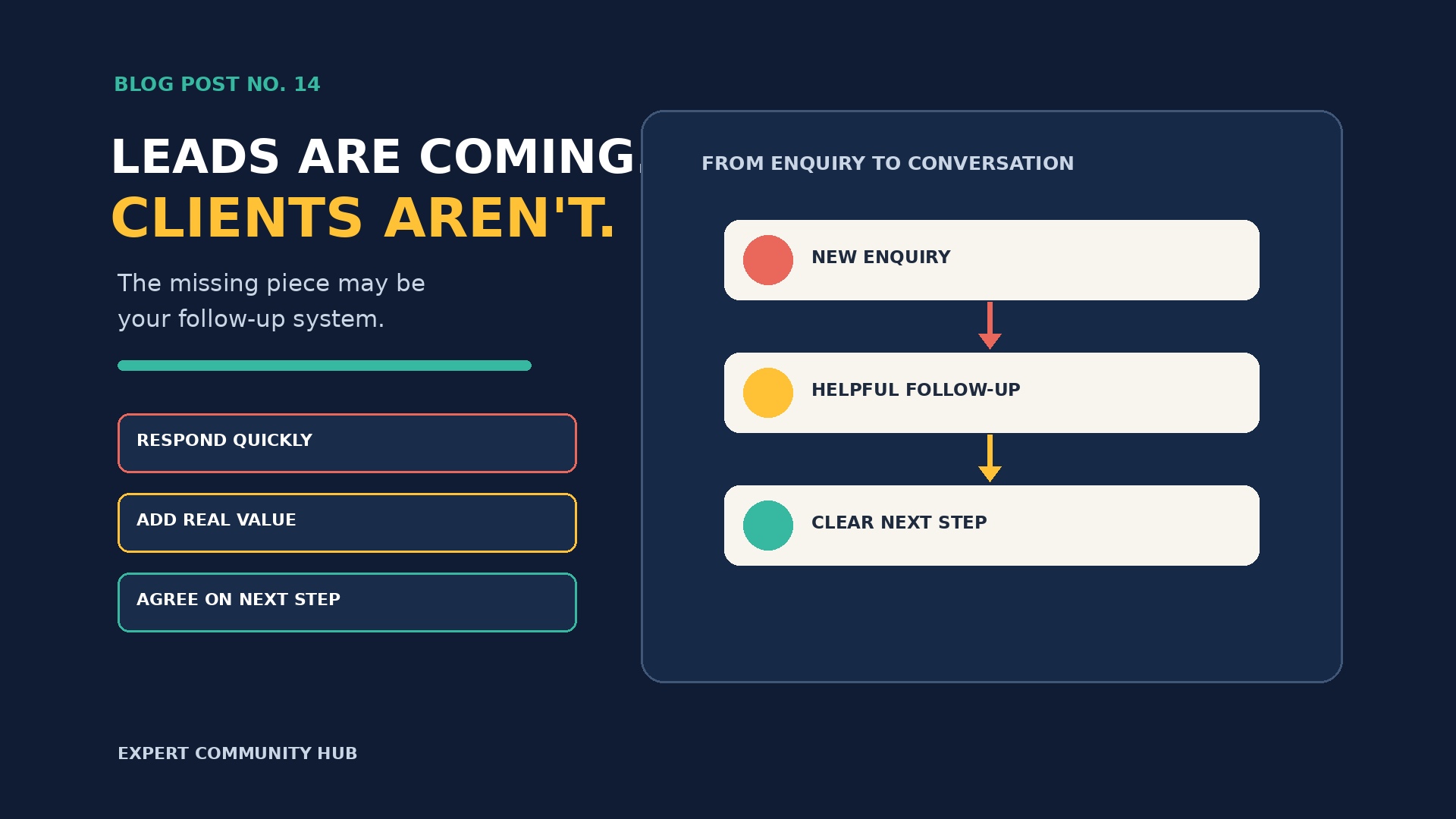
You get enquiries, but few turn into clients. Before spending more on ads, check what happens after someone raises their hand. A simple, respectful follow-up system can help you stop losing promising conversations.
You finally get an enquiry.
Someone comments on your post. Someone fills out your form. Someone sends you a WhatsApp message asking about your service.
You feel hopeful.
You reply when you get time. You send a few details. Then the conversation goes quiet.
A few days pass. You wonder whether the person was serious.
You decide you need more leads.
But wait.
What if the problem is not getting attention? What if promising conversations are slipping away after the enquiry?
By Dharmendra Singh | Expert Community Hub
The pain behind the empty pipeline
Getting an enquiry feels like progress.
It means someone noticed your work. They may have a problem you can help solve. They may be considering your service.
But an enquiry is not yet a client.
People can get distracted. They may have questions. They may be comparing options. They may not understand the next step. Or they may simply not be ready.
If you do not have a clear process, every conversation depends on memory.
You forget to reply. You delay a promised resource. You assume silence means rejection. You move on to finding more leads.
Meanwhile, a potentially useful conversation is left unfinished.
The answer is not to pressure people into buying. It is to make follow-up clear, timely, helpful, and respectful.
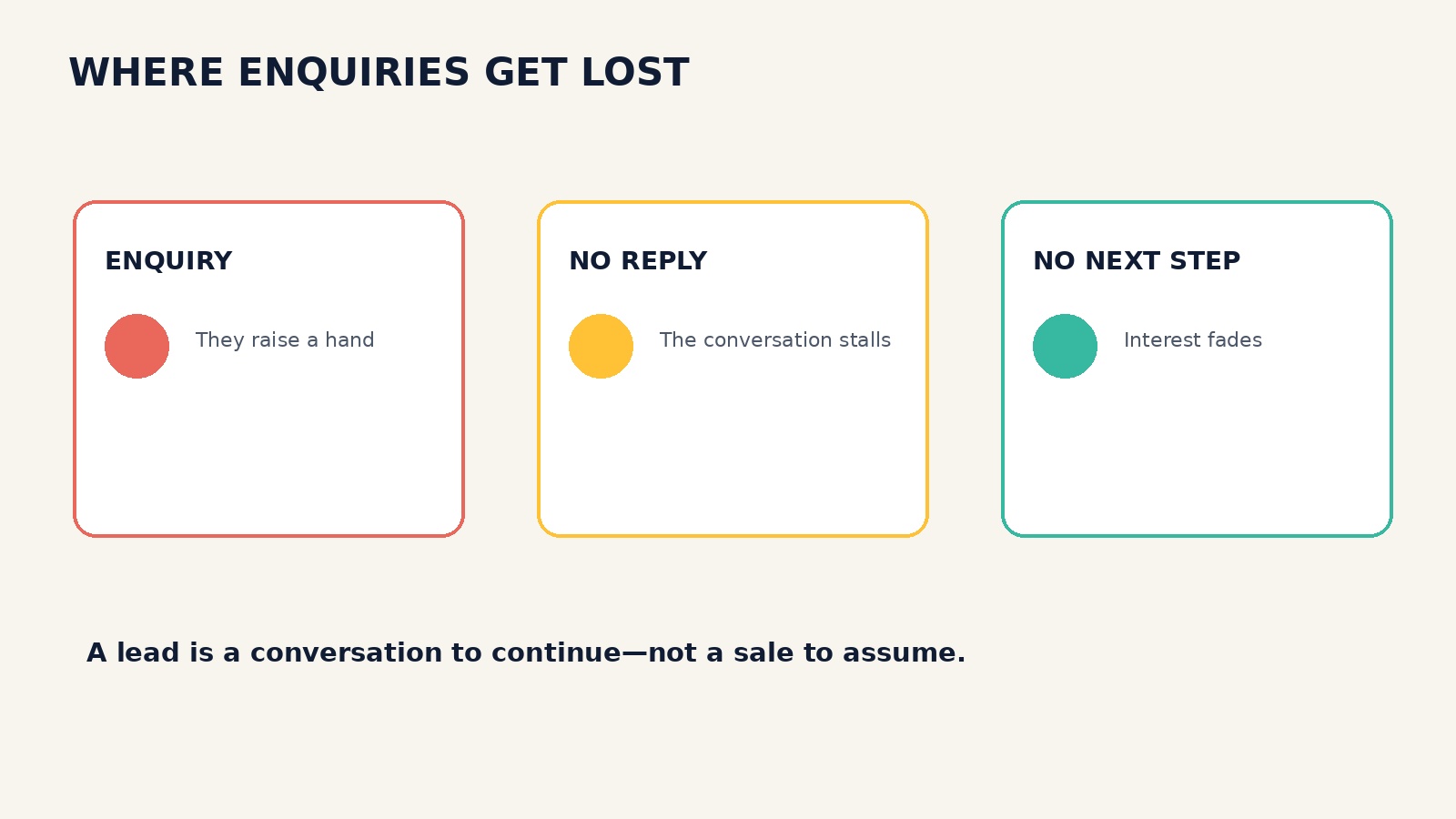
Where enquiries get lost
A simple client journey may look like this:
- Someone discovers your content or offer.
- They ask a question or submit an enquiry.
- You respond and understand what they need.
- You explain a relevant next step.
- They decide whether to continue.
Many experts focus heavily on the first step. They spend time creating content and generating leads.
But the later steps can be inconsistent.
A lead may receive a generic response. They may never get the promised information. Nobody checks whether their question was answered.
A simple system helps you see where each conversation stands.
Why people stop responding
Silence does not always mean a lack of interest.
They are busy
Your service is important to you. But your prospect has their own priorities. Your message may get buried.
They still have questions
They may be unsure about the process, scope, timing, or suitability of your offer.
The next step is unclear
You send a long message about your services. But you do not tell them what they can do next.
The timing is wrong
They may want help later. Their budget or circumstances may not be ready.
You cannot control every reason. You can control how clearly and respectfully you communicate.
Build a simple follow-up rhythm
You do not need a complicated CRM to begin. Start with a spreadsheet or a basic tracking tool.
Record the person's name, enquiry date, need, last contact, next action, and status.
Then use a simple rhythm.
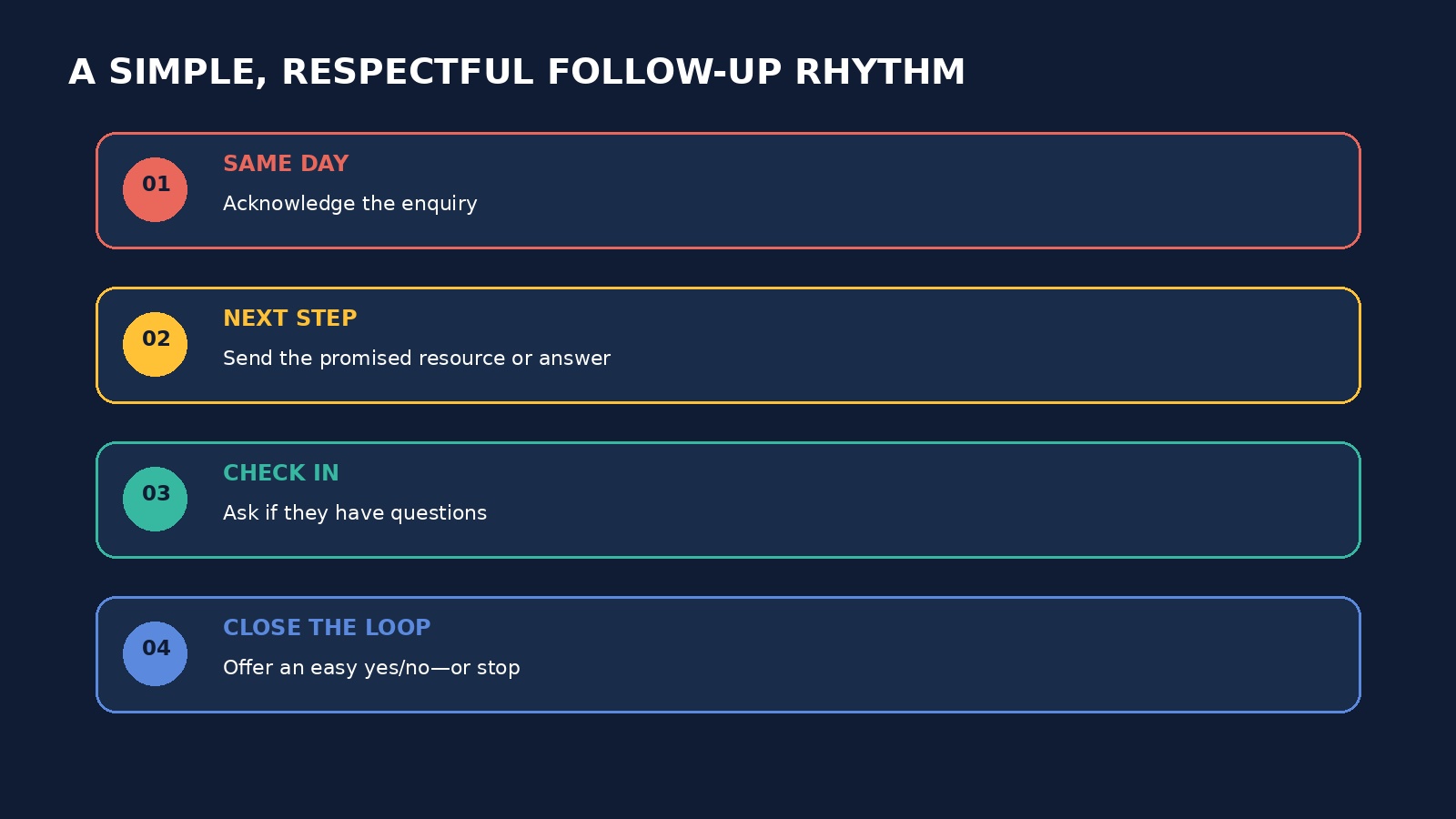
Step 1: Acknowledge the enquiry
Respond as soon as reasonably possible.
Thank them for reaching out. Ask one relevant question if you need more context.
Avoid sending a long pitch before understanding their situation.
Step 2: Deliver what you promised
If you said you would send details, send them.
Keep the information focused on the person's question. Make it easy to understand.
Step 3: Check in with a useful question
After giving them time to review the information, ask whether they have questions.
Do not send the same message repeatedly. Add context or value when you follow up.
Step 4: Close the loop
If they are not ready, ask whether a later check-in would be useful.
If they decline or ask you to stop contacting them, respect that immediately.
A good follow-up process makes the next step clear without removing the prospect's freedom to choose.
Three follow-up messages you can adapt
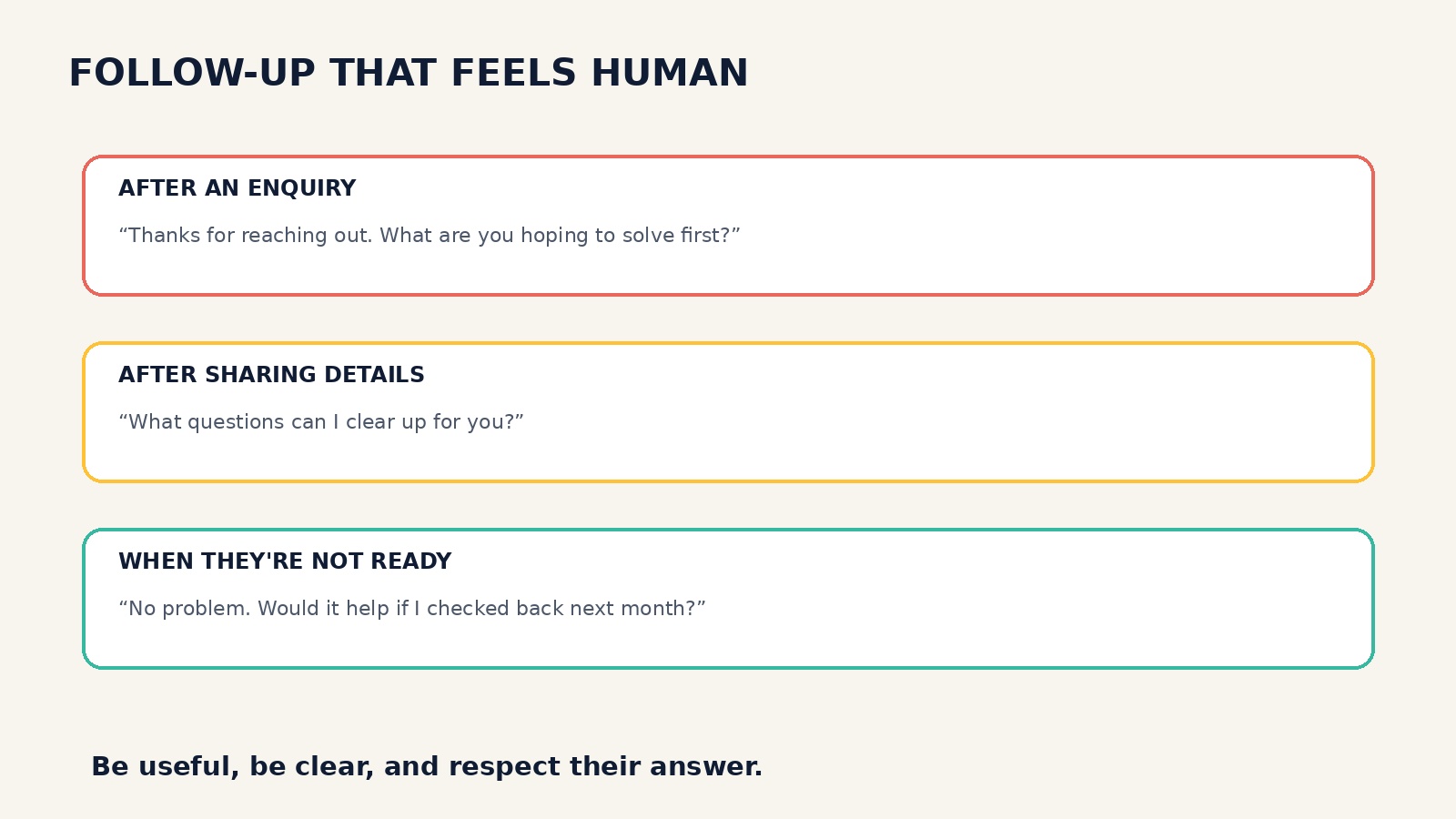
After someone enquires
"Hi [Name], thanks for reaching out. To point you in the right direction, what is the main challenge you are hoping to solve right now?"
After you share your offer details
"Hi [Name], I wanted to check whether the details I shared were clear. Is there anything about the process or what's included that you would like me to explain?"
When they are not ready
"Thanks for letting me know. No pressure. Would you prefer to reach out when the timing is right, or would a check-in next month be useful?"
Personalise these messages. Do not send them mechanically to people who have not agreed to be contacted.
Track conversations, not just leads
A list of names is not a follow-up system.
You need to know what should happen next.
Use a few simple statuses:
- New enquiry: You have not responded yet.
- Contacted: You have replied.
- Needs understood: You know what they are looking for.
- Details shared: They have the relevant information.
- Follow-up due: You have a useful reason to reconnect.
- Won, lost, or later: The outcome or next timing is recorded.
Review the list at a set time each working day.
This small habit can help you avoid forgotten conversations and understand where your process needs improvement.
Know what to measure
Do not judge your marketing only by the number of leads.
Track:
- How many enquiries you receive.
- How many receive a timely response.
- How many have a meaningful conversation.
- How many book a call or take another agreed next step.
- How many become clients.
These numbers help you locate the bottleneck.
If you receive very few enquiries, improve your reach or message.
If enquiries arrive but conversations do not progress, review your response and follow-up process.
If conversations happen but sales remain low, check your offer clarity, fit, pricing, and sales conversation.
Do not assume one metric tells the whole story.
A 15-minute follow-up reset
You can start today.
Minutes 1–5: List your open enquiries from the last few weeks.
Minutes 6–10: Record the last contact and the next useful action for each person.
Minutes 11–15: Send appropriate replies to people who are waiting for information. Schedule a respectful check-in where it makes sense.
Do not message everyone just to push a sale. Focus on conversations where a genuine next step is appropriate.
Then choose a regular time to review your pipeline.
Key takeaways
1. More leads will not fix every sales problem. Check what happens after an enquiry.
2. Reply with relevance. Understand the person's need before pitching.
3. Make the next step clear. Avoid leaving interested people guessing.
4. Track every open conversation. Use a simple system instead of relying on memory.
5. Follow up respectfully. Help people decide; never pressure them into buying.
Final thought: don't let good conversations disappear
You do not need to chase every lead.
You need a reliable way to respond, deliver what you promise, answer questions, and agree on the next step.
Some people will buy. Some will not. Some will return later.
A good system helps you treat each person professionally and learn from the process.
At Expert Community Hub, we help coaches, consultants, and experts build clear offers and practical AI-supported client acquisition systems. A simple follow-up process is one part of turning marketing activity into a more organised business.
Your turn
Think about the last five people who enquired about your service.
How many received a clear response and a useful next step?
That answer may reveal your next business improvement.