
It’s not just about finding clients. It’s the uncertainty, the emotional rollercoaster, and the silent pressure of never knowing what next month will bring.
It’s not just about finding clients. It’s the uncertainty, the emotional rollercoaster, and the silent pressure of never knowing what next month will bring.
By Dharmendra Singh | Expert Community Hub
The month ends. You exhale. Then the anxiety begins again.
Imagine this.
It's the last day of the month.
You managed to close a few clients. The money has arrived. Your bills are covered, and for a moment, you feel relieved.
You tell yourself, “This month went well. Things are finally moving in the right direction.”
Perhaps you even reward yourself with a nice dinner or spend some quality time with your family.
But then, a new month begins.
You open your calendar.
A few old conversations are still pending. There are no confirmed clients for next week. Your social media posts aren't generating enough enquiries, and the people who promised to get back to you haven't responded.
Suddenly, that feeling of relief disappears.
The questions return.
- Where will my next client come from?
- Will I earn enough to cover my expenses this month?
- Should I spend more money on marketing?
- What if I work hard but still don't get results?
- How long can I continue running my business like this?
And perhaps the most uncomfortable question of all:
“I have so much knowledge and experience. Why is building a successful business still so difficult?”
If you've ever experienced this, you're not alone. And the real problem may be much deeper than you think.

1. The problem isn't just a lack of clients. It's the uncertainty.
Many coaches, consultants, trainers, and independent experts believe their biggest problem is generating more leads.
They think that if they could just find five more clients, close two more deals, or get a few more enquiries every week, everything would be fine.
But let's look a little deeper.
Imagine two coaches.
Coach A earns ₹1 lakh this month. However, they have no idea where next month's clients will come from.
Coach B earns ₹70,000 this month, but has a repeatable process for attracting prospects, following up with interested people, and converting suitable clients.
Who is more likely to feel confident about the future?
Coach B may have earned less this month, but they have something valuable: a process they can measure and improve.
Coach A may have higher revenue today, but without a reliable way to generate future opportunities, every new month can feel like starting from scratch.
Of course, no system can guarantee clients or income. Markets change, prospects make their own decisions, and businesses experience fluctuations.
But there is a significant difference between uncertainty you cannot control and a business process you can improve.
The goal isn't to eliminate every uncertainty. It's to stop depending entirely on luck, referrals, and last-minute efforts.
2. The hidden emotional cost nobody talks about
When client acquisition becomes unpredictable, the impact doesn't stay inside your business. It slowly enters other areas of your life.
Financial anxiety
You may postpone an investment, hesitate before making a family purchase, or worry about upcoming household expenses.
Even when your business is earning money, you struggle to enjoy it because you're already thinking about next month.
Self-doubt
You begin comparing yourself with other coaches.
You see someone with fewer years of experience posting success stories, conducting webinars, and announcing new clients.
You start wondering whether you're missing something.
Perhaps you need another certification. Perhaps your niche isn't right. Perhaps you're not good at marketing.
Sometimes, you begin questioning your expertise, even when your actual skills are not the problem.
Pressure to always be working
You wake up thinking about leads.
You check WhatsApp during meals.
You spend weekends creating content because you haven't generated enough enquiries during the week.
Even when you're physically with your family, your mind is calculating how to bring in the next client.
And the irony?
You may have started your coaching or consulting business precisely because you wanted more freedom.
The fear of going back to where you started
For some professionals, building an independent business represents much more than earning money.
It represents independence, dignity, flexibility, and the opportunity to create something of their own.
When income becomes unpredictable, the fear isn't always just about losing money. It's about losing the future they imagined for themselves.
You don't just want more clients. You want the confidence to plan your life without constantly worrying about where the next payment will come from.

3. Why referrals alone may not be enough
Referrals are valuable. A recommendation from a satisfied client can build trust much faster than a cold introduction.
But what happens when referrals slow down?
What happens when your best client finishes a project, your network becomes quiet, or the people who know your work simply don't have anyone to recommend?
If referrals are your only source of business, you may have very little control over when the next opportunity arrives.
The same problem can occur when you depend entirely on social media posts, occasional networking events, or personal outreach.
These activities can generate clients, but without a connected process, results may be inconsistent.
A more sustainable approach is to build several connected stages:
- Attract: Help the right people discover your expertise.
- Capture: Give interested prospects a clear way to share their details.
- Nurture: Build trust through useful content, email, webinars, or conversations.
- Convert: Explain your offer and help suitable prospects make an informed decision.
- Follow up: Stay in touch with interested people who aren't ready to buy today.
When these stages work together, you can begin understanding where opportunities come from, where they get stuck, and what needs improvement.
You no longer have to guess blindly every month.
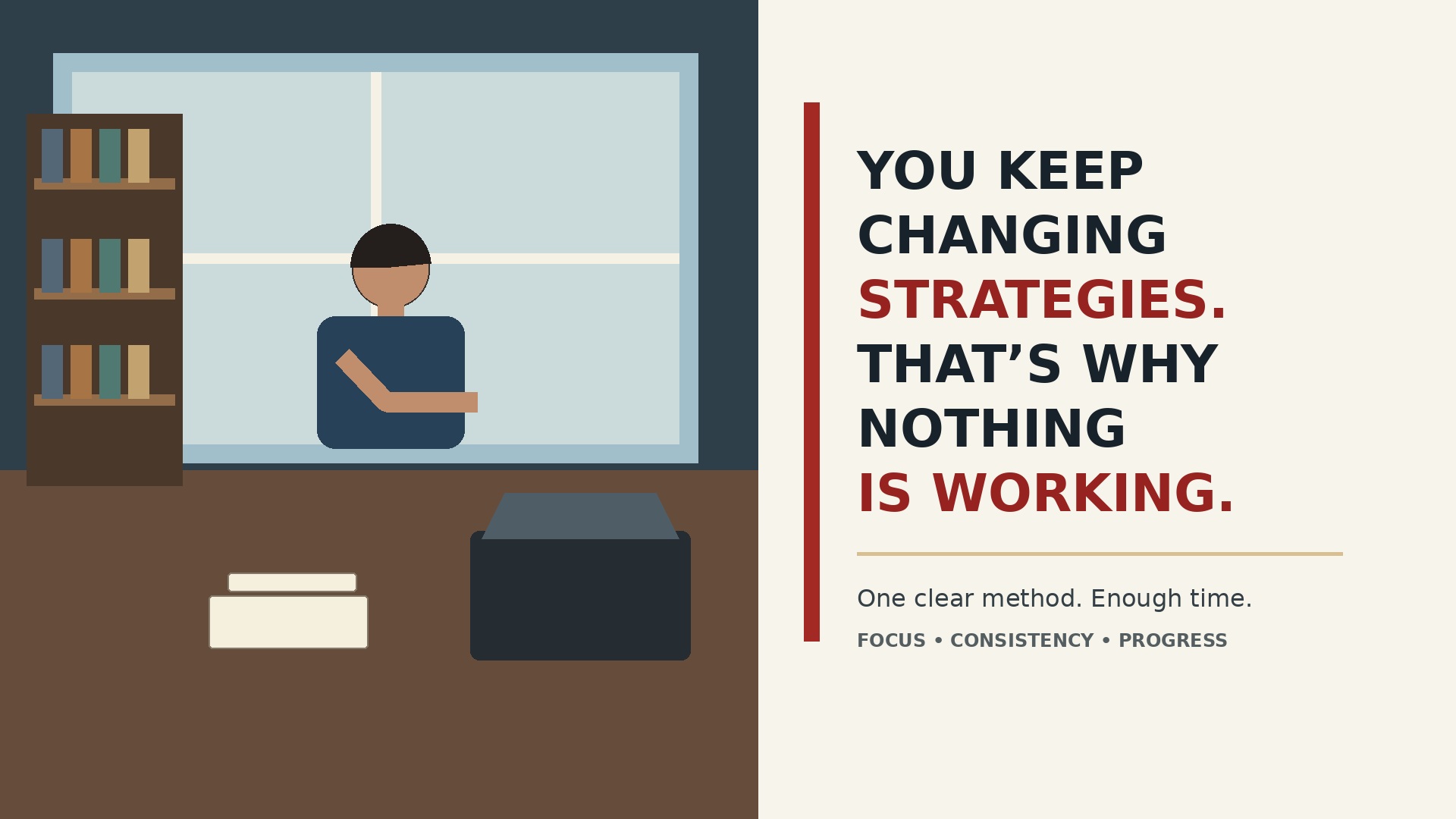
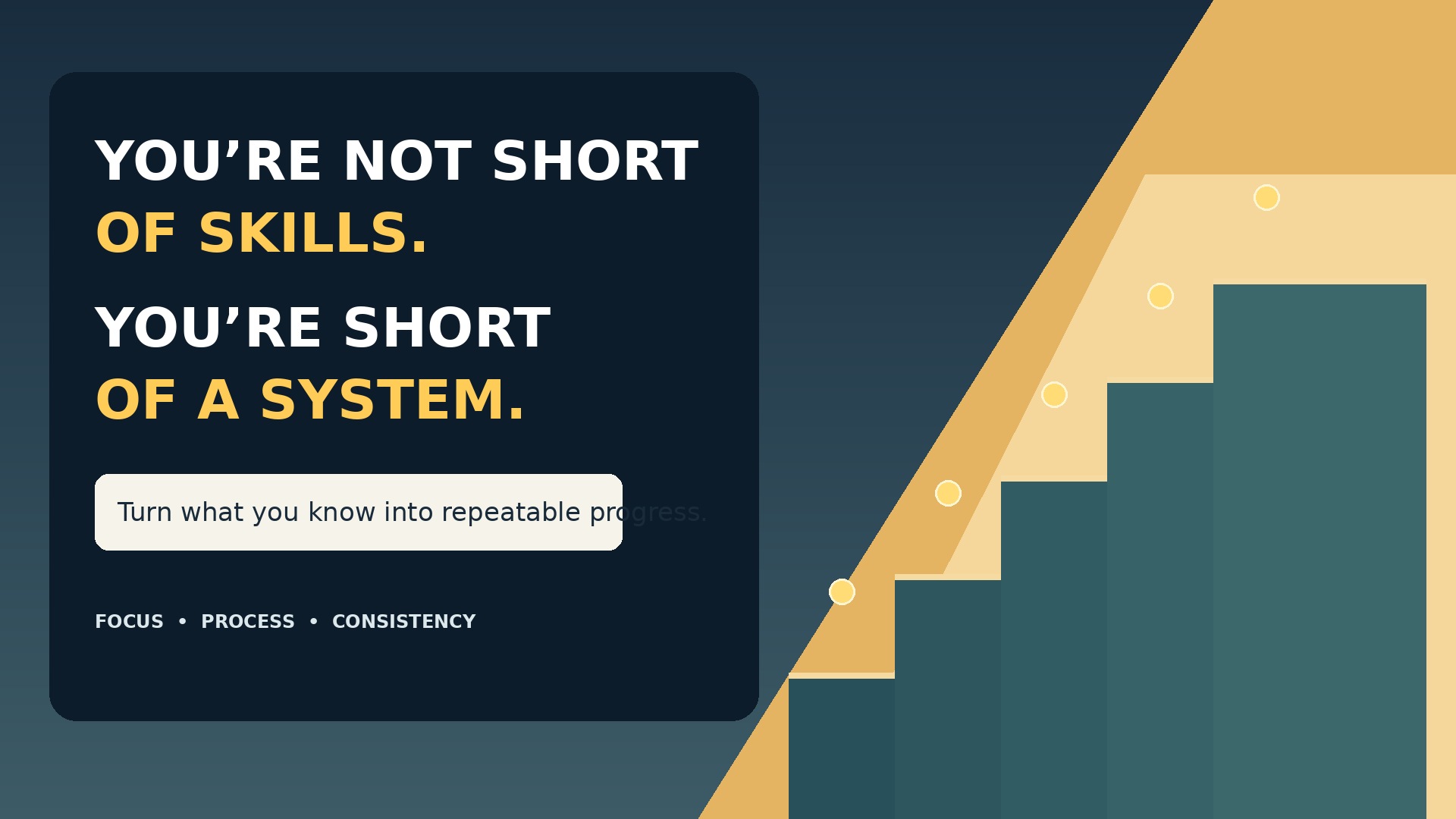
4. You don't necessarily need to work harder. You need a repeatable process.
Here's a common trap.
When sales slow down, many experts respond by doing more of everything.
They create more posts. They join more groups. They watch more marketing tutorials. They buy another tool or enrol in another course.
Their working hours increase, but their business doesn't necessarily become more predictable.
Why?
Because activity and progress are not the same thing.
Posting every day without a clear message may not attract the right audience.
Generating leads without following up may waste good opportunities.
Conducting webinars without understanding why attendees don't purchase may lead to repeating the same mistakes.
Buying automation software without a defined process may simply automate confusion.
Instead, start with four questions.
Question 1: Who exactly do I help?
Can you clearly describe the people you serve, the problem they want to solve, and the outcome you help them pursue?
Question 2: How do potential clients discover me?
Do you have one or two dependable channels for reaching relevant people, or do you wait for someone to recommend you?
Question 3: What happens after someone shows interest?
Do you have a clear next step, such as a useful resource, consultation, webinar, or structured follow-up?
Question 4: What do I measure every week?
Do you know how many enquiries you receive, how many conversations you have, how many prospects become clients, and why others don't?
You don't need a complicated dashboard to begin. A simple spreadsheet tracking these numbers can reveal more than another month of working without a clear plan.

5. How AI can help you build a more consistent client acquisition process
You may have heard that AI can help you grow your business.
But AI is not a magic button that automatically brings paying clients.
Its real value comes when you use it to improve a well-defined process.
For example, you can use AI to:
- Research the problems and questions of your target audience.
- Develop clearer positioning and compelling lead magnets.
- Turn your expertise into useful blogs, emails, videos, and webinar content.
- Create a follow-up sequence for people who express interest in your services.
- Organise enquiries and analyse your sales pipeline.
- Reduce repetitive administrative work through appropriate automation.
Imagine spending less time wondering what to post, manually following up with every lead, and trying to remember every business activity.
Instead, you could use that time to serve clients, improve your offers, develop your expertise, and spend more time with your family.
That is the real opportunity: using technology to support your expertise rather than allowing technology to become another source of overwhelm.
Start with one bottleneck.
If you struggle to attract prospects, improve your positioning and lead generation first.
If people enquire but don't buy, investigate your offer, sales conversations, and follow-up process.
If you have clients but no time, look for repetitive activities that can be simplified or automated.
Build the system step by step.
6. Your next month doesn't have to look like your last month
Let's return to the question we started with.
What if you could begin a new month without feeling that everything depended on finding clients from scratch?
Imagine knowing:
- Which channels bring relevant enquiries.
- What content helps potential clients understand your expertise.
- How interested prospects move toward a buying decision.
- Which follow-ups need attention.
- What you need to improve to create more opportunities.
You would still have work to do. You would still face challenges. You would still need to deliver value and earn the trust of your clients.
But you would have a process to work on instead of relying entirely on hope.
Over time, that process could help you make better decisions, use your time more effectively, and build a business that is less dependent on your daily improvisation.
And perhaps the biggest change would not be visible on your revenue dashboard.
It would be the ability to sit with your family without constantly worrying about next month's income.
The confidence to invest in your future.
The freedom to take a break without feeling that your entire business will stop.
And the satisfaction of knowing that your years of knowledge and experience are finally supported by a business model designed to help them reach more people.
Key takeaways: What to remember
1. Unpredictable income creates a deeper problem than low sales. It can affect your confidence, family decisions, and ability to plan for the future.
2. Your expertise may not be the problem. You can be excellent at helping people and still struggle if you lack a repeatable way to attract and convert clients.
3. Referrals are valuable, but don't rely on them alone. Build a process that helps new prospects discover you and understand the value you provide.
4. More activity doesn't automatically mean more growth. Focus on the stages of your client acquisition process that need the most improvement.
5. Use AI to support a clear business process. Start small, measure results, and automate repetitive tasks only when it makes sense.
6. Build for more than revenue. A sustainable business should also support your freedom, relationships, purpose, and quality of life.
Your next step
Take five minutes today and answer this question honestly:
If your current sources of clients stopped bringing enquiries for the next 30 days, would you know exactly what to do to generate new opportunities?
If your answer is no, don't blame yourself. Treat it as a signal that your business needs a clearer process.
At Expert Community Hub, our focus is helping coaches, consultants, and experts turn their knowledge into a more structured digital business using AI, marketing systems, and practical implementation.
You don't have to build everything at once. You just need to identify the next missing piece and start working on it.
Your expertise deserves a business system that supports it.
What is the biggest challenge in your business right now: finding leads, converting prospects, following up, or managing your time? Share your experience in the comments. Your answer might help another expert who is facing the same challenge.