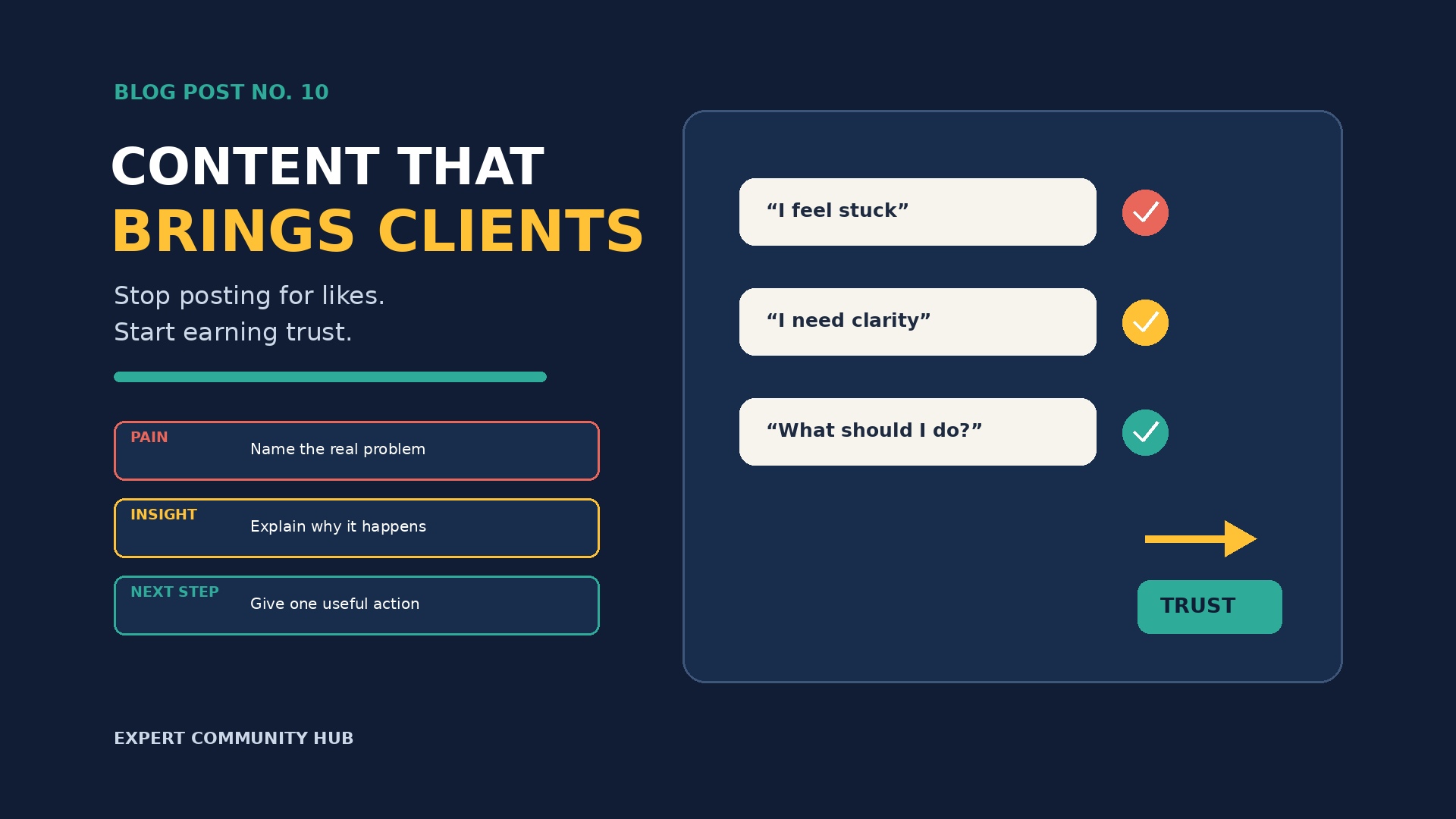
You post regularly, but enquiries are rare. The answer may not be more content. Learn how to create posts that make the right people feel understood, trust your expertise, and take a meaningful next step.
You post consistently. People watch, scroll, and sometimes like your content. But very few ask how they can work with you.
What is missing?
Maybe you do not need to post more often.
Maybe your content needs to do a different job.
Content should not only attract attention. It should help the right people understand their problem, trust your thinking, and see a useful next step.
By Dharmendra Singh | Expert Community Hub
The pain behind the empty inbox
You spend time creating posts.
You think about the topic. You write the caption. You design the graphic. You publish it.
Then you check the numbers.
A few likes. A few views. No enquiries.
After a while, you begin to question yourself.
"Is my niche wrong?"
"Do I need better designs?"
"Should I follow every new trend?"
It is easy to turn to more tools or more posting.
But content can get attention without building trust. It can educate people without showing them how you help. It can entertain without connecting to your offer.
The goal is not to turn every post into a sales pitch.
The goal is to make your content useful to the people you want to serve.
Stop writing to impress. Start writing to be understood.
Experts often share what they know.
They explain models. They use industry terms. They give long lists of tips.
That can be valuable.
But your audience may first need to feel understood.
A new coach may not be searching for a sophisticated funnel architecture. They may be worried because nobody is enquiring about their services.
A consultant may not need another productivity hack. They may need a clear way to explain the value of their work.
Start with the problem your audience is already thinking about.
Use the words they use. Describe the situation they recognise. Then explain one useful idea.
This makes your expertise easier to connect with their real life.
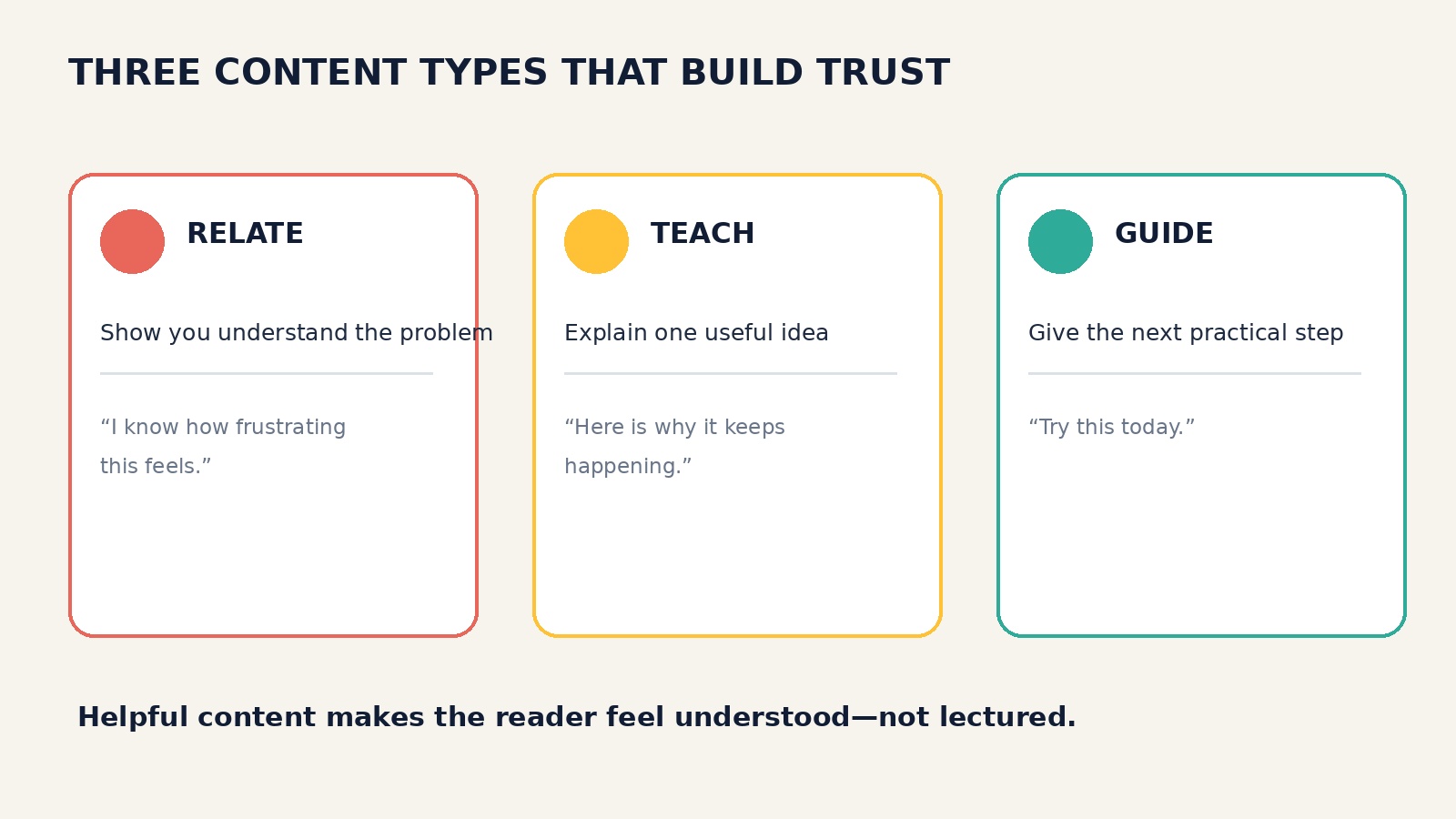
The three types of content that build trust
1. Relate: show that you understand
Describe a familiar struggle.
For example:
"You have the skills to help people. But when someone asks what you do, your answer becomes a long list of services."
This makes the reader pause. They recognise themselves.
Do not invent pain just to provoke emotion. Be honest and specific.
2. Teach: explain why the problem happens
Give the reader a fresh way to understand the situation.
For example:
"Your offer may be hard to buy because it describes your methods, but not the problem your client wants solved."
Explain the idea in plain language. Use a short example.
3. Guide: give one useful action
Help the reader move forward.
For example:
"Complete this sentence: I help [audience] solve [problem] so they can [outcome]."
One useful action is better than twenty tips the reader never applies.
Together, these three content types help people feel understood, learn from you, and experience the value of your approach.
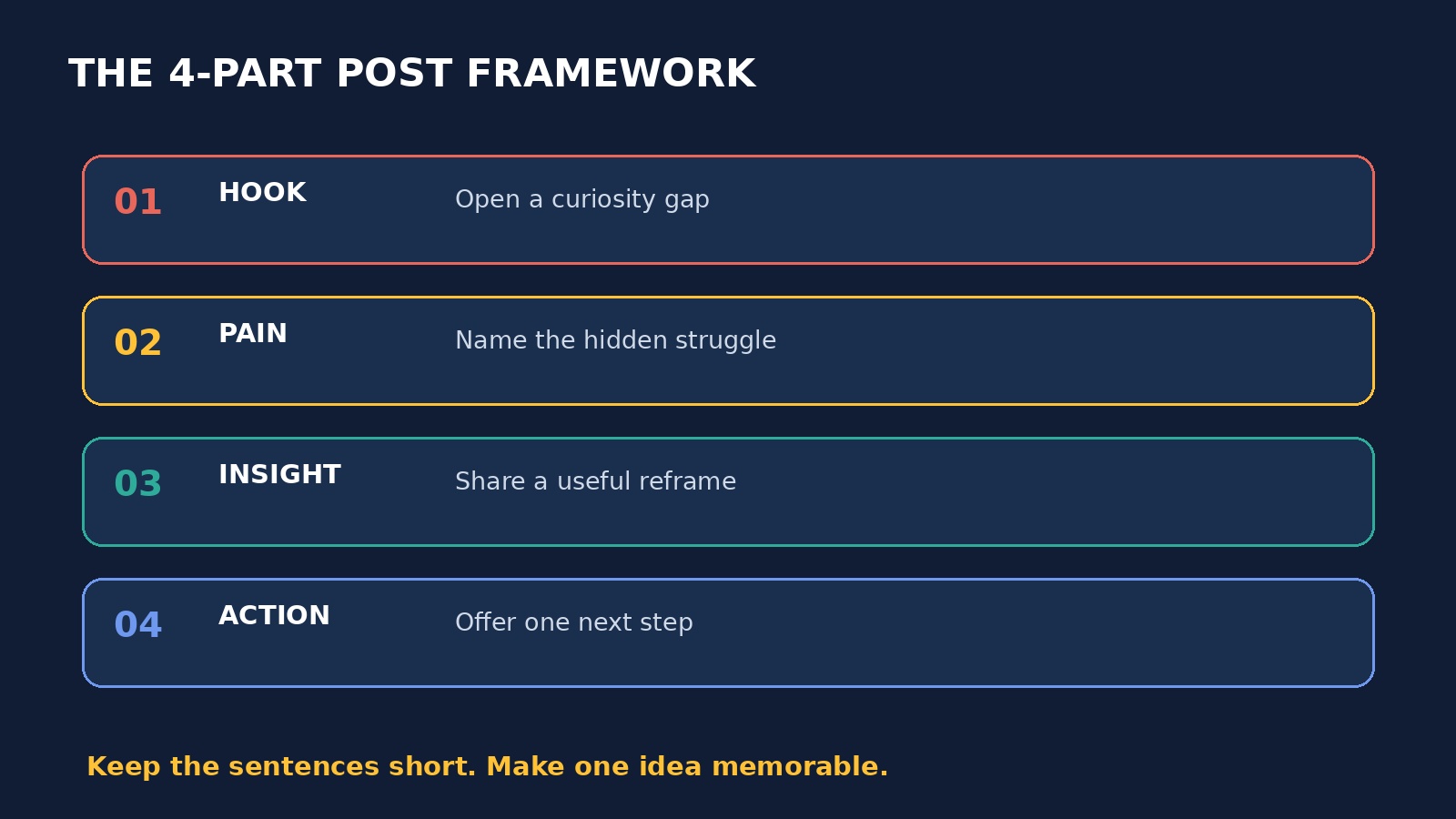
Use this four-part framework for your next post
You do not need to reinvent your content every day.
Use this simple structure.
Part 1: The hook
Open with a question, contrast, or surprising observation.
Examples:
- "Why are people reading your posts but not enquiring?"
- "More content will not fix an unclear offer."
- "Your audience may not need more advice. They may need a clear next step."
Make the opening relevant. Avoid promises you cannot support.
Part 2: The pain
Describe the problem in everyday language.
Show what it looks like in real life. Explain why it is frustrating.
Keep the sentences short.
Part 3: The insight
Share one useful explanation or reframe.
Do not cram your entire course into one post. Choose one idea and explain it well.
Part 4: The action
Give the reader something practical to try.
Invite a reply, a reflection, or a small action. Make the next step natural.
Example: turn a generic post into a meaningful one
Generic version:
"Five tips to grow your coaching business. Be consistent. Create content. Build your brand. Use social media. Never give up."
The advice is familiar. The reader may have seen it many times.
Stronger version:
"You publish three posts every week. But nobody asks about your coaching.
Before creating more content, check one thing.
Does each post help your ideal client recognise a problem you solve?
Choose one audience problem. Explain why it happens. Share one action they can take. Then connect the topic to your service where it makes sense.
You do not need every post to sell. You need your content to help people understand why your work matters."
The stronger version focuses on a specific situation. It explains the problem and gives a clear action.
That is what makes content useful.
Your content does not need to sell in every sentence
People need time to understand you.
Some readers are just discovering your work. Others are learning about their problem. A smaller group may be ready to explore your service.
Your content can support all three stages.
- Discovery: Help new people recognise a problem.
- Trust: Teach a useful idea and demonstrate your thinking.
- Decision: Explain how your service works, who it suits, and what the next step looks like.
You do not need to force an offer into every post.
But your overall content should make it easy for interested people to learn more about working with you.
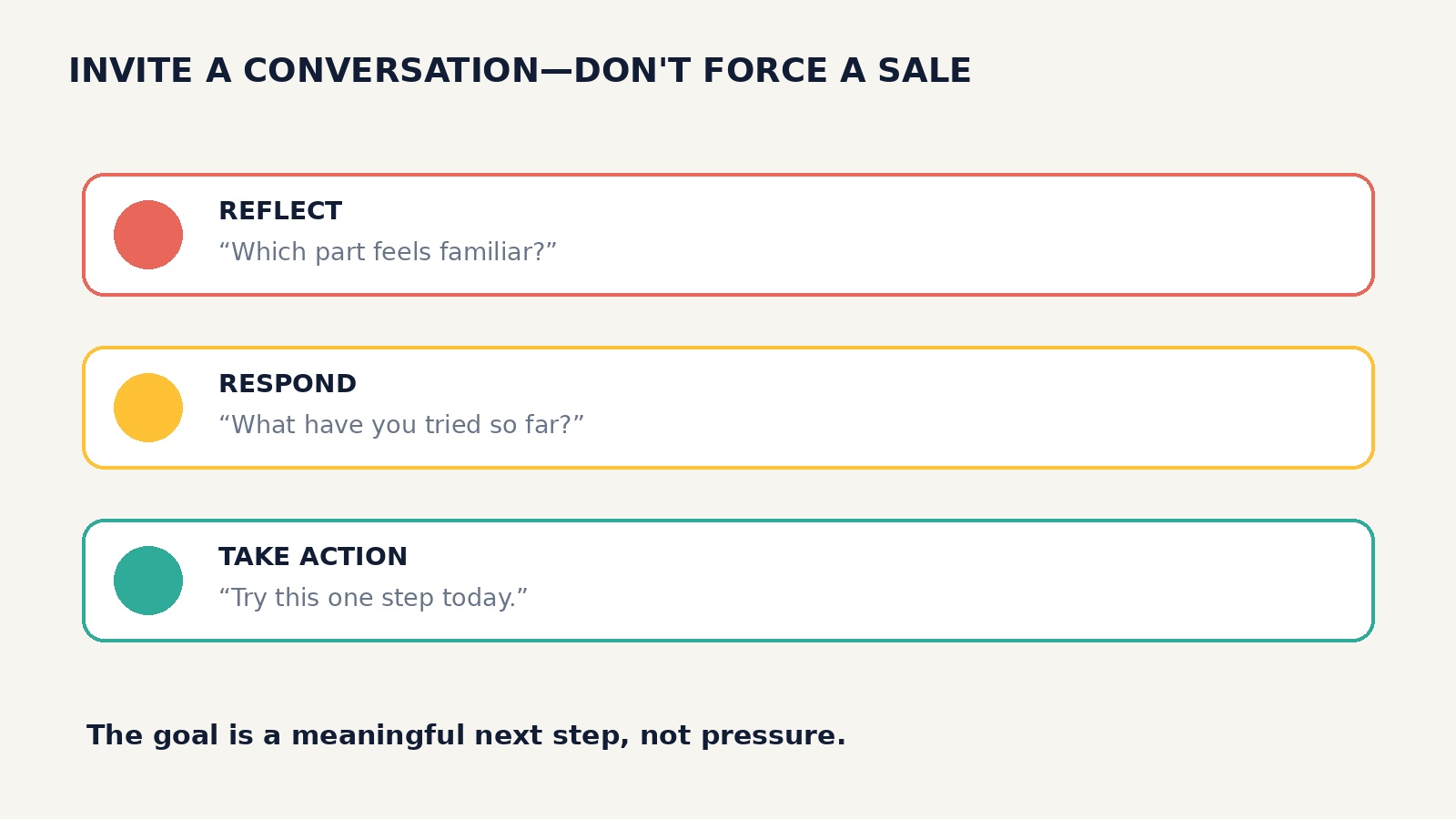
Invite a conversation without sounding pushy
A useful call to action does not need pressure.
Try questions like:
- "Which part of this feels familiar?"
- "What have you tried so far?"
- "Would this framework help with your current challenge?"
- "What is the biggest obstacle you face with this?"
Ask a genuine question. Respond thoughtfully when people answer.
Do not treat every comment as a sales opportunity. Build a conversation first.
When someone shows interest in your service, explain the next step clearly and respectfully.
A simple weekly content plan
Start with three useful posts per week.
Post 1: Relate. Describe a problem your audience recognises.
Post 2: Teach. Explain one reason the problem happens and offer a practical solution.
Post 3: Guide. Share a framework, a case example, or a next step. Explain how your service may help the right person.
Repeat this pattern with different audience problems.
You can also repurpose one idea into a short video, a carousel, an email, and a longer blog post.
Keep the core message consistent. Adapt the format to the platform.
Measure more than likes
Likes can show that people noticed your content. They do not tell the whole story.
Track a few signals that match your goal:
- Relevant comments and replies.
- Saves and shares.
- Profile visits from your target audience.
- Enquiries and conversations started.
- Calls booked or other meaningful next steps.
Look for patterns over time.
Which topics start thoughtful conversations? Which posts lead people to ask about your service? Which messages seem to confuse them?
Use that feedback to improve your next post.
Do not judge a strategy from one post alone.
Key takeaways
1. Attention is only the beginning. Content should also build understanding and trust.
2. Start with a real audience problem. Use language your audience recognises.
3. Teach one idea at a time. A focused post is easier to remember and apply.
4. Give a practical next step. Help readers turn insight into action.
5. Connect content to your offer naturally. Make it easy for interested people to learn more.
Final thought: become the expert people remember
You do not have to publish every day to be useful.
You do not need to copy every trend.
You need to understand your audience well enough to create content that feels relevant. Then you need to share useful ideas consistently and make the next step clear.
Your content should leave people thinking:
"This person understands my problem."
"I learned something useful."
"I would like to hear more."
That is a stronger foundation for client acquisition than chasing attention alone.
At Expert Community Hub, we help coaches, consultants, and experts turn their knowledge into clear offers, useful content, and practical AI-supported client acquisition systems.
Start with one audience problem. Write one helpful post. Make one next step clear.
Then learn from the response.
Your turn
What is the biggest challenge your audience faces before they decide to work with you?
Use that question as the starting point for your next post.