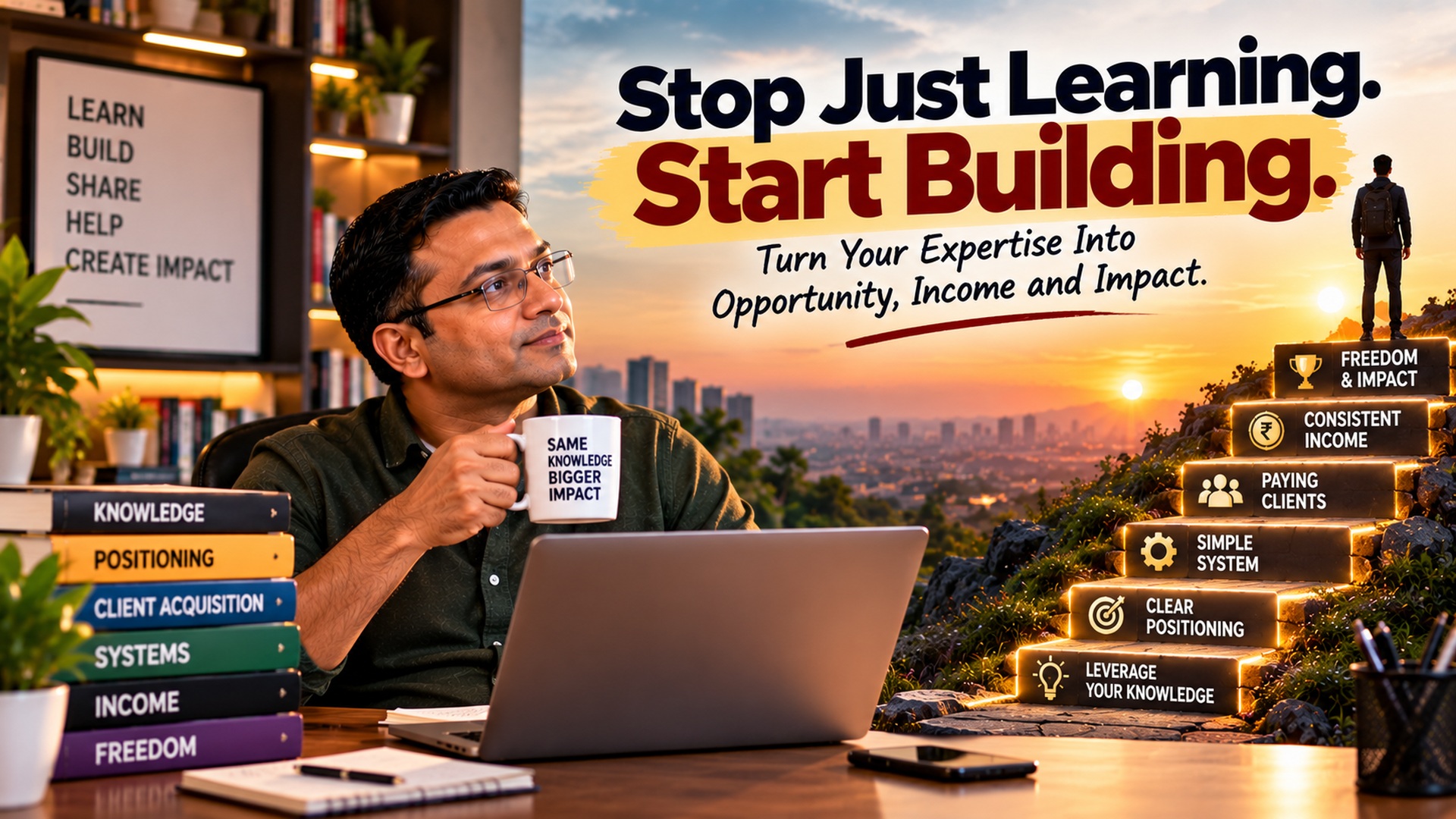

What if failure isn't the only thing holding you back? Sometimes, the bigger fear is discovering what changes when you finally try. Learn how to move forward with small, practical steps.
What if the biggest risk isn't failing? What if it's never finding out what you could do?
By Dharmendra Singh | Expert Community Hub
The idea you keep postponing
You have an idea.
You have thought about it for months. Maybe even years.
You want to launch your coaching offer. Start consulting. Publish your first video. Host a webinar. Or finally tell people what you can help them achieve.
You know the first step.
Yet you keep delaying it.
You tell yourself you need more preparation. You need a better website. You need to learn one more skill. You need to feel more confident.
Each reason sounds sensible.
But the weeks pass. The idea stays where it is.
Have you ever wondered why?
Sometimes, we are afraid of failing. We worry about criticism, rejection, or wasting time.
But there can be another fear beneath it.
What if you try, and your life starts to change?
Success can bring new responsibilities. More visibility. Higher expectations. Difficult decisions. It can ask you to leave behind a familiar identity.
The unknown can feel frightening, even when it holds something you want.
Fear doesn't always look like fear
Fear is not always a racing heart or a clear feeling of panic.
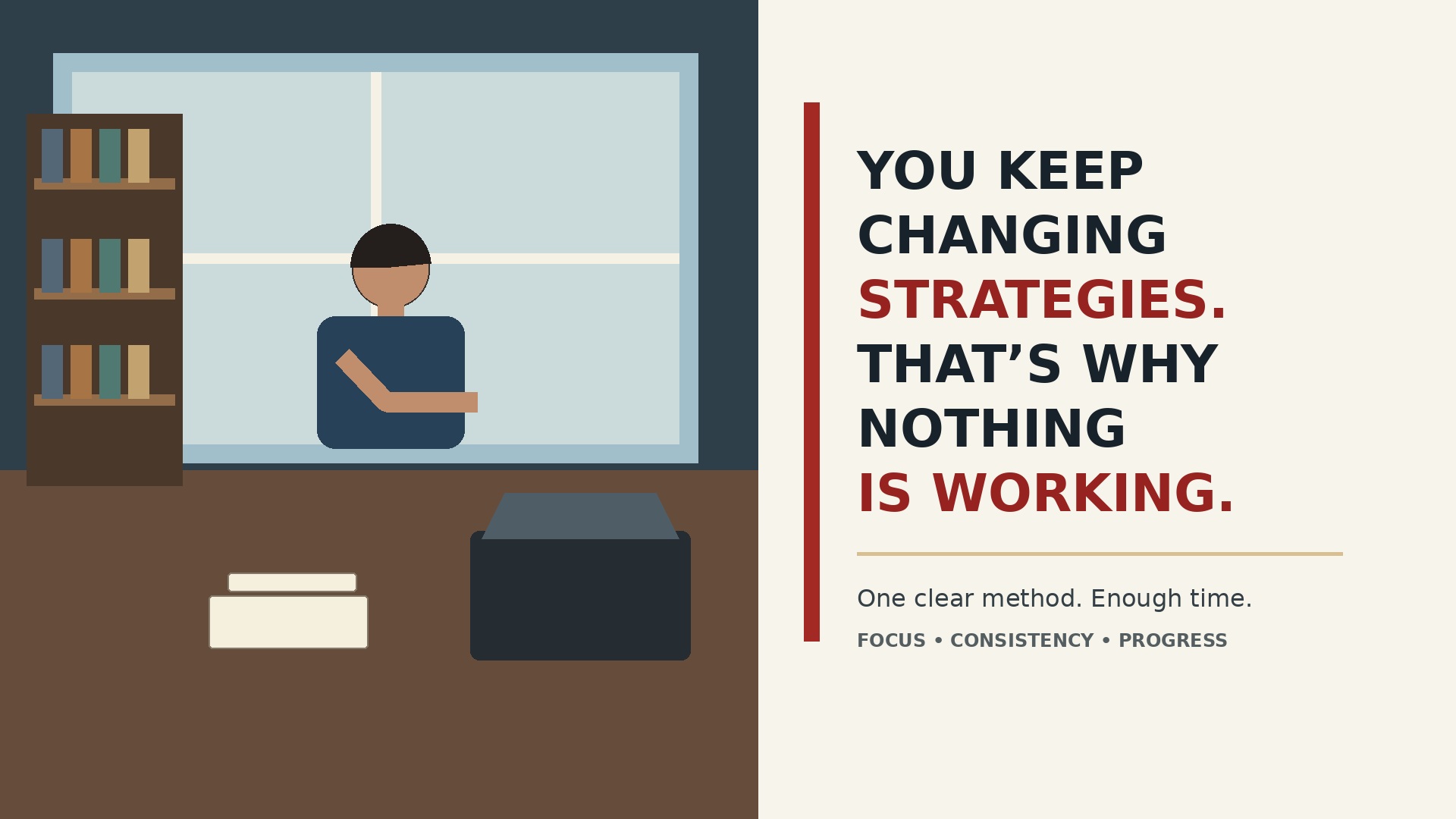
Sometimes, it looks like endless preparation.
You research instead of launching. You edit instead of publishing. You keep changing your niche. You wait for the perfect moment.
You may call it planning.
Some planning is useful. But planning becomes a problem when it repeatedly delays the action that would teach you something real.
Here are three common signs.
1. You keep raising the bar
You decide to launch when your offer is perfect.
Then you decide your website must be perfect too.
Next, you need a better camera, more content, and another certification.
The finish line keeps moving.
2. You compare yourself with people who are further ahead
You see another coach sharing wins online.
You compare their progress with your starting point.
Suddenly, your first step feels too small. You think you need to catch up before you begin.
But you cannot build experience by comparing yourself with someone else's results.
3. You avoid situations where you might be judged
You hesitate to publish your opinion. You avoid asking for a sale. You don't invite people to your webinar.
You stay safe from rejection.
But you also stay away from feedback, learning, and opportunity.

The hidden fear: what if I really can do this?
We often talk about fear of failure. We talk less about the uncertainty that can come with growth.
Imagine your coaching business starts working.
More people ask for your help. Your calendar fills up. Your audience grows.
Now you need to deliver consistently. You need to manage expectations. You may need to raise prices, improve your systems, or learn to say no.
People may pay more attention to what you say.
Your choices may affect more people.
That can feel like pressure.
You may also worry about losing the freedom you wanted when you started your business. What if growth creates a bigger workload? What if clients depend on you for everything?
These concerns are real. They deserve a plan, not shame.
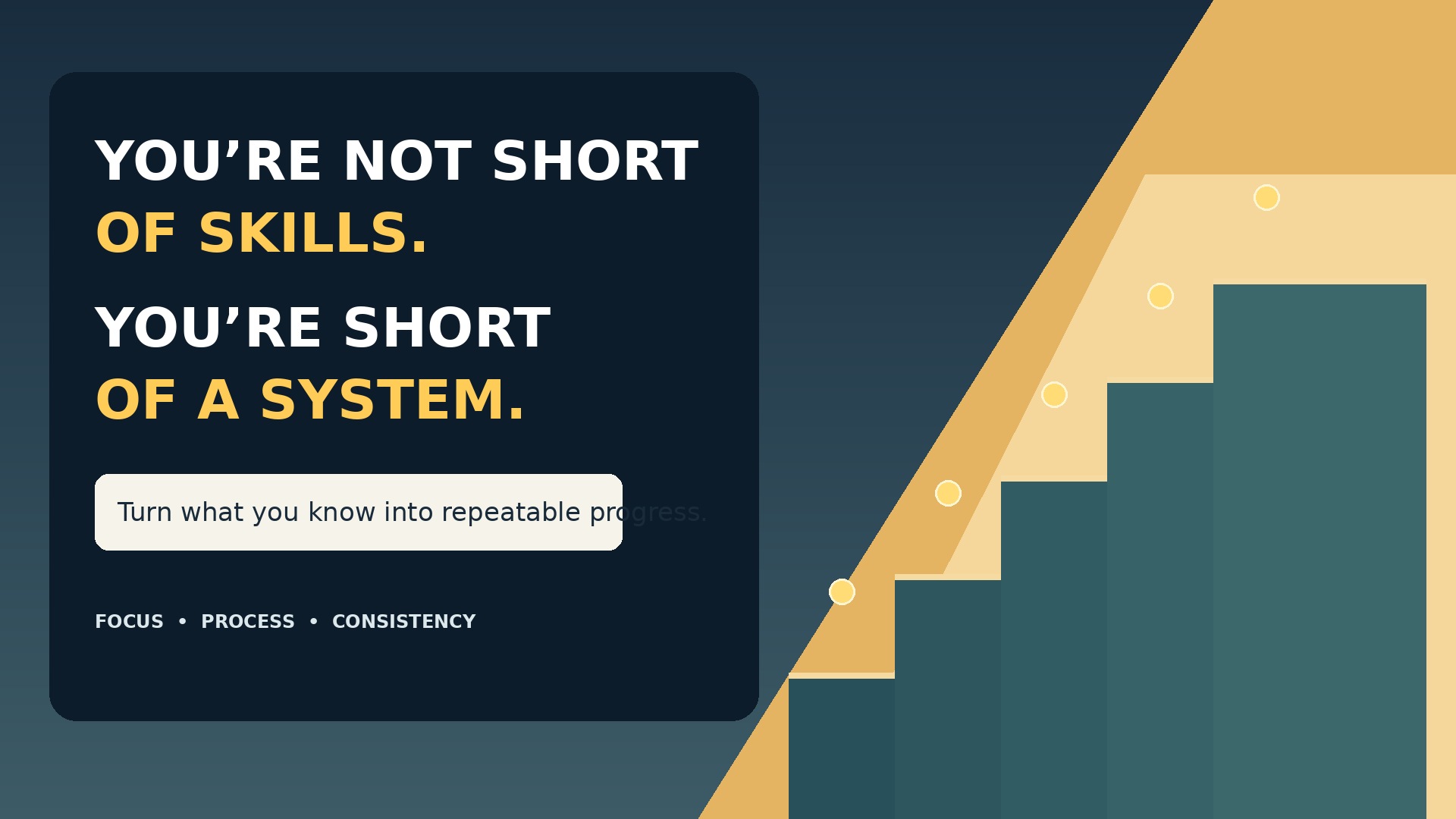
The answer is not to avoid growth. It is to build the skills and systems that help you handle it.
You can start small. You can set boundaries. You can design your offer around the life you want to live.
You do not need to choose between meaningful growth and a meaningful life. You need to build with both in mind.
Confidence comes after action
Many people wait to feel confident before they begin.
But confidence often grows after you take action.
Think about learning to drive. Reading the manual helps. Watching someone else drive helps too.
But neither replaces getting behind the wheel and practising safely.
Business works in a similar way.
You can study marketing for months. But publishing your first useful post teaches you something different.
You can watch sales training. But talking to a real prospect reveals the questions you need to answer.
You can plan a webinar. But running one helps you understand your audience's needs.
Action creates feedback. Feedback helps you improve. Improvement builds confidence.
You don't have to feel fearless.
You need a step small enough to take while fear is still present.
Try the 10-minute courage exercise
You don't need a dramatic life change today.
Try this simple exercise.
Step 1: Name the action.
Write down the one thing you keep postponing.
Be specific. "Grow my business" is too broad.
"Publish one post explaining how I help new coaches find their niche" is clear.
Step 2: Name the fear.
Complete this sentence:
"If I do this, I am afraid that…"
Perhaps nobody will respond. Perhaps someone will criticise you. Perhaps you will discover that your offer needs work.
Write the fear down without judging yourself.
Step 3: Make the action smaller.
If a live webinar feels too big, invite three people to a short conversation.
If a long video feels intimidating, record a 60-second version.
If launching an entire course feels overwhelming, test one workshop first.
Step 4: Define success by the action.
Your first goal is not to get ten clients or go viral.
Your first goal is to complete the experiment and learn from it.
You can measure the result later. First, build the habit of showing up.
Step 5: Review what happened.
Ask yourself: What did I learn? What went better than expected? What would I change next time?
This turns an uncertain moment into useful experience.
Stop asking, "What if I fail?"
Ask a better question.
"What will I learn if I try?"
This does not mean ignoring risk. Important decisions still deserve research, planning, and sound judgment.
It means recognising that inaction has a cost too.
When you never test your idea, you never learn how the market responds.
When you never share your expertise, people cannot discover its value.
When you never ask for feedback, you may keep solving the wrong problem.
You do not need to bet everything on one big move.
You can run small experiments. Protect your finances. Ask for guidance. Build skills gradually.
Courage is not reckless action.
Courage is taking a thoughtful next step without demanding certainty first.

A seven-day challenge to break the waiting cycle
Use the next seven days to build evidence that you can act before you feel completely ready.
Day 1: Write down one goal you have postponed.
Day 2: Identify the specific fear or uncertainty behind it.
Day 3: Break the goal into a 10- to 20-minute action.
Day 4: Complete that action. Keep it simple.
Day 5: Share your work or idea with one suitable person and ask for honest feedback.
Day 6: Use the feedback to make one improvement.
Day 7: Review your progress and choose the next small step.
You may not transform your business in a week.
That is not the point.
You will have something more useful than another promise to yourself. You will have evidence that you can move forward.
Key takeaways
1. Fear often hides behind preparation. Notice when planning helps and when it becomes a reason to delay.
2. Growth can feel uncertain too. More opportunity may bring new responsibilities. Build systems and boundaries as you grow.
3. Confidence is often built through action. You don't need to feel ready for every first step.
4. Make the risk manageable. Test ideas in small ways before making large commitments.
5. Measure learning, not just outcomes. A useful experiment can teach you even when the result is not what you hoped for.
Final thought: your potential needs a chance
You may not be able to control every result.
You can control whether you take the next thoughtful step.
You can publish the post. Start the conversation. Test the offer. Ask for feedback. Improve the process.
You do not have to become a different person overnight.
You only need to stop making perfect confidence a condition for beginning.
At Expert Community Hub, we believe coaches, consultants, and experts deserve a practical path to turn their knowledge into meaningful work. That path starts with clarity, action, learning, and systems that support steady progress.
Your potential is not proved by what you imagine.
It is explored by what you are willing to try.
Your turn
What is one action you have been postponing because you are afraid it won't work?
Write it down. Make it smaller. Take the first step this week.